Over half of America's largest data centers run on gas and coal
A Harvard study finds that more than half the electricity powering the largest US data centers comes from fossil fuels, with thousands more facilities planned.
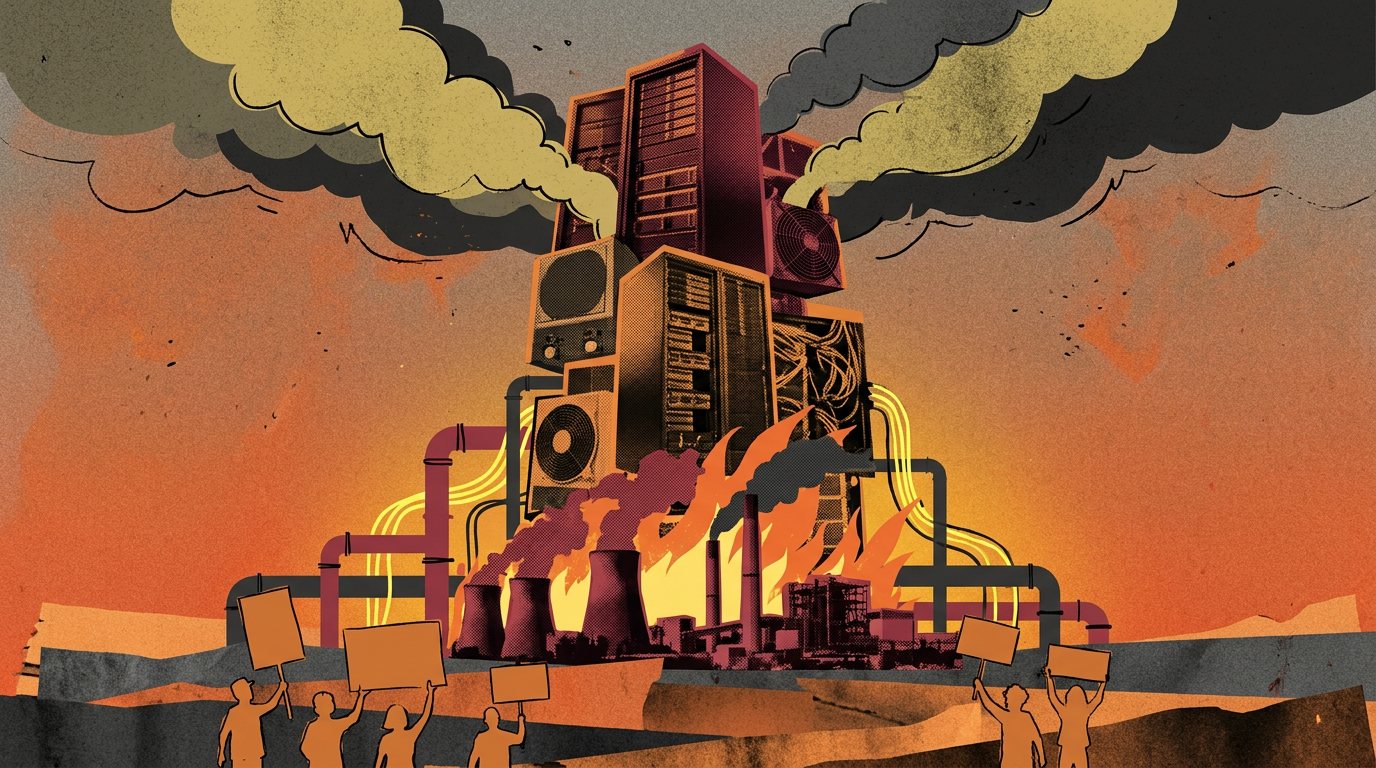
More than half of the electricity powering America's largest data centers comes from natural gas and coal, according to a Harvard study published in the journal Nature Sustainability. The research points to a growing climate cost behind the rapid expansion of artificial intelligence and cloud computing, and the researchers warn that the trend could set back national climate goals if it continues.
The study examined 403 US hyperscale data centers, the very large facilities run by major technology companies to store data and process computing workloads. Between May 2024 and April 2025, these sites produced roughly 25.7 million metric tons of carbon dioxide. That total is larger than the annual emissions of Denmark, a country of several million people with a developed industrial economy, which makes the comparison a useful way to grasp the scale of the sector's footprint.
Fossil fuels supplied more than half of the electricity these facilities consumed over the period studied. Because data centers run around the clock, they require a constant and reliable power supply, and gas and coal plants have long been used to provide that baseload capacity. Renewable sources, which depend on weather and time of day, are harder to rely on for uninterrupted round-the-clock operation without large-scale storage, a constraint that helps explain why fossil generation remains so prominent in the mix.
The researchers also looked ahead. Around 2,000 additional facilities are planned across the United States, and the authors caution that if they are powered in the same way, emissions from the sector will rise sharply. Their warning reflects a broader tension between the technology industry's ambitions for rapid growth and the commitments many companies have made to reduce their carbon footprints. Each new facility adds demand to regional grids, meaning that utilities and power producers may need to expand generation capacity to keep pace with the buildout.
The findings also raise questions about transparency. Much of the energy used by individual data centers is not publicly itemized by source, so outside researchers must rely on grid-level data and modeling to estimate what fuels the facilities. The Harvard team's approach shows how much emissions can remain hidden when companies report their electricity use in aggregate rather than by facility and generation source.
The study adds to a wider debate about how the energy needs of artificial intelligence should be met. Supporters of rapid buildout argue that data centers are essential to economic competitiveness and innovation. Critics counter that without a major shift toward clean power, including renewable generation and storage, the sector risks undermining the emissions reductions that governments and companies have pledged to achieve. The Harvard findings give both sides a concrete set of numbers to weigh as the next wave of construction moves forward.
Source: the-decoder.com
2