Romanian Researcher Develops AI Algorithms for NASA Space Robots
Sorina Lupu, a Romanian researcher working at the intersection of NASA's Jet Propulsion Laboratory, Caltech and the Openmind Research Institute, is developing artificial intelligence algorithms for robots sent into space.
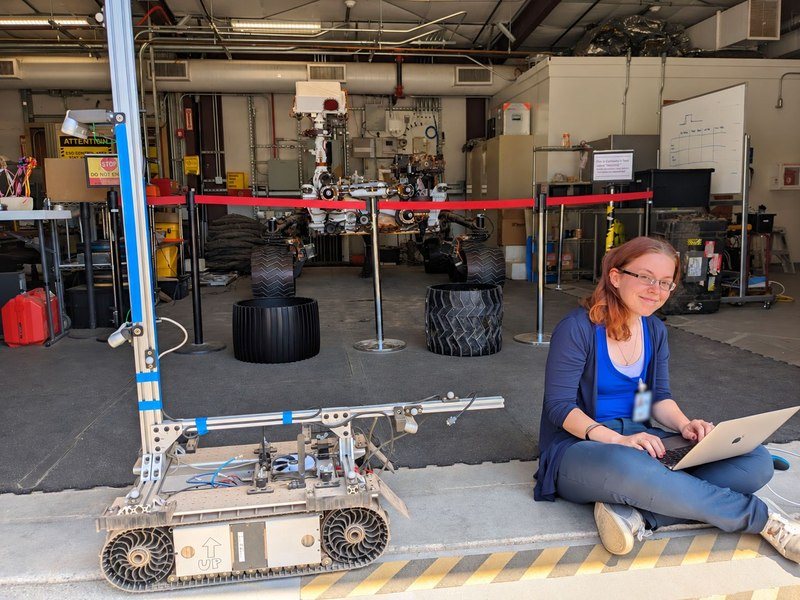
Sorina Lupu, a Romanian researcher, is developing artificial intelligence algorithms for robots sent into space, working at the intersection of NASA's Jet Propulsion Laboratory (JPL), the California Institute of Technology (Caltech) and the Openmind Research Institute. Her work focuses on the software that allows autonomous machines to operate in environments where human intervention is impossible.
The researcher's role places her at the heart of efforts to give space robots the capacity to make decisions independently. In an interview, she described the potential reach of such technology, suggesting that a robot equipped with these algorithms could one day land on another planet and encounter extraterrestrial life. The remark points to the long-term ambition behind autonomous systems: machines that can explore, adapt and respond without waiting for instructions from Earth.
Lupu's affiliation with three institutions reflects the collaborative nature of modern space research. NASA's Jet Propulsion Laboratory, managed by Caltech, is the agency's primary center for robotic planetary exploration, having built and operated missions ranging from Mars rovers to deep-space probes. The Openmind Research Institute adds a further dimension to her work, connecting academic research with the development of intelligent systems.
The development of AI for space robots addresses a fundamental challenge of interplanetary exploration: the delay in communication between Earth and distant spacecraft. As missions reach farther from Earth, real-time remote control becomes impractical, making onboard autonomy essential. Algorithms that allow a robot to perceive its surroundings, plan its actions and respond to unexpected situations are therefore central to the next generation of exploration.
Lupu's career path from Romania to leading American research institutions illustrates the international character of contemporary science. Researchers trained in one country increasingly contribute to projects that are global in scope, and her work on robot intelligence places her among those shaping how machines will operate beyond Earth.
The prospect of robots capable of independent decision-making on other worlds raises questions that extend beyond engineering. As autonomous systems take on greater responsibility in exploration, the boundary between programmed instruction and independent judgment becomes a subject of both scientific and ethical interest. For now, the focus remains on building reliable software that can withstand the uncertainties of space.
Her work forms part of a broader effort to equip spacecraft and rovers with the intelligence needed for missions that humans cannot yet undertake. Whether such robots will one day encounter life elsewhere remains speculative, but the algorithms being developed today are intended to make such encounters possible to detect and respond to.
5