Michigan Senate candidate Abdul El-Sayed faces new video contradicting defund the police denials
Surfaced videos show Abdul El-Sayed, a leading Democratic Senate candidate in Michigan, previously argued for defunding police, contradicting his recent denials. The controversy highlights tensions in the primary race to replace retiring Sen. Gary Peters.
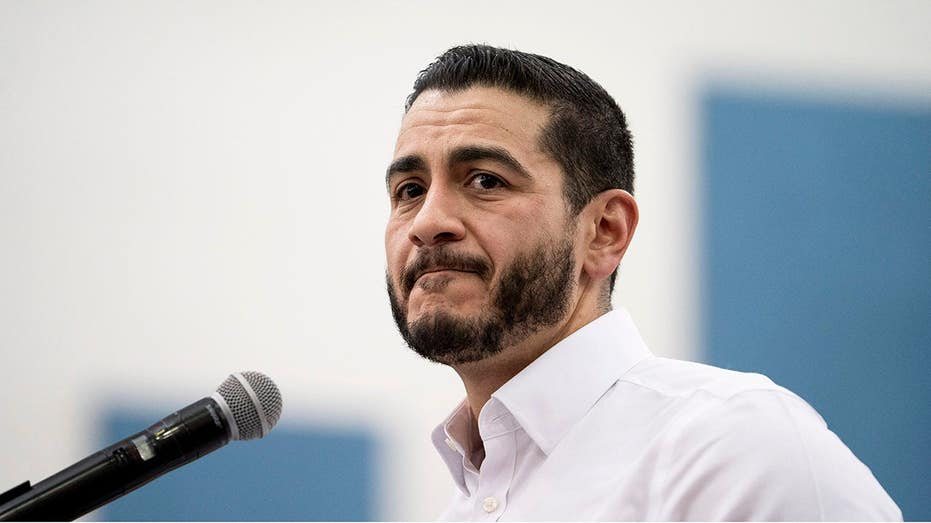
Abdul El-Sayed, the front-runner in Michigan’s competitive Democratic Senate primary, is facing renewed scrutiny after newly surfaced videos show him advocating for policies aligned with the «defund the police» movement, directly contradicting his recent statements that he never supported such measures. The videos, unearthed by Fox News Digital, include a 2019 interview with the University of Michigan titled «Systemic Racism as a Public Health Issue,» in which El-Sayed questioned the need for police funding and the use of force by law enforcement.
In the video, El-Sayed asked, «Why are we investing so much in people with guns and less in people with the means of being able to invest in young folks, empower folks through their livelihoods, and empower them to live their best lives?» He continued, «Do police really need to use guns? Do we need as much of a police force?» The candidate argued that public spending should prioritize poverty reduction over policing, stating, «We need to make a lot better decisions about investing in the things that root out poverty, rather than investing in policing poverty.»
The revelations come as El-Sayed has repeatedly denied ever calling for defunding the police during his campaign for the Senate seat being vacated by retiring Sen. Gary Peters, D-Mich. In a recent interview with CNN’s Kasie Hunt, El-Sayed claimed he deleted old tweets on the topic to prevent them from being «taken out of context» and dismissed the controversy as «clickbait in D.C.» He said, «I think this debate about 2020 and the ways that tweets are going to play are really nice on CNN if you want to get clicks. They’re not that effective, and nobody really asks me about them on the streets or in communities in Michigan.»
However, a CNN report from 2020 found that during the height of the «defund the police» movement, El-Sayed leaned into the idea. In a June 2020 interview with Detroit Public Radio, he acknowledged that while he did not directly use the phrase «defund the police,» he described the principles behind it. «So, you’ll note, I didn’t say ‘defund the police,’ I just described what needed to be done,» El-Sayed said at the time. He defined defunding as «disinvesting in the means of incarcerating someone or killing them on the streets and investing more in the means of educating and empowering and engaging communities.» He also pitched his stance as «refunding» the police to ensure taxpayer dollars do not go toward «buy war materiel to wage war in our streets.»
El-Sayed’s campaign has sought to clarify his position, with spokesperson Roxie Richner stating that his perspective has evolved through hands-on experience. Richner noted that during his tenure as director of Health, Human, and Veterans Services for Wayne County, Michigan, El-Sayed worked closely with law enforcement. «One simple word has never been enough to fully explain the reforms we need for a challenge as complex as our criminal legal system,» Richner said. She added that El-Sayed now supports improving law enforcement recruitment, retention, and retirement funding, while also advocating for the George Floyd Justice in Policing Act and community violence intervention programs.
The controversy underscores the broader ideological battle within the Democratic Party as El-Sayed, a progressive backed by Sen. Bernie Sanders, I-Vt., and Rep. Alexandria Ocasio-Cortez, D-N.Y., faces Rep. Haley Stevens, D-Mich., in a primary that could determine control of a key Senate seat. Republicans are eager to flip the seat in the 2026 midterm elections, and the defund the police issue has become a flashpoint in the race. El-Sayed’s past statements have also drawn attention to his broader progressive platform, which includes calls for criminal justice reform and systemic changes to policing.
Despite the backlash, El-Sayed remains a leading candidate, and his campaign argues that his focus is on practical solutions rather than slogans. «What we call that is, to me, less important than what we do on the problems on the ground,» he said in 2020. As the primary approaches, the videos are likely to fuel further debate over the direction of the Democratic Party and the electability of progressive candidates in swing states like Michigan.
89