Portadown Residents Draw Support Against Anti-Catholic Parade
A broad wave of solidarity has formed around the Garvaghy Road in Portadown, as people from across Ireland and beyond join residents opposing an attempt to force an anti-Catholic parade through the Catholic community.
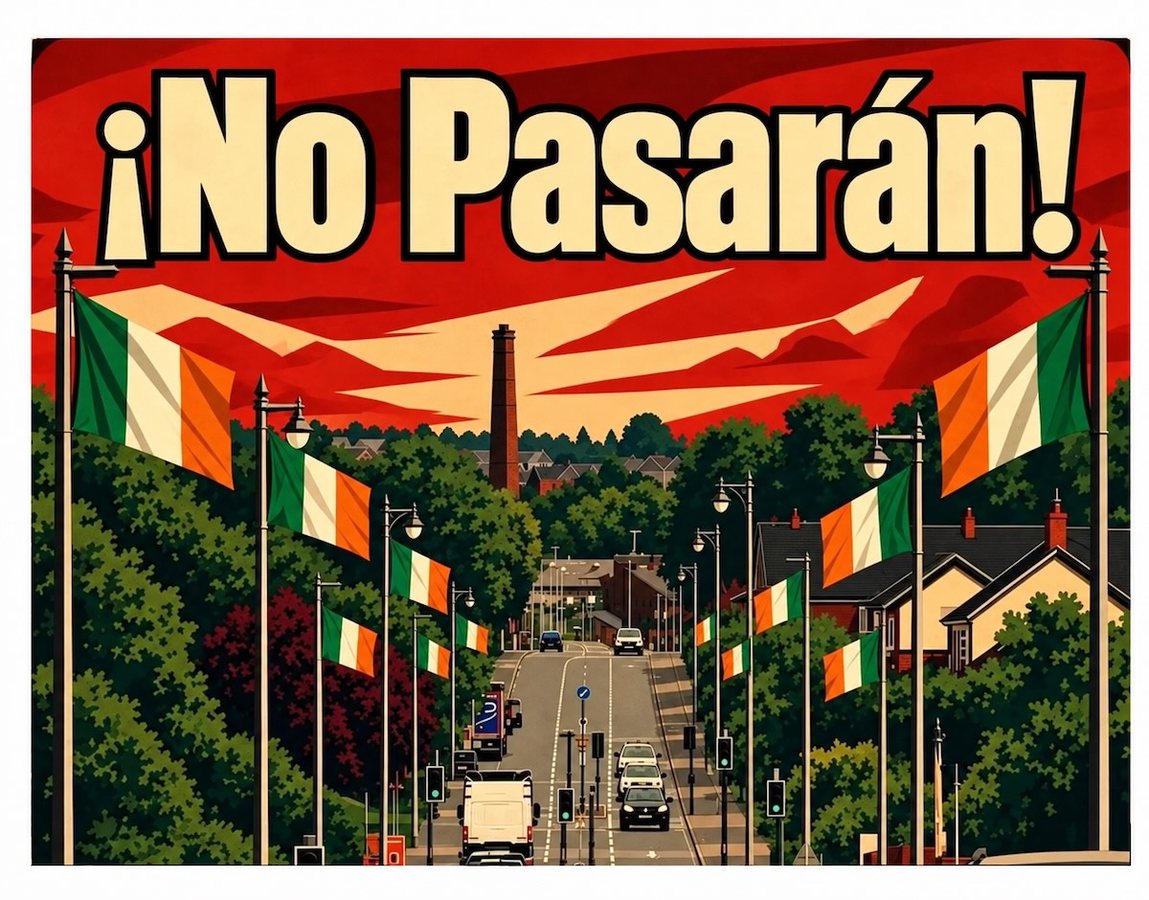
A broad wave of solidarity has gathered around the Garvaghy Road in Portadown, where residents are opposing an attempt to force an anti-Catholic parade through their Catholic community. People from across Ireland and beyond have joined the local effort, turning the neighbourhood into a focus of support that extends well past its own streets.
The dispute centres on a parade that residents and their supporters describe as anti-Catholic, and on the insistence that it be routed through the Catholic area. The opposition is not confined to the immediate locality. Supporters have travelled from other parts of Ireland and from further afield to stand with the community, according to accounts of the mobilisation.
The Garvaghy Road has long been a flashpoint in Northern Ireland's contested parade landscape, where questions of territory, identity and consent have repeatedly produced standoffs. The current mobilisation echoes earlier episodes in which residents organised to resist marches they regarded as sectarian and provocative. What is notable now is the breadth of the response, which has drawn in people with no direct connection to Portadown.
For the residents, the core issue is the principle that a community should not have a hostile parade forced through it against its wishes. The support they have received is presented as a rejection of that coercion, rather than as a position on any single organisation. The presence of outside supporters has given the local campaign a wider platform and a sense that the dispute is being watched beyond the immediate area.
The mobilisation also reflects how parades disputes in the region continue to function as tests of whether local consent is treated as a real constraint or as an obstacle to be overridden. In that sense, the events on the Garvaghy Road are being read as part of a longer argument about power, memory and who gets to decide what happens in a neighbourhood.
Residents have framed their opposition in terms of protecting their community from a march they consider hostile to their faith and identity. The solidarity they have attracted is described as extraordinary, with people from across Ireland and beyond joining them in that opposition. The gathering of support has made the Garvaghy Road a symbol of resistance to the forced parade, at least for the duration of the current standoff.
What happens next will depend on whether the attempt to force the parade through the area proceeds and how the authorities handle the resulting tension. For now, the community's opposition has been amplified by an unusually wide network of supporters, and the road has become a meeting point for those who share the view that the parade should not go ahead as planned.
5