Romania's Education Minister: Nearly Half of Pupils Lack Basic Math and Romanian Language Skills
Interim Education Minister Mihai Dimian says National Assessment results show almost half of Romanian pupils do not master basic mathematics and Romanian language, warning that the school system must focus on practical skills and future professions.
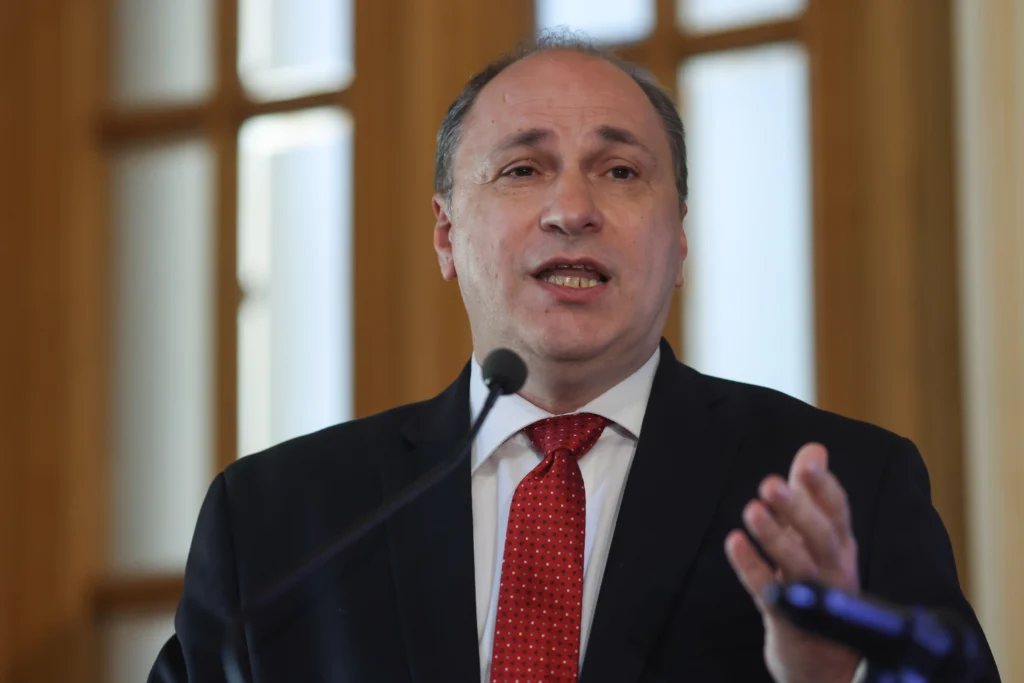
Nearly half of Romania's pupils do not have a sufficient command of mathematics and the Romanian language, according to interim Education Minister Mihai Dimian, who cited the results of the National Assessment in an interview with Radio Iași. The minister said the findings point to a deeper problem than a simple lack of knowledge, noting that even pupils who possess the necessary knowledge often struggle to apply it in concrete situations.
«Before knowing how to apply something, you have to know it. What the National Assessment shows us is that almost half of Romania's pupils, if we are talking about mathematics, and roughly half in Romanian language and literature, do not know,» Dimian said. He added that functional illiteracy in Romania has reached around 50 percent, and that more than half of Romanian pupils do not master mathematics at a basic level.
The minister argued that schools must place greater emphasis on practical competences and on preparing pupils for the professions of the future. «We are not preparing pupils for today, but for five to ten years from now, when they will enter the labour market,» he said. Among the causes of weak results, Dimian listed absenteeism, a lack of motivation among some pupils, and problems with teacher coverage in schools.
He also called for a better-adapted curriculum that includes more practical exercises, real-life applications, and digital activities. Dimian spoke about the need for greater demandingness from teachers, saying there are cases in which pupils who received a grade of 5 in mathematics in middle school go on to obtain grades of 2 or 3 at the National Assessment. In his view, school and family must work together to motivate pupils to learn better.
The minister stressed the importance of remedial activities, which should reach especially those pupils who genuinely need support. He said these could be delivered through additional lessons, by integrating them into teachers' working hours, or with the help of additional staff. Another planned change concerns the National Assessment and high school admission. Dimian believes exam results should take greater account of a pupil's profile and interests. He gave the example of a pupil passionate about science who could be prevented from pursuing that profile because of a lower grade in Romanian, or a pupil interested in history and geography who obtains a weaker result in mathematics.
Dimian also announced a review of school curricula and a plan of measures to be presented in the coming period. Among the proposed directions are more intensive use of science laboratories and smart laboratories, as well as turning activities in the «Școala Altfel» and «Săptămâna verde» programmes into more practical activities closer to reality. The National Assessment results have renewed debate over the state of Romanian education, where functional illiteracy remains a persistent challenge and where the gap between basic knowledge and its practical application continues to shape pupils' prospects.