Wildfire in Orés, Zaragoza, Rages Out of Control, Devouring 15,400 Hectares
A wildfire in Orés, Zaragoza, has burned 15,400 hectares, forcing evacuations of six towns in Aragon and one in Navarre. The blaze remains uncontrolled on its left flank, driven by erratic winds and difficult terrain, as Spain faces extreme fire risk across eight autonomous communities.
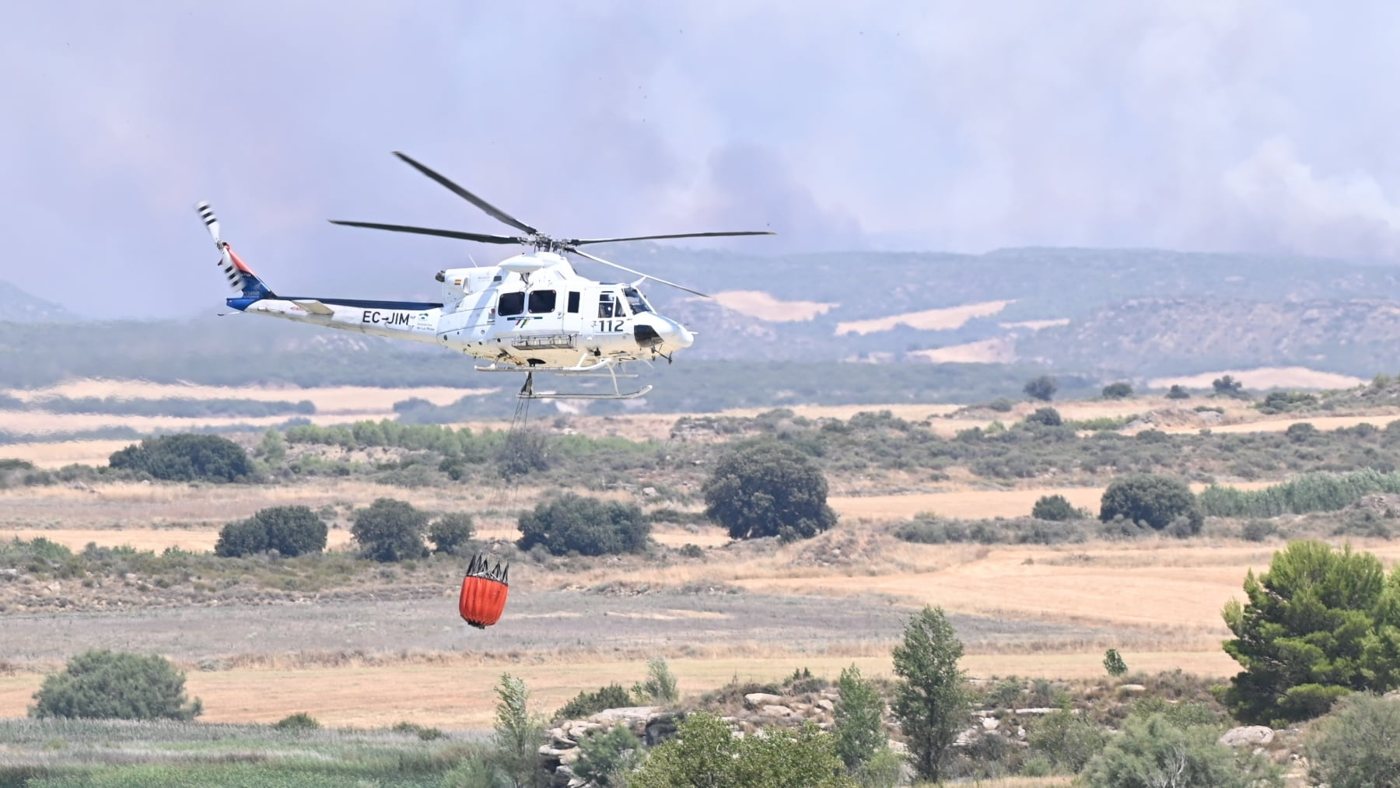
A devastating wildfire in the municipality of Orés, located in the Zaragoza province of Aragon, has spiraled out of control, scorching approximately 15,400 hectares of land and carving a perimeter of 60 kilometers. The blaze, which ignited on Wednesday, has become the most extensive wildfire recorded in Spain so far this year, according to the latest data released by the Government of Aragon on Saturday. The flames have forced the evacuation of six towns in Zaragoza — Orés, Asín, Luesia, Malpica de Arba, Peraltilla, and Uncastillo — as well as the neighboring Navarrese locality of Petilla de Aragón, as emergency services scramble to protect residents and contain the advancing inferno.
The situation remains critical, particularly on the left flank of the fire, where erratic winds have hampered firefighting efforts throughout the night. Jorge Azcón, the president of Aragon, delivered a grim assessment during a meeting of the Cecopi (Operational Coordination Center) on Saturday, stating that «the night has not been favorable.» In a message posted on social media, Azcón acknowledged the challenging conditions, writing, «Work continues with great effort, but the climatic and topographical circumstances are making the work of the extinction teams extraordinarily difficult.» He also expressed his gratitude to the personnel deployed on the ground, who are battling the blaze under extreme conditions.
The wildfire has already forced the evacuation of hundreds of residents, with emergency alerts sent via the ES-Alert system to keep people away from the affected areas. The flames have come dangerously close to the urban center of Luesia, though firefighters have managed to prevent the fire from entering the town itself. However, the proximity of the blaze to the municipality of Biota remains a major concern. The evacuations have been expanded as the wind shifted direction, driving the fire toward new areas and complicating the efforts of the more than 500 firefighters, military personnel, and aerial units deployed to the scene.
The wildfire in Orés is not the only major blaze threatening Spain. In the province of Guadalajara, a separate fire in La Mierla has already burned 3,800 hectares and forced the evacuation of 529 people from 11 municipalities. That fire remains at Level 2 of emergency, with flames advancing on multiple fronts, particularly toward the town of Semillas, where emergency services are working to protect homes and prevent the fire from reaching inhabited areas. Several roads in the area have been closed as a precaution, and authorities continue to use the ES-Alert system to warn residents. In contrast, more hopeful news has emerged from Málaga, where a fire that broke out on Friday in Árchez, which had confined the municipality of Cómpeta for more than five hours, was stabilized overnight. Firefighting teams are now focusing on fully controlling and extinguishing that blaze.
The broader meteorological outlook offers little relief. The State Meteorological Agency (Aemet) has placed eight autonomous communities at extreme risk of wildfires on Saturday, the highest level on the scale. The areas under the most intense surveillance include Huesca in Aragon; the eastern half of Andalusia; the Region of Murcia; the Community of Madrid, excluding its metropolitan area; the southeast of Castile and León; northern Catalonia; large parts of the provinces of Castile-La Mancha; and several strips of the Valencian Community. These regions are experiencing a combination of high temperatures, low humidity, and strong winds that create ideal conditions for the rapid spread of fires.
The fire in Orés has already surpassed the scale of other major wildfires in Spain this year, drawing comparisons to the devastating blazes that have plagued the country in recent summers. The rugged terrain of the Cinco Villas region, characterized by steep slopes and dense vegetation, has made it difficult for ground crews to access the most active areas. Aerial resources, including water-dropping helicopters and planes, have been working continuously, but the erratic wind patterns have sometimes forced them to suspend operations for safety reasons. The fire has also generated a massive column of smoke visible from kilometers away, affecting air quality in nearby towns and raising health concerns for residents.
Local authorities have set up reception centers for evacuees in nearby municipalities, providing shelter, food, and medical assistance. The Red Cross and other humanitarian organizations have been mobilized to support the displaced population. The economic impact of the fire is also expected to be significant, as the affected area includes agricultural land, forests, and livestock grazing grounds that are vital to the local economy. The full extent of the damage will not be known until the fire is brought under control and a detailed assessment can be conducted.
As the firefighting effort continues, the Government of Aragon has called for calm and urged the public to follow instructions from emergency services. President Azcón has emphasized that the priority remains the protection of human life and property, and that all available resources are being deployed to achieve that goal. The coming days will be critical, as weather forecasts predict little change in the conditions that have fueled the fire, with high temperatures and dry winds expected to persist. The fire in Orés serves as a stark reminder of the growing threat of wildfires in Spain, driven by climate change and land-use practices, and the need for continued investment in prevention, detection, and response capabilities.
76