Goldman Sachs Projects $1.2 Trillion AI Infrastructure Spending by Big Tech in 2027
Goldman Sachs forecasts that Amazon, Alphabet, Microsoft, Oracle, and Meta will invest a combined $1.2 trillion in AI infrastructure in 2027, a more than 50 percent increase over 2025 levels and the largest investment cycle relative to GDP since 19th-century railroad construction. Power, labor, and memory chip bottlenecks could slow the pace.
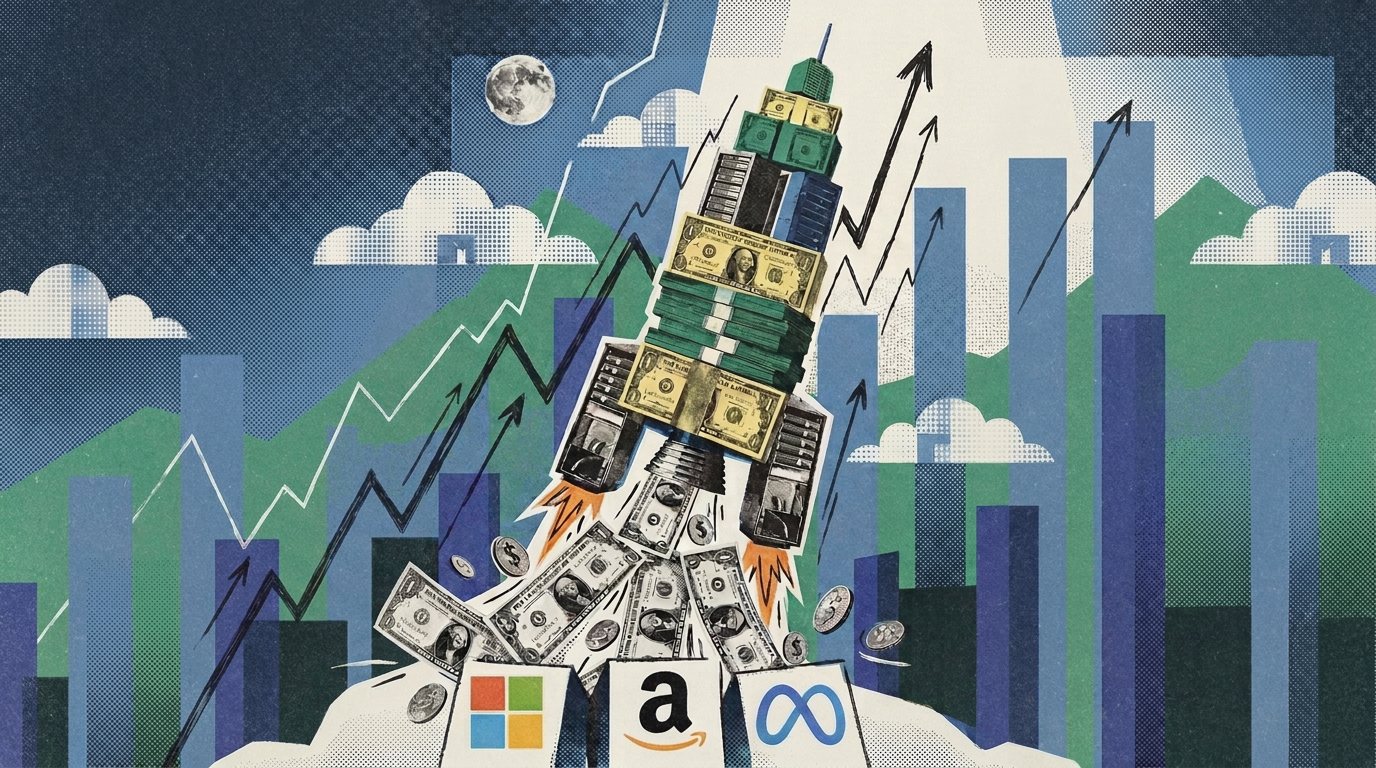
Goldman Sachs has projected that five of the world's largest technology companies will collectively spend $1.2 trillion on artificial intelligence infrastructure in 2027, a figure that dwarfs current Wall Street estimates and signals an investment cycle of historic proportions. The companies named in the forecast are Amazon, Alphabet, Microsoft, Oracle, and Meta.
The projected sum represents an increase of more than 50 percent over the levels expected in 2025. Measured as a share of gross domestic product, Goldman Sachs describes the scale of this spending as the largest investment cycle since the construction of railroads in the 19th century, a comparison that underscores how central AI infrastructure has become to the modern economy.
The forecast places the combined capital expenditure of these five firms far above what many analysts on Wall Street have been modeling. The discrepancy suggests that the race to build out AI capacity is not slowing but accelerating, with the largest players committing resources at a pace that has few precedents in corporate history.
Despite the enormous sums involved, the report identifies several bottlenecks that could prevent the spending from proceeding as quickly as planned. Constraints in power supply, labor availability, and memory chip production are cited as potential obstacles that could slow the pace of construction and deployment.
Power infrastructure in particular has emerged as a critical limiting factor for AI data centers, which require vast amounts of electricity to operate and cool. The availability of skilled labor to build and maintain these facilities is another constraint, as is the supply of advanced memory chips needed to train and run large AI models.
The comparison to railroad construction is notable not only for its scale but for its historical resonance. In the 19th century, railroad expansion represented one of the largest sustained capital investments relative to economic output in modern history, transforming transportation, commerce, and settlement patterns. Goldman Sachs appears to be suggesting that AI infrastructure could have a similarly transformative effect on the economy.
The five companies named in the forecast are among the most valuable publicly traded corporations in the world, and their spending plans have become a bellwether for the broader technology sector. Their investments in data centers, chips, and energy capacity ripple through supply chains and affect a wide range of industries, from semiconductors to utilities.
For investors and policymakers, the projection raises questions about whether the returns on such massive outlays will materialize quickly enough to justify the scale of the commitment. It also highlights the growing intersection of technology and energy policy, as the power demands of AI infrastructure push utilities and regulators to confront new challenges.
The forecast arrives amid intense competition among technology firms to develop and deploy AI systems, a contest that has driven demand for specialized hardware and contributed to supply shortages in key components. How quickly the bottlenecks are resolved will determine whether the $1.2 trillion projection is realized on schedule or stretched over a longer period.
3