Humanoid robot with sensor skin detects people before contact
Italian startup Generative Bionics has unveiled a humanoid robot whose sensor-filled artificial skin detects people approaching before physical contact. The Gene.01 platform also senses touch, temperature and force, with an eye on safer industrial collaboration.
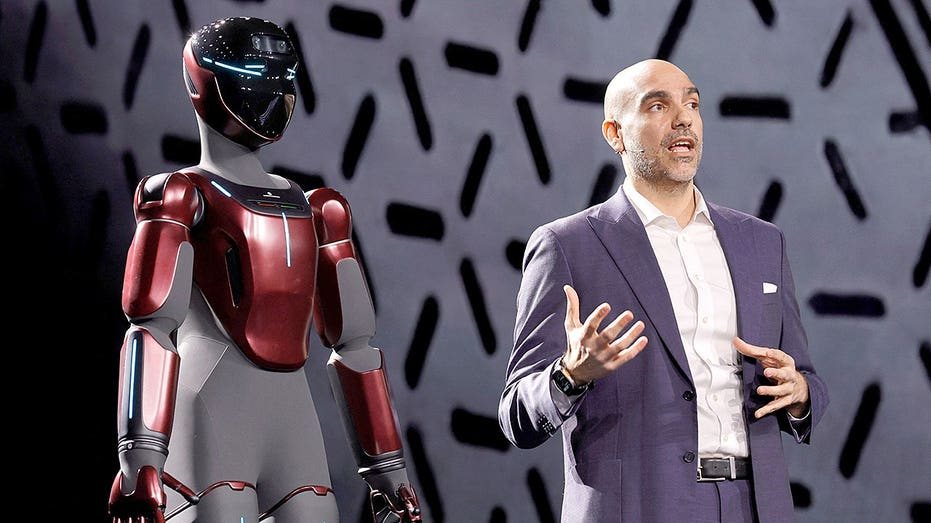
Italian robotics startup Generative Bionics has introduced a humanoid robot whose sensor-filled artificial skin can detect a person approaching before physical contact takes place. The company says the system, built into its Gene.01 platform, senses touch, temperature, proximity and force at the same time, allowing the machine to gather information about its surroundings and about what happens during an interaction with a human worker.
The announcement addresses a central concern about bringing humanoid machines into workplaces built for people. Traditional industrial robots often work behind barriers precisely because a collision with heavy equipment can injure a worker. Companies now want humanoid robots to handle tools and move through ordinary spaces, which makes separating them from employees harder. Cameras help a robot notice someone approaching, but a person standing very close or positioned behind part of the machine may disappear from view. Full-body proximity sensing provides a separate source of information, so the robot can detect activity near its torso and limbs without relying entirely on what it can see.
Generative Bionics describes the skin as a safety layer rather than a replacement for established safeguards. If a person enters the space around the robot, the system gets an early warning and the control software has a chance to respond before contact. If contact does occur, the robot can continue to measure the force involved. The company has not yet released detailed safety data showing how the system performs over full industrial shifts, and for now the benefits are company claims tied to a newly introduced platform.
The sensors may also change the way workers train robots. Instead of programming a machine, an experienced employee can guide Gene.01's arm through a movement while the robot records the motion and the force used. The company argues that video demonstrations leave out important physical details: a clip can show where a hand should be placed, but it may not reveal how firmly an object should be gripped. Too little pressure can make an item slip, while excessive force can damage it. By letting a worker demonstrate the feel of a task, the robot can learn how much force to apply, potentially making training accessible to people who know the job well but do not write code.
Gene.01 was built around an approach the startup calls Physical AI, in which the robot's body and movement controls are developed as one connected system rather than as separate hardware and software layers. The team uses models of the robot and of the human working beside it, then adjusts the design around measurable factors such as walking stability and the physical strain on the person. Generative Bionics says this methodology grew from research by members of its founding team at the Istituto Italiano di Tecnologia. The journal Nature Machine Intelligence published that research on July 13, 2026. The paper focused on a human-aware robot called ergoCub rather than on Gene.01. In the study, researchers jointly optimized the robot's physical design and movement controls, using human-related measurements, including stress on a person's back, alongside the machine's walking requirements.
The company describes Gene.01 as the first industrial platform to apply that peer-reviewed methodology to a fully functional, sensor-covered humanoid. The robotics team says it moved the platform from concept to a functional robot in six months. Generative Bionics CEO Daniele Pucci said the robot was designed as a foundation for several different industrial machines: «Unlike other one-size-fits-all humanoids, Gene.01 is a scalable platform, customized at the edge of AI, design and end-effector level to maximize each customer's needs. It is also the first expression of our belief that Physical AI must be human-aware, physics-native and industrial from day one. In six months, our team moved from concept to a fully functional and sensorized humanoid platform by combining deep humanoid robotics expertise with AI, biomechanics and design.»
Pucci said the company wants robots to learn from the physical world while adapting to each customer's work. Gene.01 is meant to serve as the base for a family of specialized humanoids: the AI can be adjusted for a particular task, the exterior can be altered to suit the working environment, and engineers can replace its end effectors, the technical term for the hands, grippers or feet attached to the ends of the robot's limbs.
The wider robotics industry has shown increasing interest in machines designed to operate close to people. Sensor-packed skin of the kind used on Gene.01 will not eliminate every risk, but it adds another layer of awareness to machines that are expected to share space with humans on factory floors and in logistics facilities. The real test, industry observers note, is whether the sensors and control software can react quickly enough under the demands of real work.