MIT Report Warns AI Is Eroding Office Hours, Study Groups, and Faculty Trust
An MIT expert committee finds that AI is weakening core elements of the college experience, including office hours, study groups, and undergraduate research, while trust between faculty and students breaks down.
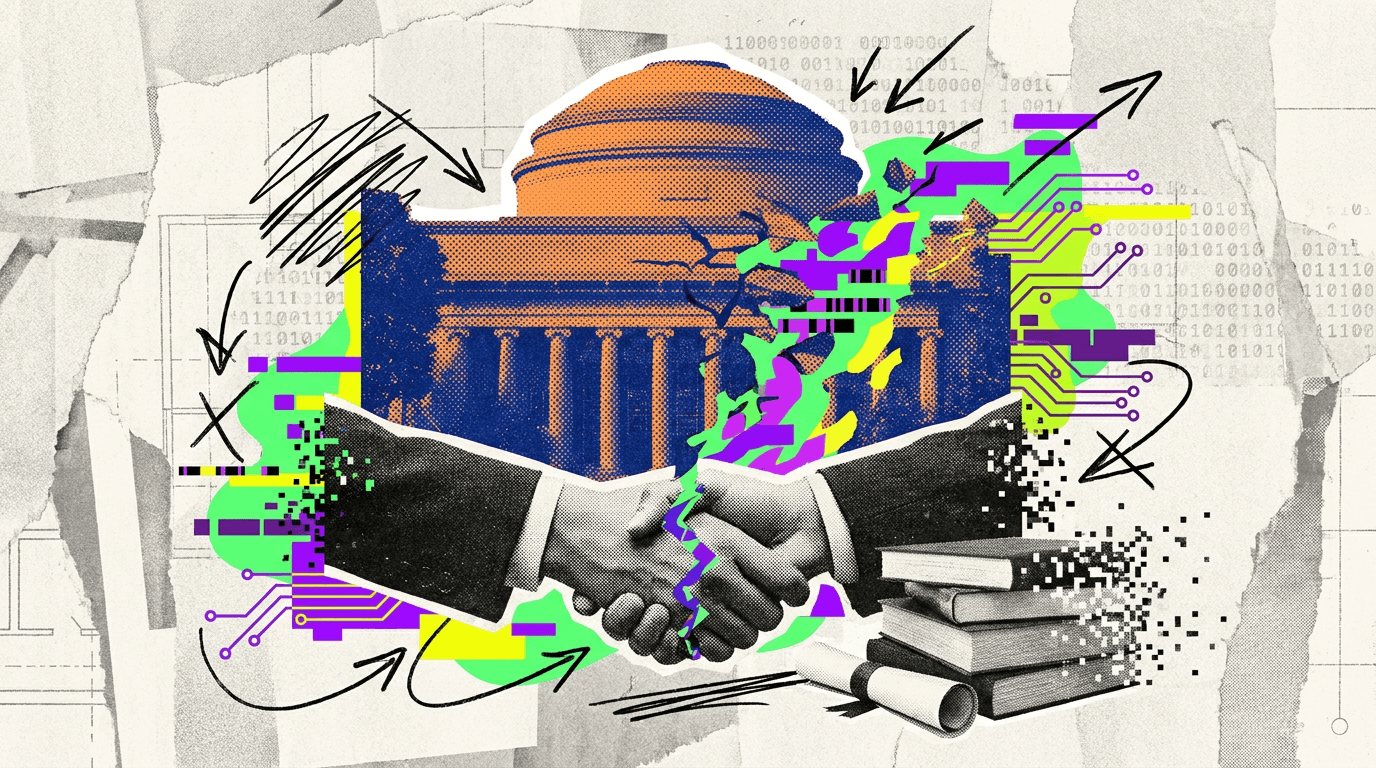
Artificial intelligence is quietly dismantling some of the most human parts of a university education, according to a new report from an expert committee at the Massachusetts Institute of Technology. The committee warns that office hours, study groups, and MIT's flagship undergraduate research program are all fading as AI tools become more embedded in academic life. At the same time, trust between faculty and students is breaking down, and some professors are even considering replacing student research assistants with AI agents.
The irony is hard to miss. MIT, the institution most closely associated with the origins of modern artificial intelligence, is now calling for a complete overhaul of higher education. The report does not treat AI as a mere tool to be adopted or banned. Instead, it describes a systemic erosion of the relationships and rituals that have long defined a residential college experience.
Office hours, once a cornerstone of faculty-student interaction, are reportedly losing their purpose. When students can get instant answers from an AI model at any hour, the incentive to visit a professor in person diminishes. That shift may seem convenient, but it removes a setting where mentors offer nuance, encouragement, and professional guidance that algorithms cannot replicate. Study groups are facing a similar decline. These peer-led sessions have traditionally helped students test their understanding, learn from one another, and build the social bonds that sustain them through demanding coursework. If AI can summarize readings or solve problem sets on demand, the collaborative pressure that makes study groups effective weakens.
Perhaps most striking is the fate of MIT's flagship research program for undergraduates. The committee indicates that this program is fading, though the report does not specify whether the cause is student disengagement, faculty withdrawal, or both. What is clear is that the research apprenticeship model — where students work alongside professors on original projects — is under strain. Some faculty members are now considering AI agents as substitutes for student research assistants. That prospect raises profound questions about the purpose of undergraduate research. Is it primarily a way to produce knowledge, or a formative experience that teaches students how to think, fail, and persevere? If AI can perform the tasks more efficiently, the educational rationale for involving students may be challenged.
The breakdown of trust between faculty and students runs through all these developments. When professors cannot tell whether a piece of writing or a solution was produced by a student or a machine, suspicion can poison the classroom atmosphere. Students, meanwhile, may feel that they are being policed rather than taught. The report suggests that this mutual suspicion is not a minor side effect but a central problem that demands institutional attention.
The committee's call for a complete overhaul of higher education is a recognition that piecemeal responses — an honor code here, a detection tool there — will not be enough. What is needed, the report implies, is a rethinking of what college is for in an age when information and even reasoning can be outsourced to machines. That means redefining the value of office hours, study groups, and research mentorships not as legacy features but as deliberate practices that build judgment, character, and community.
For institutions beyond MIT, the warning carries weight. AI is not just changing how students learn; it is changing whether they learn together, whether they seek out mentors, and whether faculty trust the work they assess. The report does not offer a simple solution, but it makes clear that the erosion is real and that the university most identified with AI's origin story is now asking whether its own educational model can survive the technology it helped create.
3