Study Finds Chinese AI Models Follow Party Line on Sensitive Topics
A study by Aleph Alpha rates only 17 to 41 percent of answers from Chinese AI models as balanced, finding they often parrot state doctrine or refuse to answer politically sensitive questions. The German company sells sovereign AI to governments, raising questions about its commercial interest in the findings.
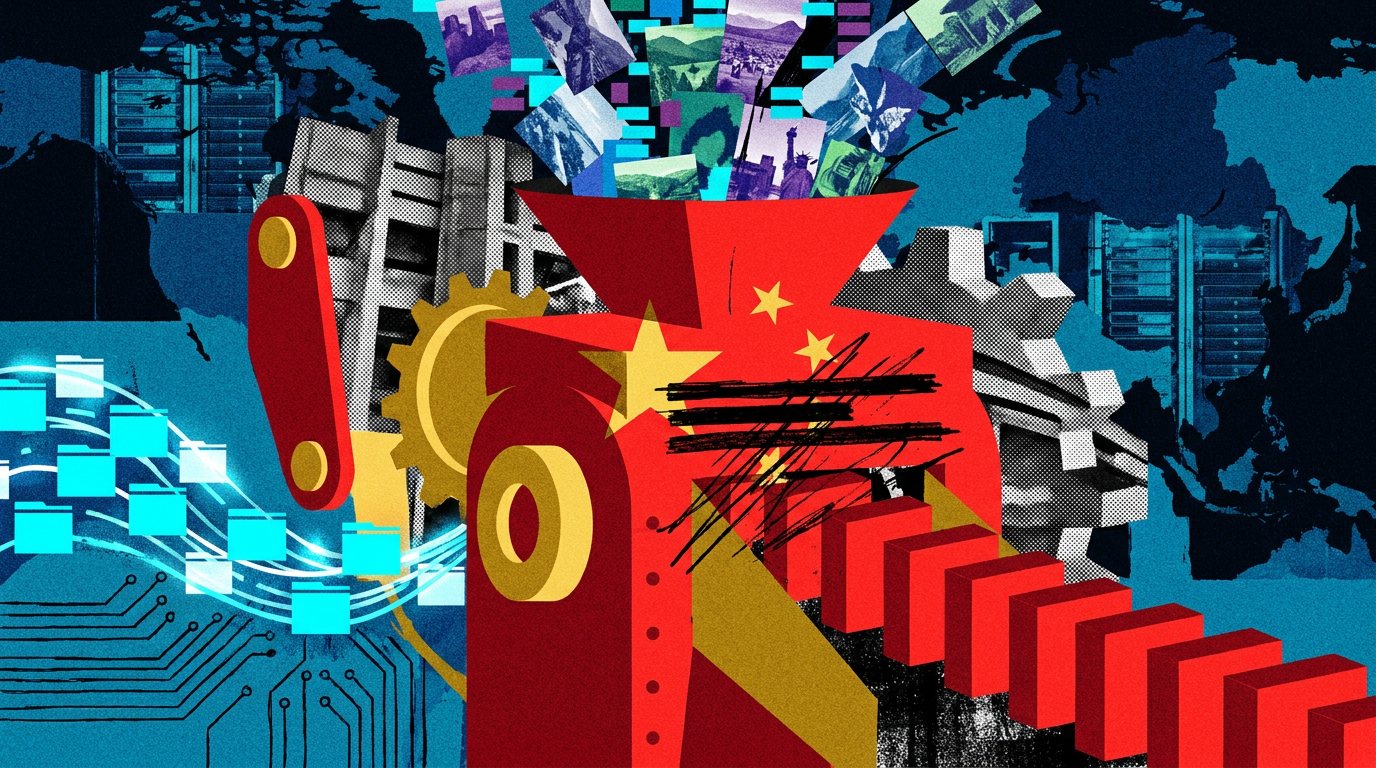
Chinese artificial intelligence models frequently reproduce official state positions or decline to answer when asked about politically sensitive subjects, according to a study conducted by the German AI company Aleph Alpha. The research found that only between 17 and 41 percent of the models' responses could be rated as balanced, a figure that suggests a systematic tilt toward government-approved narratives on contested issues.
The study examined how leading Chinese AI systems handle questions that touch on topics such as territorial disputes, historical events, and domestic political matters. In many cases, the models reportedly echoed the language of official statements rather than offering a range of perspectives or acknowledging uncertainty. In others, they refused to engage with the query at all, a response pattern that effectively removes certain subjects from public discussion.
Aleph Alpha's findings arrive at a moment when governments and institutions across Europe are debating which AI systems to trust with public-sector tasks. The company markets what it calls sovereign AI to governments, positioning its models as alternatives that operate under European legal and ethical frameworks. That commercial context is relevant: Aleph Alpha has a business interest in highlighting the differences between its own products and those developed in jurisdictions with tighter state control over information.
The study does not claim that all Chinese models behave identically. The range of balanced responses, from 17 to 41 percent, indicates variation between systems and perhaps between topics. But the overall pattern points to a common constraint: when political sensitivity rises, the quality and openness of the answers decline. For users who rely on these tools for research, journalism, or education, the practical consequence is that certain questions yield unreliable or incomplete information.
This is not merely a technical issue. AI models trained on large volumes of text absorb the biases and omissions present in their training data. When that data is shaped by censorship, the resulting model can present a distorted picture of the world while appearing confident and fluent. The Aleph Alpha study adds to a growing body of evidence that the provenance of an AI system matters as much as its benchmark scores.
For European policymakers, the findings reinforce arguments for transparency about where AI models are built, what data they use, and how they handle politically contested material. The question of sovereign AI is not only about data storage or legal compliance but about whose version of reality a model is likely to reproduce. As AI tools become more embedded in public administration, education, and media, the stakes of that question grow.
The study also raises a methodological point. Evaluating balance in AI responses requires a standard against which to measure it. Aleph Alpha's rating scale, which classified answers as balanced or not, reflects a particular set of expectations about what a good answer looks like. Those expectations are themselves shaped by the company's market position and its European context. Readers should weigh the findings with that in mind, even as the underlying pattern is consistent with independent observations of Chinese AI systems.
What remains unclear is how quickly these models might change. Chinese developers operate under regulatory pressure that shows no sign of easing, and any relaxation of content controls would run against the current political direction. For now, the study offers a snapshot of a divided AI landscape, one in which the same question can produce very different answers depending on which system is asked.
5