US Bill Proposes Permanent Ban on Artificial Superintelligence
Senator Bernie Sanders and Representative Greg Casar have introduced legislation that would permanently prohibit the development and use of artificial superintelligence and establish a new federal agency to oversee artificial intelligence.
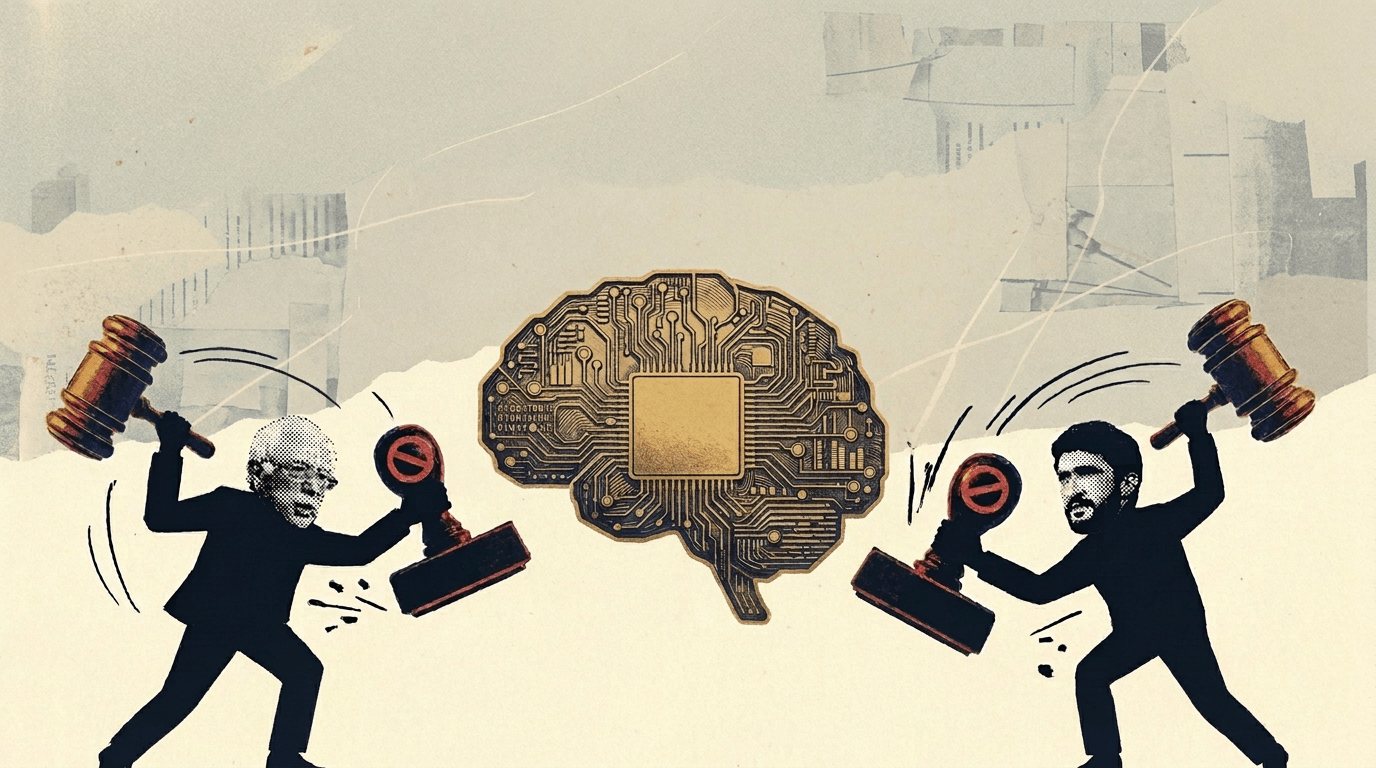
Senator Bernie Sanders and Representative Greg Casar introduced a bill on September 23 that would permanently ban the development and use of artificial superintelligence, the hypothetical form of AI that would surpass human cognitive abilities across virtually every domain. The proposal also calls for the creation of a new federal agency dedicated to the oversight of artificial intelligence, signaling a significant shift in how the United States might approach the governance of advanced AI systems.
The legislation targets artificial superintelligence specifically, distinguishing it from narrower or less capable forms of AI that are already in commercial and research use. By seeking a permanent prohibition, the bill goes further than previous regulatory efforts that have focused on transparency, safety testing, or sector-specific rules. The ban would apply both to the development and the use of such systems, according to the proposal.
The introduction of the bill reflects growing concern among some lawmakers about the pace of AI advancement and the potential risks posed by systems that could exceed human control or understanding. Artificial superintelligence remains theoretical, but rapid progress in machine learning and large-scale computing has prompted calls for preemptive safeguards. The proposed federal agency would presumably be tasked with monitoring AI development, enforcing the ban, and possibly regulating other aspects of the technology.
Senator Sanders, an independent from Vermont, and Representative Casar, a Democrat from Texas, are known for their progressive stances on economic and social issues. Their involvement places the AI debate within a broader political conversation about technology, power, and public accountability. The bill’s prospects in Congress are uncertain, as it would likely face opposition from industry groups and some lawmakers who favor a more permissive approach to AI research and development.
If enacted, the ban would make the United States one of the first countries to explicitly outlaw artificial superintelligence. Other nations and international bodies have begun discussing AI governance, but few have proposed outright prohibitions on specific categories of AI. The creation of a new federal agency would also require significant bureaucratic infrastructure and funding, raising questions about how it would operate alongside existing regulators.
The bill arrives amid a broader global debate over how to balance innovation with safety. AI companies and researchers have called for guardrails, but many argue that overly restrictive measures could push development underground or to other countries. The proposal from Sanders and Casar is likely to intensify that debate, even if it does not advance quickly through the legislative process.
For now, the bill serves as a marker of how far some policymakers are willing to go in response to the rapid evolution of AI. It also highlights the absence of a comprehensive federal framework for AI in the United States, where regulation has largely been left to sector-specific agencies and state-level initiatives. Whether the bill gains traction or not, it adds a prominent voice to the conversation about the limits of artificial intelligence and the role of government in shaping its future.
4