Estonian Foreign Minister Warns Putin Faces Grim End if War Continues
Estonian Foreign Minister Margus Tsahkna states that Russia lacks the resources for a larger attack on NATO and predicts that Vladimir Putin may face a grim end if he does not enter serious negotiations to end the war in Ukraine.
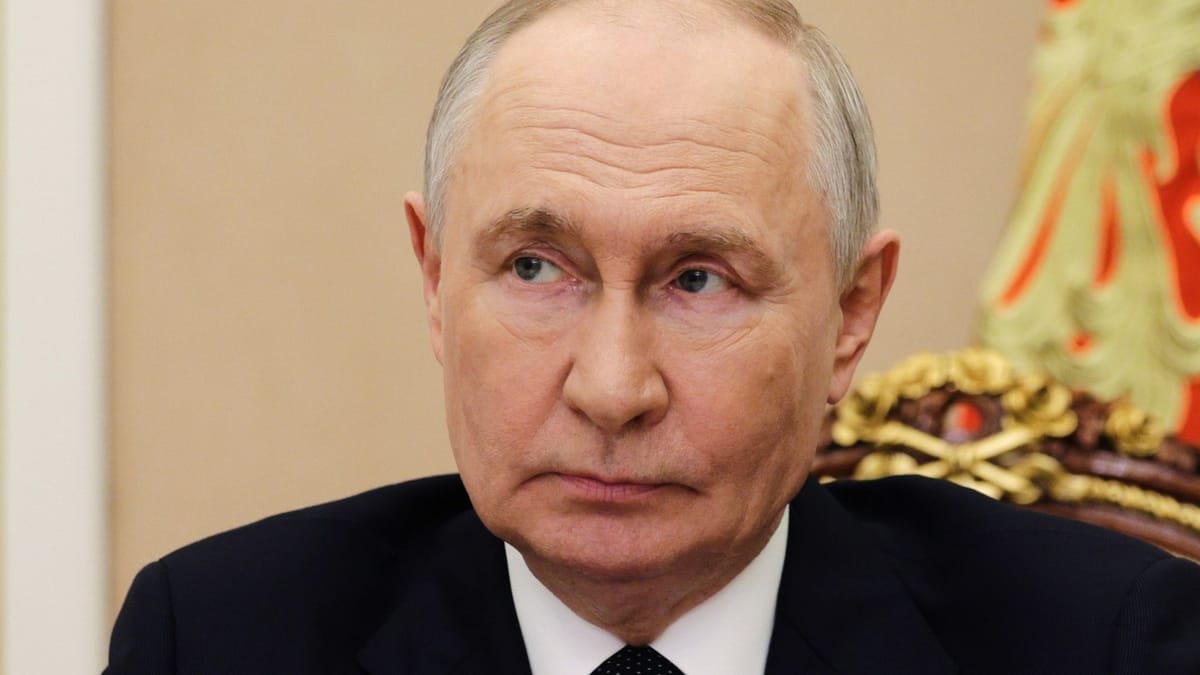
Estonian Foreign Minister Margus Tsahkna has issued a stark warning about the future of Russian President Vladimir Putin, suggesting that the Kremlin leader faces only two possible outcomes if he fails to engage in serious negotiations to end the war in Ukraine. In an interview with the Redaktionsnetzwerk Deutschland (RND), Tsahkna dismissed fears that Russia is preparing a larger attack on NATO countries, stating that Moscow currently lacks the military capacity for such an escalation.
Tsahkna’s comments come amid heightened concerns in Eastern Europe about Russian aggression, particularly after the head of Poland’s foreign intelligence service, Pawel Szota, expressed worries that Putin might launch an attack on Poland in the coming weeks or months. However, the Estonian minister pushed back against these scenarios, emphasizing that there are no signs of an imminent large-scale offensive. «We see no indications that Russia is currently preparing a larger attack,» Tsahkna said. «Russia lacks the forces for that.»
The minister pointed to significant military setbacks for Russia, including recent Ukrainian drone and missile strikes deep into Russian territory that have targeted oil refineries and weapons factories. These attacks have caused severe economic and political consequences for Putin, including fuel shortages that have led to long queues at gas stations in some regions. For the first time, the Kremlin has stopped referring to the conflict as a «special military operation» and has begun calling it a «war,» a shift that Tsahkna says reflects growing pressure on the regime.
According to Tsahkna, the Russian public can no longer ignore the war’s impact, and even among the oligarch elite, doubts about Putin’s strategy are spreading. «Many who spoke of victory a year ago no longer believe in it,» he told RND. «Even in the circle of oligarchs, more and more are doubting Putin’s war.» The minister argued that Putin is now under pressure to negotiate seriously, but warned that failure to do so could lead to a dramatic end. «It could just as well be that one day he jumps out of the window with his family,» Tsahkna said. «Such things happen in Russia.»
Tsahkna also expressed disappointment with the United States under President Donald Trump, describing the talks between Washington and Moscow as «effectively failed.» He called for European nations to take a more assertive role in the conflict, urging strategic patience and increased pressure on Russia rather than engaging in what he termed «sham talks.» «Now is not the time to extend a hand to Putin with fake negotiations,» he said. «We need strategic patience and more pressure.»
The Baltic states, including Estonia, have long been considered potential targets for Russian aggression if Putin decided to expand his military campaign beyond Ukraine. However, Tsahkna’s assessment suggests that Russia’s current military capabilities are too depleted for such a move, largely due to the sustained Ukrainian counteroffensive. The war has drained Russian resources, and the economic sanctions imposed by Western nations have further weakened the country’s ability to sustain a prolonged conflict.
Tsahkna’s remarks highlight a growing divide between Eastern European allies and some Western powers over how to handle Russia. While the United States has pursued diplomatic channels, Estonia and other Baltic nations advocate for a tougher stance, including continued military support for Ukraine and a refusal to engage in negotiations that they believe would only benefit Putin. The minister’s warning about Putin’s potential fate echoes historical precedents in Russia, where leaders who have lost power or faced crises have often met violent ends.
As the war in Ukraine enters its third year, the international community remains divided on the path forward. Tsahkna’s call for increased pressure on Moscow reflects the urgency felt by countries on Russia’s border, who fear that any sign of weakness could embolden the Kremlin. For now, the Estonian minister’s message is clear: Putin must choose between serious negotiations and a grim outcome, and the West must maintain its resolve to ensure that the latter does not come to pass.
71