EU Court of Justice Upholds Spanish Amnesty Law for Catalan Separatists
The European Court of Justice has upheld the bulk of Spain's amnesty law for Catalan separatists, ruling that it does not violate EU financial or anti-terrorism directives, though key figures like Puigdemont and Junqueras await a separate Spanish Constitutional Court decision in October.
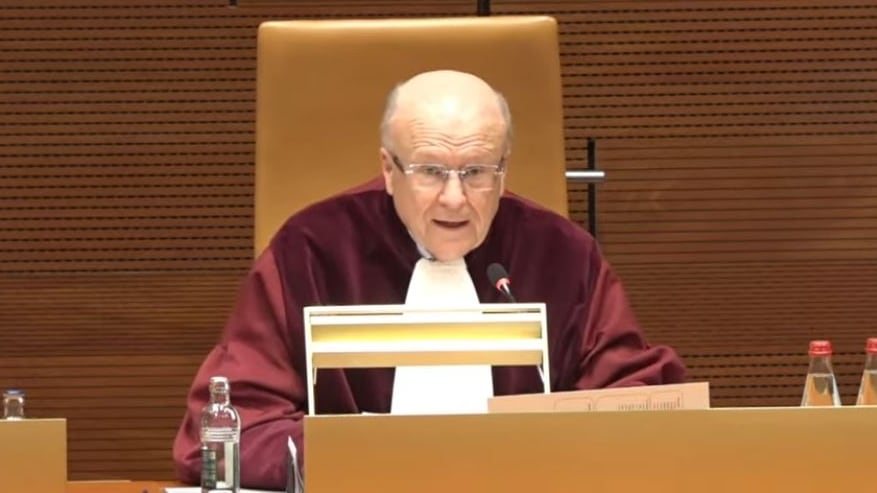
The European Court of Justice (ECJ) delivered a landmark ruling on Thursday, broadly upholding Spain's amnesty law for Catalan separatists involved in the 2017 independence bid. The decision, which has been eagerly awaited by hundreds of individuals facing legal proceedings, provides a significant legal victory for the Spanish government and the pro-independence movement, though it leaves the fate of key political figures temporarily unresolved.
The ECJ's judgment confirmed that the amnesty does not affect the European Union's financial interests or contravene the bloc's directive on combating terrorism. This effectively dismisses the main objections raised by Spanish judicial bodies and conservative political parties, who had argued that pardoning crimes such as misappropriation of public funds and terrorism-related offenses would undermine EU law. The court found that the Spanish law, as applied, did not meet the threshold for harming EU economic interests and was not in conflict with European anti-terrorism standards.
The ruling has immediate implications for hundreds of lower-profile individuals who were prosecuted for their roles in the 2017 referendum and subsequent declaration of independence. Many of these cases, ranging from civil disobedience to minor public order offenses, are now expected to be closed or dismissed under the amnesty's provisions. However, the ECJ's decision explicitly excludes two technical aspects related to the timing of the law's application, which Spanish legal sources indicate have already been resolved in domestic proceedings.
Despite the broad endorsement from Luxembourg, the most prominent figures in the Catalan independence movement—former regional president Carles Puigdemont and former vice president Oriol Junqueras—will not benefit immediately. Their cases remain under review by Spain's Constitutional Court, which is scheduled to issue its own ruling in October. The Constitutional Court is examining whether the amnesty law violates Spain's constitutional principles, including the separation of powers and the prohibition of amnesties for certain serious crimes. Until that decision is made, the legal status of Puigdemont, who remains a fugitive from Spanish justice, and Junqueras, who was previously convicted and sentenced, remains uncertain.
The ECJ's ruling was delivered in two separate opinions, both of which were made public on Thursday. Legal experts noted that the court's reasoning focused narrowly on EU law compatibility, leaving the broader constitutional questions to Spain's highest court. The Spanish government, led by Prime Minister Pedro Sánchez, has defended the amnesty as a necessary step toward political normalization in Catalonia, arguing that it promotes dialogue and reduces tensions. Opposition parties, particularly the conservative People's Party and the far-right Vox, have condemned the law as an attack on the rule of law and a concession to separatists.
In Catalonia, reactions were mixed. Pro-independence leaders welcomed the ECJ's decision as a validation of their political strategy, while unionist groups expressed disappointment and vowed to continue legal challenges. The ruling also has implications for the European arrest warrants issued for Puigdemont, who has been living in self-imposed exile in Belgium and other EU countries. While the ECJ's decision does not directly affect those warrants, it may influence how other EU member states interpret Spain's request for his extradition.
The amnesty law, passed by the Spanish parliament in 2024, was designed to cover all acts related to the 2017 independence process, including the organization of the illegal referendum and the subsequent declaration of independence. It has been one of the most controversial pieces of legislation in recent Spanish history, sparking mass protests and deep political divisions. The ECJ's ruling is seen as a crucial step in resolving the legal aftermath of the crisis, but the final chapter will be written by the Constitutional Court in October.
For now, the hundreds of individuals whose cases are covered by the amnesty can begin to see a path to legal closure. The Spanish judiciary will now have to apply the ECJ's ruling to individual cases, a process that is expected to take several weeks. Meanwhile, the political focus shifts to the Constitutional Court, where the fate of Puigdemont, Junqueras, and other senior leaders will be decided.
92