Large Wildfires Break Out in Southern France and Northern Greece
Nearly 600 firefighters are battling a wildfire near Perpignan in southern France, while separate blazes in northern Greece have forced evacuations and destroyed forested areas amid a prolonged drought in southern Europe.
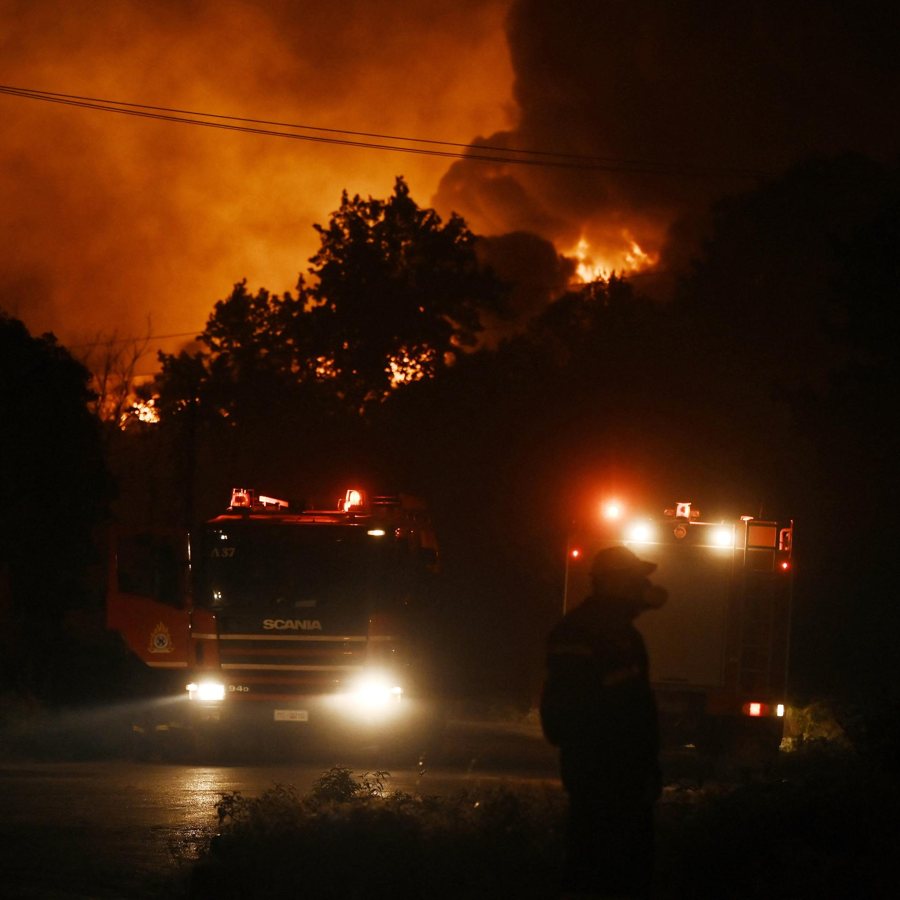
Southern Europe is facing a severe wildfire crisis as large blazes rage in both southern France and northern Greece, fueled by an ongoing drought that has left the region tinder-dry. In France, nearly 600 firefighters are battling a forest fire near Perpignan in the Pyrénées-Orientales department, where a remote mountainous area in Trévillach has been burning since the evening before, according to the local prefecture.
The fire in southern France has already consumed hundreds of hectares of pine forest and scrubland, with flames spreading rapidly due to strong winds and low humidity. Firefighting teams are struggling to access the rugged terrain, relying on water-dropping aircraft and ground crews to contain the blaze. No casualties have been reported so far, but several homes have been evacuated as a precaution, and authorities have warned residents in nearby villages to remain vigilant.
In northern Greece, separate wildfires have broken out near the city of Alexandroupolis and the island of Thasos, forcing the evacuation of several settlements. Greek firefighters, supported by water bombers and volunteers, are working to control the flames that have destroyed large swaths of forest and agricultural land. The Greek government has declared a state of emergency in the affected areas and called for assistance from European Union civil protection mechanisms.
The simultaneous outbreaks highlight the growing threat of wildfires across southern Europe, where climate change has intensified heatwaves and prolonged dry spells. Meteorologists warn that the current drought conditions are among the worst in decades, with rainfall levels far below average in many regions. This has created ideal conditions for fires to ignite and spread rapidly, overwhelming local firefighting resources.
In France, the fire near Perpignan is particularly challenging because of its location in a steep, rocky area that is difficult for ground crews to reach. The prefecture has deployed specialized mountain firefighting units and is coordinating with national emergency services. Helicopters and Canadair aircraft have been making repeated water drops to slow the advance of the flames, but officials say the fire is not yet under control.
Greek authorities have also faced difficulties, with strong winds fanning the flames and causing the fire to jump containment lines. In the Alexandroupolis region, the fire has burned close to residential areas, prompting the evacuation of at least three villages. The Greek Fire Service has reported that dozens of firefighters, along with vehicles and aircraft, are engaged in the effort, but the scale of the blaze has required international assistance.
The European Union has activated its Civil Protection Mechanism to coordinate support for Greece, with several member states offering firefighting aircraft and personnel. This cross-border cooperation reflects the increasing frequency and severity of wildfires in the region, which experts attribute to rising global temperatures and changing weather patterns.
Local authorities in both countries have urged residents to follow evacuation orders and avoid any activities that could spark new fires, such as outdoor burning or using machinery that generates heat. In France, the prefecture has banned access to several forested areas and imposed restrictions on agricultural work to reduce the risk of additional ignitions.
The economic and environmental toll of the fires is expected to be significant. In Greece, the destruction of forests and farmland will have long-term consequences for local communities, while in France, the loss of pine forests could affect tourism and biodiversity. Firefighting costs are also mounting, with both countries allocating additional funds to combat the blazes and support recovery efforts.
As the fires continue to burn, meteorologists predict little relief in the coming days, with temperatures remaining high and no significant rainfall expected. This has heightened concerns that the current crisis could escalate further, especially if new fires ignite in other parts of southern Europe that are also experiencing drought conditions.
The situation in southern France and northern Greece serves as a stark reminder of the growing wildfire risk in the Mediterranean region. Governments and emergency services are under pressure to improve prevention and response strategies, including better land management, early warning systems, and investment in firefighting infrastructure. For now, the priority remains on containing the existing blazes and protecting lives and property.
89