Oil Sheen Spreads From Sanctioned Tanker Stranded Off Oman
Satellite imagery shows a growing oil sheen around Oman's protected Hallaniyat Islands after a sanctioned tanker carrying Russian crude was stranded in June. Experts warn the vessel, loaded with more than 800,000 barrels, could break apart during monsoon season and trigger a major spill.
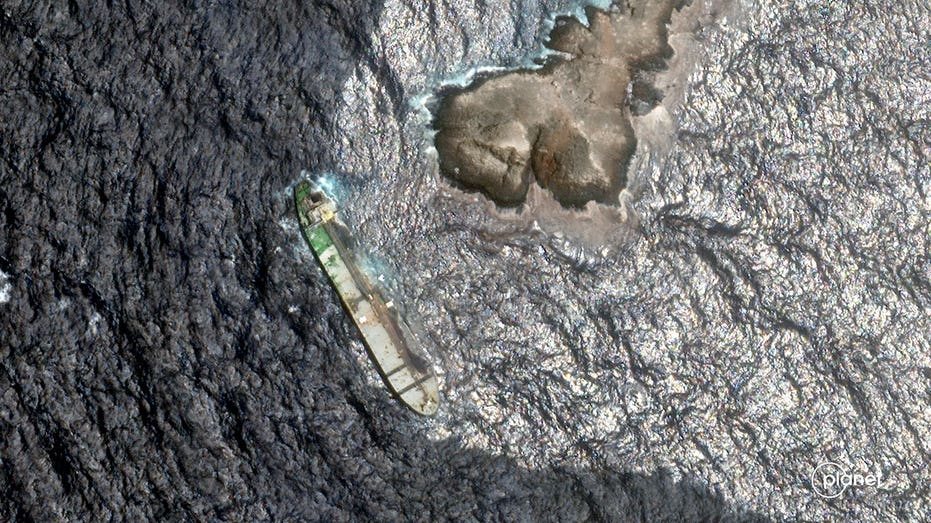
A sanctioned tanker carrying Russian crude is leaving a growing oil slick in protected waters off the coast of Oman, satellite imagery shows, as experts warn the stranded ship may break apart during the region's monsoon season.
The images reveal an oil sheen stretching across roughly 20 square kilometers — about 8 square miles — around Dhofar's Qibliyah Island in the Hallaniyat Islands, an Omani nature reserve. Dark patches of crude have also reached the shoreline, and analysts say the leak has strengthened in recent days.
«The last few days, the imagery indicates an increase in oil coming out, as the size of the sheen is growing,» said Wim Zwijnenburg, an environmental expert at the Dutch peace organization PAX. He said the main danger is that the vessel could split as strong winds and heavy seas batter its hull.
The vessel, the 899-foot, Cameroon-flagged Caroline Bezengi, has been stranded off Oman's southern coast since June, when its crew reported an explosion on board. Maritime security sources said the tanker first ran into trouble on June 8 near the Yemeni port of Mukalla, where initial assessments suggested a blast may have occurred. The cause has not been confirmed.
Ship-tracking data showed that the tanker had loaded Russian crude at the Black Sea port of Novorossiysk before its latest voyage. The vessel is under sanctions imposed by the United Kingdom, the European Union, Canada and Switzerland for allegedly carrying Russian oil as part of Moscow's «shadow fleet» — aging tankers used to evade Western sanctions introduced after Russia's invasion of Ukraine.
Zwijnenburg estimated that the tanker is carrying more than 800,000 barrels of crude. Recent imagery suggests at least one section of the hull has been breached, and other maritime specialists who examined the images said the vessel appears to be listing, increasing concerns that it could eventually break apart.
A large spill would hit a protected marine reserve in the Arabian Sea that is home to endangered petrels and other rare wildlife. Greenpeace Germany warned that oil has already polluted stretches of coastline and damaged the fragile ecosystem.
«With oil apparently continuing to leak and the tanker stranded in a difficult location, there is a serious risk of a much larger oil disaster, with even more devastating consequences for the region's coastlines and marine ecosystems,» said Nina Noelle of Greenpeace Germany.
The International Maritime Organization, the U.N. agency that oversees shipping safety, said this week it is monitoring the situation. It noted that the vessel has not broken apart, but that authorities are still assessing safety and environmental risks.
Oman's Ministry of Transport, Communications and Information Technology ordered the vessel's owners to remove the ship and its cargo by July 23. It is unclear whether that deadline was met or whether the owners have responded.
The incident highlights the dangers posed by the shadow fleet, a network of aging tankers that Russia has used to keep oil exports moving despite Western sanctions. If the tanker breaks apart in the coming weeks, experts say, the resulting spill could affect coastlines and marine life across a wide area of the Arabian Sea, complicating cleanup in a remote region already difficult to reach during monsoon conditions.