Pope Leone visits Lampedusa migrant cemetery, calls for a more humane world
Pope Leone made a historic visit to Lampedusa, praying at the migrant cemetery and urging the world to become more humane, in a powerful gesture highlighting the Mediterranean migration crisis.
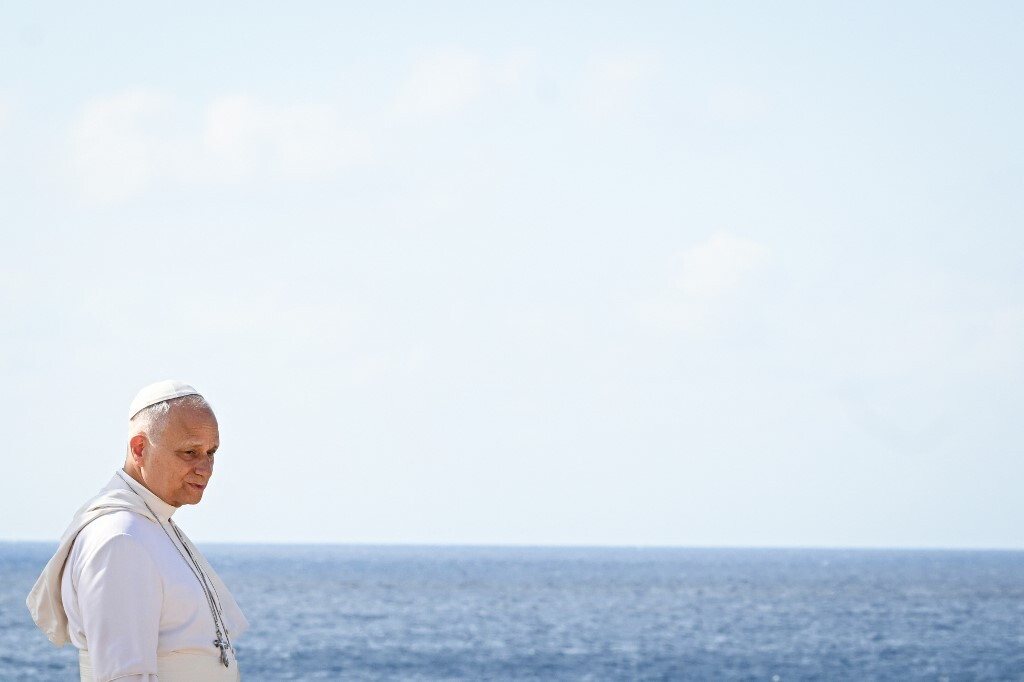
Pope Leone arrived on the Italian island of Lampedusa on Saturday for a pastoral visit of strong symbolic value, focusing entirely on the plight of migrants and the victims of the Mediterranean Sea. The pontiff used the trip to revive one of the key themes of his predecessor, Pope Francis, bringing the drama of forced migration back to the center of attention for the Church and the world.
Upon arrival at the airport, the Holy Father was welcomed by the highest religious and political authorities, including the Archbishop of Agrigento, Alessandro Damiano; Undersecretary Alfredo Mantovano; Sicilian Governor Renato Schifani; and the mayor of the island, Filippo Mannino. In his address to the mayor, the Pope emphasized the deep meaning of his presence on the island: «This is a place where, more than words, gestures speak. I did not come to make speeches, but to celebrate the Eucharist, the supreme sign of Christ's presence among us.»
The pontiff added: «The gesture of Jesus breaking the bread to give Himself gives meaning and strength to our daily gestures of assistance and sharing. Yes, this is a place where, more than words, gestures speak. But gestures, to be human, need a heart. That is why we have gathered here: to draw from Christ the love that only He can give us, so that the world of today and tomorrow may be more humane, for everyone.»
In a historic first, Pope Leone became the first world leader to visit the cemetery of Lampedusa, where migrants who died at sea and remain unidentified are buried. In one area of the cemetery, fifteen bare crosses stand. Among them, the cross of Youssef, a six-month-old baby from Guinea who drowned, is marked by a photo and a moving dedication from his parents. The Pope knelt to lay a wreath of flowers and observed a long moment of silent prayer. He was accompanied by Archbishop Damiano, the island's parish priest Don Carmelo Rizzo, and the vicar of Rome, Cardinal Baldo Reina.
The visit continued with a stop at Molo Favaloro, the concrete pier that has become a symbol of all the lives saved at Lampedusa. Here, the Pope blessed a plaque naming the pier after Pope Francis, which reads: «Pope Francis Pier, place of landing, hope, humanity.» After pausing before the monument dedicated to Bergoglio, Pope Leone greeted a group of migrants assisted by Red Cross workers.
Later, the Pope reached the Porta d'Europa (Gate of Europe) in the Cavallo Bianco area. The five-meter-high monument, facing Libya, is dedicated to those who have lost their lives at sea. Here, the Holy Father greeted a migrant family and a couple who had adopted a foreign boy, then walked through the gate alone, holding the hands of two children. An unscripted moment followed: after touching the artwork and looking at the sea, the Pope walked over the rocks to reach the shore, while the strong wind blew his papal zucchetto off, which was quickly retrieved.
The visit to Lampedusa comes at a time when migration remains a deeply divisive issue in Europe. The island, located just 113 kilometers from the coast of Tunisia, has been at the forefront of the Mediterranean migration crisis for decades, with tens of thousands of people arriving each year in search of safety and a better life. The cemetery visit, in particular, underscored the human cost of the crisis, as many of those buried there remain unidentified, their stories unknown.
Pope Leone's gesture was widely seen as a direct challenge to the growing trend of border fortification and anti-immigration policies across Europe. By choosing to visit the cemetery of the «invisible» victims, the pontiff sent a clear message about the need for compassion and solidarity. The Archbishop of Agrigento, Alessandro Damiano, described the visit as a message also against the concept of «remigration,» a term used by some political groups to advocate for the forced return of migrants.
The Pope's itinerary also included a blessing of the sea and a meeting with local fishermen, who have often been the first to rescue migrants in distress. The visit, though brief, was packed with symbolic acts that resonated far beyond the small island. It reaffirmed the Catholic Church's commitment to the most vulnerable and called on the international community to do more to prevent further loss of life in the Mediterranean.
77