Spain celebrates second World Cup title with Madrid parade after victory over Argentina
Spain won the 2026 FIFA World Cup, defeating Argentina in the final. The team returned to Madrid for a victory parade, with celebrations nationwide tempered by a tragic accident in Ciudad Rodrigo that killed a 13-year-old boy.
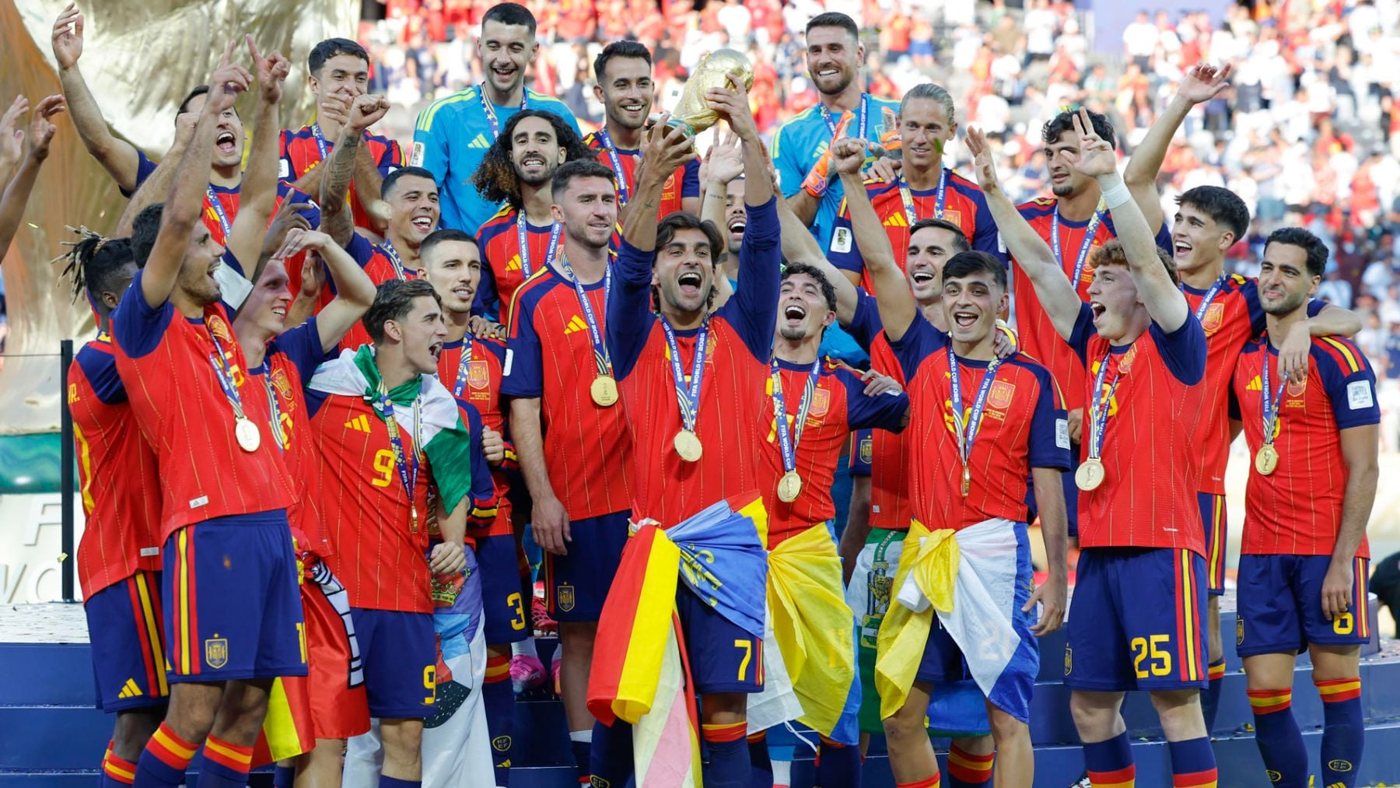
Spain is celebrating its second FIFA World Cup title after the national team defeated Argentina in the final, 16 years after its first triumph in South Africa. The victory, secured under coach Luis de la Fuente, sparked massive celebrations across the country, with thousands of fans flooding streets and gathering around giant screens to witness the historic moment. The team returned to Madrid on Monday for a victory parade culminating at the Plaza de Cibeles, the traditional venue for Spanish sporting triumphs.
The final, broadcast live on multiple channels, drew an average audience of 15.7 million viewers in Spain, with a peak of 17.1 million viewers at midnight, representing a 91.2 percent share. The match itself averaged 15.4 million viewers and an 86.3 percent share, while extra time, which ended with Spain's winning goal, reached 16.6 million viewers and an 89.3 percent share. Only the penalty shootout of the Spain-Portugal Euro 2012 semi-final, with 18.1 million viewers, ranks higher in Spanish television history.
Midfielder Rodrigo Hernández Cascante, known as Rodri, was named the tournament's Most Valuable Player. Rodri had previously been the best player at Euro 2024, which returned Spain to the top of international football. Despite a serious knee injury two years ago, he played a pivotal role in securing the World Cup title. His performance drew widespread praise from fans and analysts alike.
The celebrations, however, were overshadowed by a tragic accident in the town of Ciudad Rodrigo, Salamanca. A 13-year-old boy died and three other people were seriously injured when a fountain collapsed during the night's festivities. Local authorities expressed their condolences and urged caution during public gatherings.
In Foios, Valencia, the victory was especially meaningful because local native Ferran Torres scored the winning goal. Mayor Sergi Ruiz called it «historic that a son of the town gives the World Cup to Spain, something that will be remembered for decades.» Councillor for Sports Emma García said the win was «not only a victory for Spain, but a great milestone for Valencian sport and our town.» Torres himself said after the match that «destiny was made for us to win, far from our people.»
International reactions also highlighted the match. U.S. President Donald Trump said he congratulated Spain on having «a great team» and noted that the Spanish side «seemed to dominate» the final. Speaking from Andrews Air Force Base near Washington, D.C., Trump denied any tension with Spain despite months of disagreement over the Spanish government's refusal to raise defense spending to 5 percent of GDP. He had earlier claimed in July that Spain had «fully redeemed itself» after allegedly agreeing to make «numerous payments» to NATO.
Global media outlets were critical of Argentina's conduct during and after the final. Many described the Argentine team's behavior as unsportsmanlike, with images circulating of players turning their backs on the podium while Spain lifted the trophy. Reports referred to Argentina's performance as «an insult to football» and labeled the team «criminals» for their rough play and poor sportsmanship.
The victory parade in Madrid is scheduled to include visits to the Royal Palace of Zarzuela and the Moncloa Palace, followed by an open-top bus tour through the capital's streets. Fans are expected to line the route, waving flags and chanting in support of the team. The celebration marks the culmination of a tournament that saw Spain dominate from the group stage through to the final, showcasing a blend of experienced stars and emerging talent.
Spain's World Cup win adds a second star to the national team's crest, cementing its place among the elite of world football. The triumph also reinforces the legacy of Luis de la Fuente, who took over the team after the 2022 World Cup and has since built a cohesive, attacking unit that has captured the imagination of fans worldwide.