Spain Reaches World Cup Quarterfinals, Eliminates Cristiano Ronaldo
A late goal by substitute Mikel Merino, assisted by Ferrán Torres, secured Spain's victory over Portugal in a tense Round of 16 match, ending Cristiano Ronaldo's World Cup journey and sending Spain to the quarterfinals.
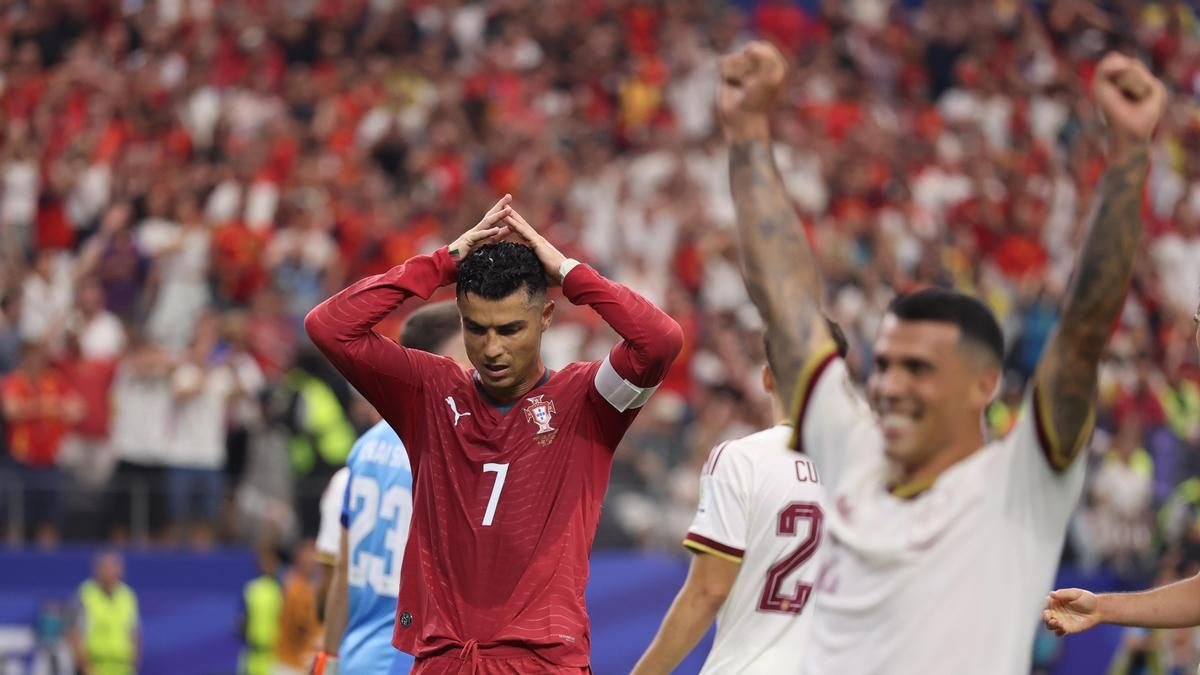
Spain advanced to the World Cup quarterfinals with a hard-fought 1-0 victory over Portugal, a result that also marked the end of Cristiano Ronaldo's storied World Cup career. The decisive goal came from substitute Mikel Merino, who headed home a cross from fellow substitute Ferrán Torres in the closing stages of a tightly contested match.
The encounter, a repeat of the 2010 Round of 16 clash in Cape Town, lived up to its billing as a tense Iberian derby. Both teams struggled to assert dominance, with Portugal creating several dangerous chances, particularly from set pieces. A poorly defended corner almost cost Spain when Nuno Mendes struck the crossbar after a scramble in the box.
Spain's defense, however, held firm, keeping their fifth consecutive clean sheet in the tournament. Goalkeeper Unai Simón was called into action on multiple occasions, dealing with shots from Bruno Mendes, Vitinha, and João Neves. The Spanish backline, organized and disciplined, repelled Portugal's advances, especially in the second half when the Portuguese side pushed forward in search of an opener.
The match's turning point came in the 50th minute when Portugal's standout left-back, Nuno Mendes, was forced off with an injury after a duel with Lamine Yamal. Mendes had been a key figure, winning most of his battles against the young Spanish winger, but his departure visibly unsettled the Portuguese defense. Spain immediately capitalized, creating three consecutive chances that resulted in corners.
Lamine Yamal, at 18 years old, was a constant threat on the right flank, though he found Mendes a formidable opponent until the injury. On the other side, Dani Olmo orchestrated attacks from the midfield, while Rodri and Pedri struggled to impose their usual control. Portugal, meanwhile, relied on the experience of Cristiano Ronaldo, now 41 and playing in his sixth World Cup, but he was largely contained by Spain's central defenders.
The goal finally arrived when Ferrán Torres, who had entered the game as a substitute, delivered a precise cross from the left. Mikel Merino, another late addition, rose above the Portuguese defense to head the ball past goalkeeper Diogo Costa. The strike sent Spanish fans into celebration and effectively ended Portugal's hopes of a comeback.
For Portugal, the defeat brings a close to an era. Cristiano Ronaldo, who had announced this tournament as his last, leaves the World Cup stage without adding to his legacy. His frustration was evident as he left the pitch, a stark contrast to the jubilant Spanish celebrations. The Portuguese team, which had struggled to find its best form throughout the tournament, could not replicate the resilience shown in their previous match against Croatia.
Spain now awaits the winner of the quarterfinal tie against Austria, a team they defeated in the group stage. Coach Luis de la Fuente praised his squad's depth and resilience, noting that the substitutes made the difference. «This team has character,» he said after the match. «We knew it would be difficult, but we believed until the end.»
The victory extends Spain's strong run in the tournament, having not conceded a goal since the opening match. Their defensive solidity, combined with the ability to create chances from the bench, makes them a formidable opponent for any remaining team. For Portugal, the focus will now shift to rebuilding after the departure of their talismanic captain.
As the final whistle blew, the contrast was stark: Spanish players embraced on the pitch, while Ronaldo walked off alone, his World Cup journey finally over. The match, a classic of the Iberian rivalry, will be remembered for its tension, its tactical battle, and the moment a substitute wrote his name into Spanish football history.
81