Trump Lashes Out at European Allies at NATO Summit
President Trump criticized European allies for not joining the war in Iran, called Spain 'hopeless,' and reiterated his desire to control Greenland, casting a pall over a critical NATO summit.
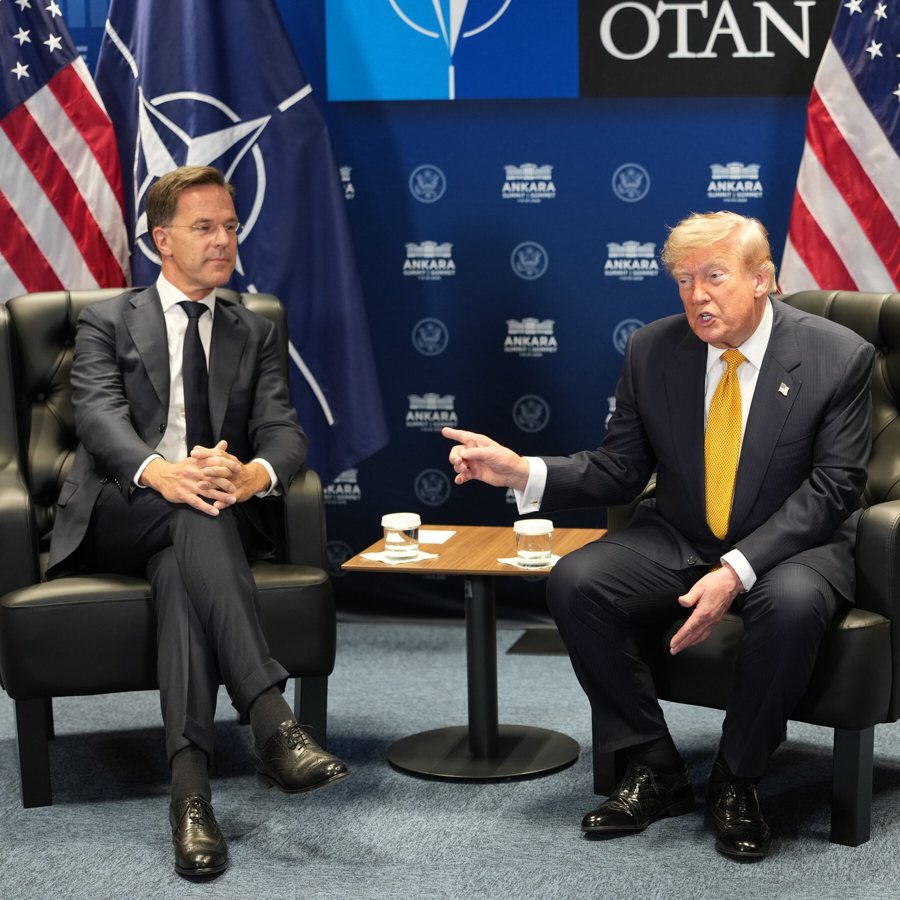
President Donald Trump launched a series of sharp attacks on European allies during the NATO summit in The Hague on Wednesday, accusing them of failing to contribute to the war in Iran and dismissing Spain as «hopeless.» His remarks cast a pall over a meeting that was intended to solidify the alliance’s future direction and address key security challenges.
Speaking to reporters after a closed-door session with NATO leaders, Trump singled out several member states for what he described as insufficient military spending and a lack of commitment to collective defense. He specifically criticized Spain for its low defense budget, calling the country «hopeless» and suggesting it was not pulling its weight within the alliance.
The president also repeated his long-standing desire to acquire Greenland, an autonomous territory of Denmark, stating that the United States needed the island for strategic purposes. This remark, which he first made public in 2019, drew puzzled reactions from European diplomats, who viewed it as a distraction from the summit’s agenda.
Trump’s comments came amid ongoing tensions over the war in Iran, where the United States has been leading a military campaign since 2025. The president accused several European allies, including Germany and France, of not providing adequate military support for the operation, despite their diplomatic backing. «They talk a good game, but when it comes to action, they’re nowhere to be found,» Trump said.
The summit, which was originally scheduled to focus on NATO’s strategic concept and responses to threats from Russia and China, was overshadowed by Trump’s outburst. European leaders expressed frustration privately, with some describing the president’s remarks as unhelpful and divisive. One senior European diplomat, speaking on condition of anonymity, said the comments risked undermining the alliance’s unity at a critical time.
NATO Secretary General Jens Stoltenberg attempted to steer the conversation back to the alliance’s achievements, noting that European members had increased defense spending in recent years. However, Trump dismissed those figures, arguing that the increases were insufficient and that the United States was still bearing an unfair share of the burden.
The president’s criticism extended beyond defense spending. He also reiterated his demand that NATO allies increase their contributions to the war in Iran, which has become a major point of contention within the alliance. While some European nations, such as the United Kingdom and Poland, have provided troops and equipment, others have limited their involvement to humanitarian aid and diplomatic support.
Trump’s remarks on Greenland were met with bemusement by Danish officials, who reiterated that the territory was not for sale. Danish Prime Minister Mette Frederiksen, who was not present at the summit, issued a statement reaffirming Denmark’s sovereignty over Greenland and expressing hope that the United States would respect it.
The summit also addressed other pressing issues, including the war in Ukraine and the growing influence of China. However, Trump’s comments dominated the news cycle, drawing attention away from the substantive discussions. Analysts noted that the president’s approach could further strain transatlantic relations, which have already been tested by trade disputes and disagreements over climate policy.
Despite the tensions, the summit concluded with a joint communiqué reaffirming NATO’s commitment to collective defense and support for Ukraine. The document also called for increased defense spending by all member states, a long-standing demand of the Trump administration. However, the president’s public criticism of allies left a sour taste for many participants, raising questions about the alliance’s ability to present a united front in the face of global challenges.
As the summit ended, Trump departed for a bilateral meeting with Turkish President Recep Tayyip Erdogan, where the two leaders were expected to discuss Turkey’s role in the Iran conflict and its recent military operations in Syria. The meeting was seen as an opportunity to mend fences, but Trump’s earlier comments suggested that tensions within the alliance were far from resolved.
85