Trump Says US and Israel Suspend Planned Strikes Against Iran
President Donald Trump said the United States and Israel have agreed to suspend planned strikes against Iran after requests from Tehran and other Middle Eastern countries, provided a diplomatic agreement can be reached quickly. The decision follows threats of massive attacks and intense regional pressure for de-escalation.
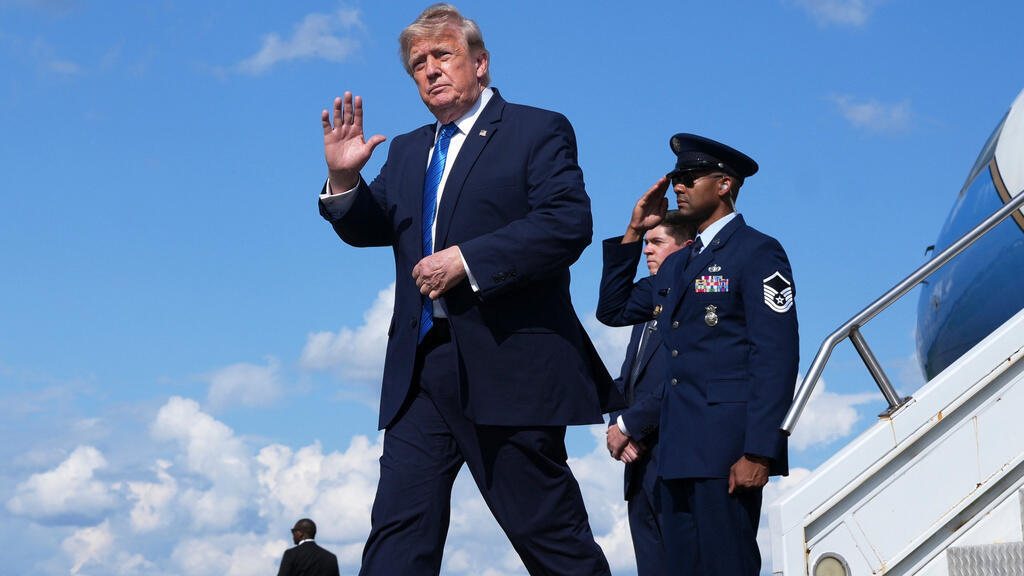
President Donald Trump announced Saturday that the United States and Israel have agreed to suspend fresh strikes against Iran, saying the decision came after Tehran and other Middle Eastern countries urged Washington to hold off and on condition that a diplomatic agreement is reached quickly.
In a message on his Truth Social platform, Trump said the United States remained ready to strike the Islamic Republic with a level of force « never seen since World War II », but agreed to pause after being asked by Iran and other regional states. « On the basis of this request, I accepted to cancel the attack, subject to being able to quickly reach an agreement. Israel joins me in this commitment », he wrote.
The announcement marked a sharp shift from the previous day, when Trump threatened during a cabinet meeting to hit Iran « very hard ». U.S. media reported that Washington had been considering new massive bombardments over the weekend, with possible joint strikes targeting Iranian oil refineries and power plants. The State Department had also advised American citizens to consider leaving the Middle East over the risk of a broader regional war.
Trump attached clear conditions to the pause. In his statement, he said an agreement must include the « complete and total opening » of the Strait of Hormuz, a vital route for global oil shipments, as well as an end to Iran's nuclear threat. He stressed that any deal would need to be concluded quickly.
Saudi Arabia played a visible role in the diplomatic push. According to a report citing unnamed U.S. officials, Saudi Crown Prince Mohammed bin Salman called Trump shortly before the announcement to express concern about the planned strikes. A source familiar with the call said the Crown Prince urged Trump to de-escalate and refrain from launching attacks.
Secretary of State Marco Rubio, speaking to Fox News before Trump's announcement, said Iran's military capabilities had been weakened and that Iranian officials were « now willing, and in some cases seem impatient, to reach an agreement on denuclearization ».
The confrontation began on February 28 with coordinated U.S.-Israeli strikes against Iran, which responded with missile and drone attacks across the region. Despite a memorandum of understanding signed in mid-June to pave the way for peace talks, new reciprocal strikes took place in early and late July.
A separate report by the Washington Post said a senior U.S. general, Alexus Grynkewich, who commands U.S. forces in Europe, warned Pentagon leadership in a letter that there were not enough warships deployed in the Middle East to protect Israel from Iranian missile attacks. The warning underscored the strain on American military resources after months of exchanges.
For now, the announced suspension remains conditional. Trump said the United States was still ready to strike at a scale not seen since World War II, and his message suggested that attacks could resume if negotiations fall through. The coming days are likely to show whether the pause can hold and whether Iran's leadership is ready to negotiate in earnest.