Bronze Horse Sculpture by Gonzalo Lebrija Installed in Madrid's Plaza del Carmen
A 6.3-metre bronze horse by Mexican artist Gonzalo Lebrija, titled «El rumor de la discordia», has been installed in Madrid's Plaza del Carmen, challenging traditional equestrian monuments and adding a new contemporary art landmark to the city centre.
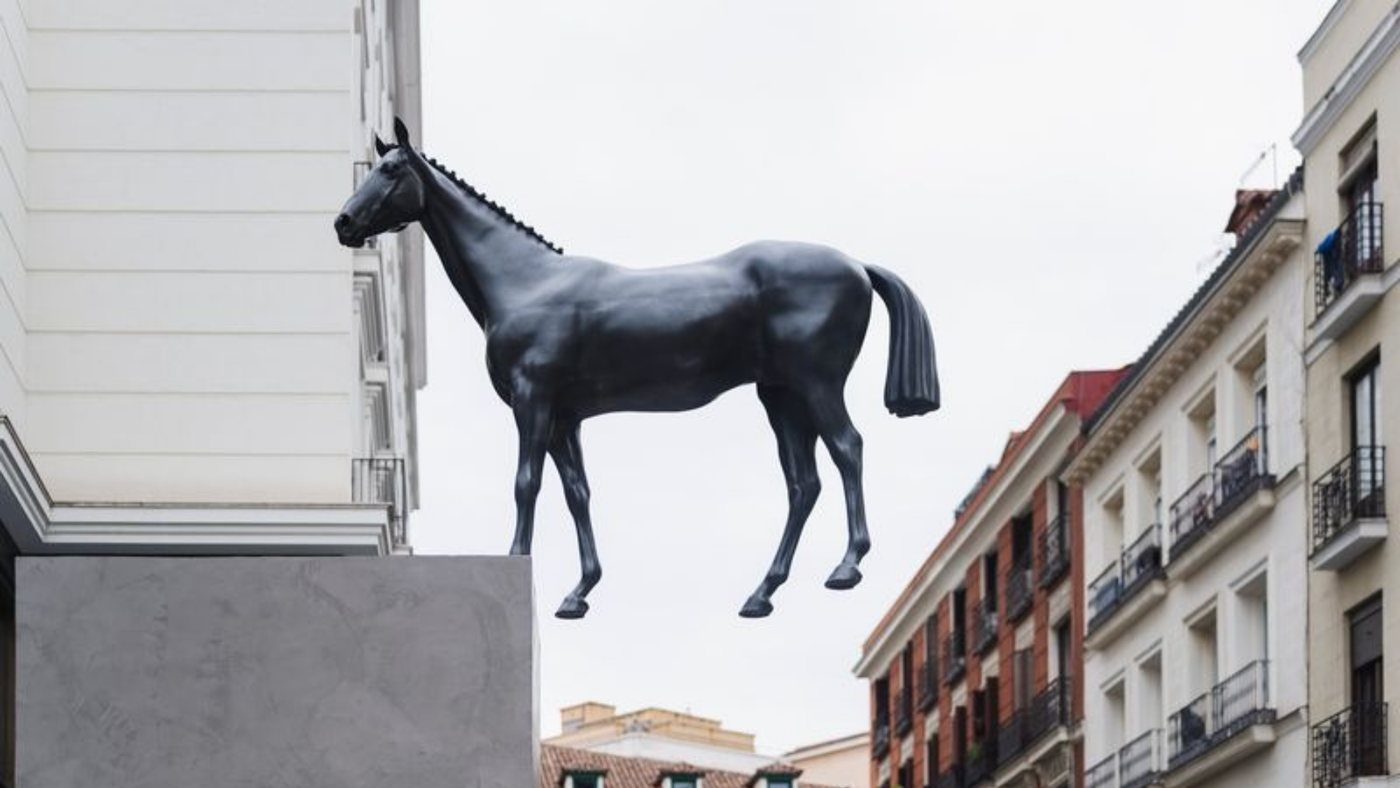
A monumental bronze horse measuring 6.3 metres in height has been installed in Madrid's Plaza del Carmen, transforming the central square into a new focal point for contemporary art. The sculpture, titled «El rumor de la discordia», is the work of Mexican artist Gonzalo Lebrija and was brought to the location by the Thompson Madrid hotel in collaboration with the Travesía Cuatro gallery.
The piece breaks with the traditional image of equestrian monuments. Rather than depicting a historical figure or commemorating a victory, it shows a thoroughbred horse with a bridle but no saddle, reins or rider. The animal stands at one end of a large concrete pedestal, far from the centre, as if caught in a moment of uncertainty — about to reach the middle but never quite arriving. The absence of a human figure reinforces the sense of contained movement and leaves the interpretation open to those who stop to contemplate it.
Gonzalo Lebrija was born in Mexico City in 1972 and lives in Guadalajara. His artistic career spans photography, video and sculpture, exploring themes of time, destiny, chaos and the perception of events. In «El rumor de la discordia», these concerns materialise in a figure that appears suspended in time, inviting reflection on the fleeting instant between one event and the next. Lebrija's work has been shown at institutions including the Museo Jumex, the Museo Tamayo, the SCAD Museum of Art and the Museo Reina Sofía.
The installation is part of the Thompson Madrid hotel's commitment to bringing contemporary art and culture into urban space, realised through its collaboration with Travesía Cuatro, a gallery with a presence in Madrid, Guadalajara and Mexico City. The sculpture expands the artistic offering of the capital's centre with a proposal that differs markedly from the historical monuments more commonly found there. Its size, the contrast between bronze and concrete, and the unusual position of the horse make it stand out in a heavily frequented square.
The work has quickly become a draw for passers-by, who stop to photograph the piece. By placing a contemporary sculpture in a public plaza rather than inside a museum, the project adds a new point of interest for both madrileños and visitors, and raises questions about how public space commemorates the past — and what it might choose to mark instead.
5