Dolly Parton Turned Appalachian Memory Into a Shared American Language
Her songs carried family memory, work, faith-inflected storytelling and mountain identity into the mainstream without reducing them to nostalgia. That cultural translation was one of her deepest achievements.
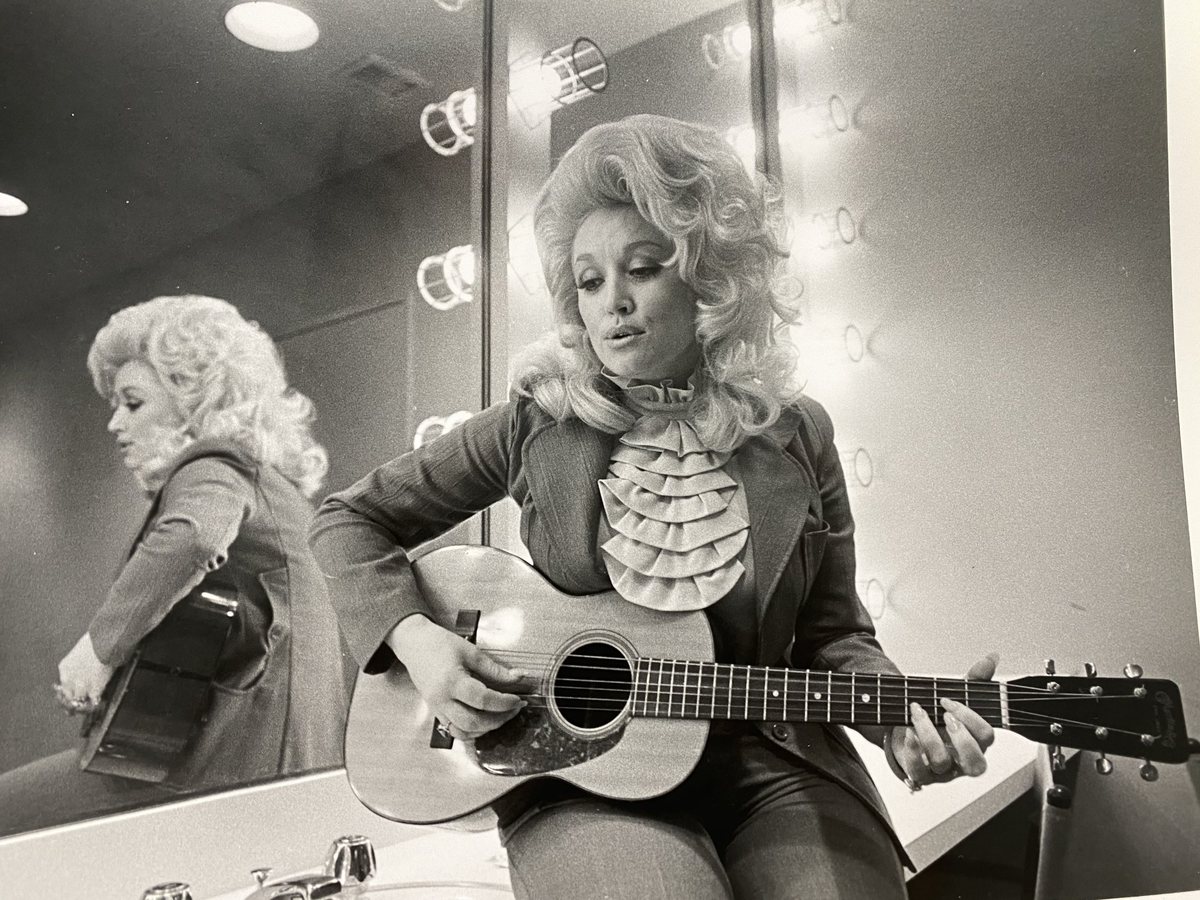
Dolly Parton’s rhinestones were never the opposite of her roots. They were one of the ways she carried those roots into public life. Behind the deliberately theatrical image was a songwriter who returned again and again to childhood, family, work, dignity, ambition and the moral language of the Tennessee mountains.
Parton died in Nashville at age 80, but a useful measure of her legacy begins with the stories she chose to preserve. Born in Locust Ridge in 1946, the fourth of 12 children, she grew up in Appalachia in a family where music passed through church, home and oral tradition. Her mother sang, her grandfather was a preacher and musician, and Parton was performing publicly by childhood.
The move into professional entertainment came early. She appeared at the Grand Ole Opry at 13, moved to Nashville after high school and joined The Porter Wagoner Show in 1967. The syndicated program turned her into a national country figure. Yet her most enduring work emerged as she learned how to step out from within that successful partnership.
“Coat of Many Colors” is central to understanding what Parton did with memory. The song retold a childhood episode in which classmates mocked the patchwork coat her mother made for her. Parton did not romanticize poverty. She retained the humiliation, but she placed beside it the family’s different measure of value. The result could be heard as autobiography and as a broader story about dignity.
The same economy shaped the songs of her first great creative peak. “Joshua” became her first solo country No. 1 in 1971. In 1974, “Jolene,” “Love Is Like a Butterfly” and “I Will Always Love You” all topped the country chart. The Country Music Hall of Fame describes the early-to-mid-1970s as the most creatively fertile phase of Parton’s country career.
“I Will Always Love You” was written not about a romance but about leaving Porter Wagoner’s show. That origin matters because the song turns separation into a moral act: gratitude and independence are allowed to exist together. Parton’s recording reached No. 1 in 1974 and again in a new version in 1982. Whitney Houston’s 1992 cover changed the scale and sound of the song, while preserving its emotional architecture.
The next stage of Parton’s career tested whether a regional artist could become a mainstream figure without treating home as something to escape. “Here You Come Again” reached No. 3 on the pop chart in 1977 and helped bring her first Grammy. She was named CMA Entertainer of the Year in 1978. In “9 to 5,” she entered Hollywood through a story about office workers rather than abandoning the concerns of ordinary labor. The title song became a No. 1 pop and country hit and won two Grammys. “Islands in the Stream” with Kenny Rogers topped three major charts in 1983.
Parton’s visual identity followed a similar moral logic. Country Music Hall of Fame materials describe how industry figures warned that her flamboyant clothes might overshadow her talent. She refused to flatten herself into an image someone else considered respectable. The style was artificial in the literal sense—carefully made—but deeply authentic in the older sense of being self-authored.
Her philanthropy turned personal memory into public infrastructure. In 1995 she founded the Imagination Library because her father had never learned to read or write. The program sends books directly to young children, and by August 2026 it had distributed more than 330 million worldwide. In her home region, she also used her resources for disaster relief, including the My People Fund after the 2016 wildfires.
Dollywood offered another form of stewardship. The park that took her name in 1986 turned East Tennessee heritage into a major economic and cultural destination. It became the state’s most-visited tourist attraction and regularly welcomed more than two million visitors a year.
Parton received major institutional honors, from the Country Music Hall of Fame and National Medal of Arts to the Kennedy Center and the Rock & Roll Hall of Fame. Yet the more revealing recognition may be the range of artists the Rock Hall places in her line of influence: Emmylou Harris and Alison Krauss, but also Taylor Swift, P!NK and Jack White.
Her achievement was not to make Appalachia picturesque for outsiders. It was to insist that its stories belonged in the center of American culture—and that ambition did not require embarrassment about where one came from. In that sense, the songs remain more than entertainment. They are acts of cultural memory that learned how to travel.
61