Picasso's Guernica Returned to Spain 45 Years Ago Aboard a Regular Iberia Flight
On 10 September 1981, Iberia flight 0952 from New York landed in Madrid carrying Picasso's Guernica in its cargo hold, ending more than four decades of exile and a complex negotiation involving the artist's heirs and the Museum of Modern Art.
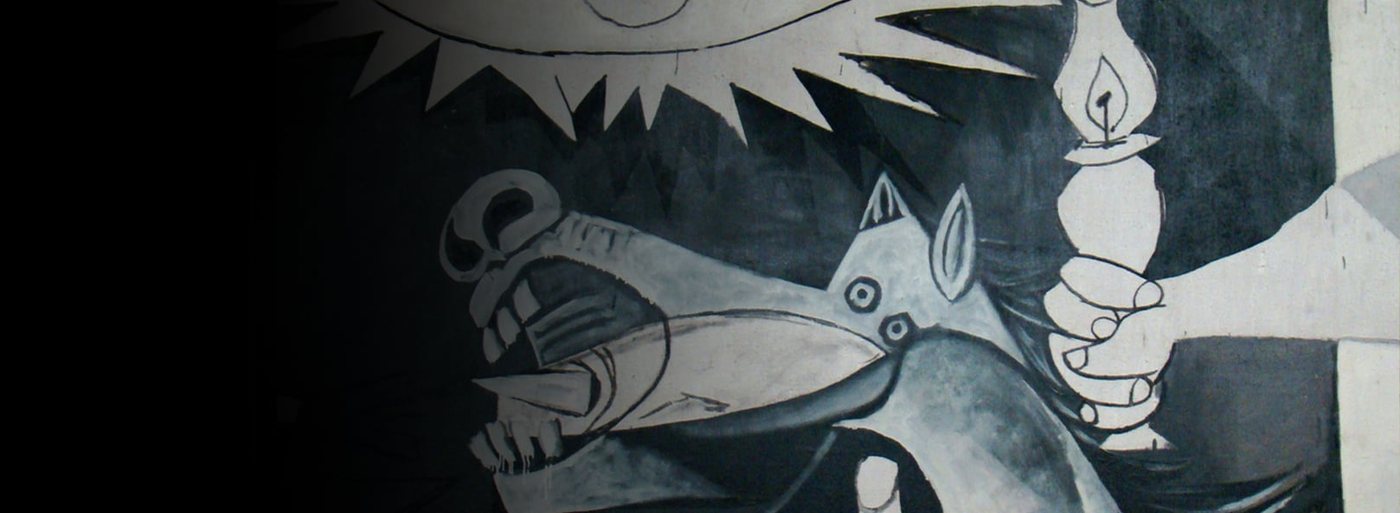
At 8:27 on the morning of 10 September 1981, Iberia flight 0952 from New York touched down at Madrid's Barajas airport. In the cargo hold of the Boeing 747, dismantled from its stretcher, rolled up and packed in a custom-built wooden crate, was Pablo Picasso's Guernica. The painting was returning to Spain after more than forty years on deposit at the Museum of Modern Art in New York, and the operation had been carried out with such discretion that most of the more than 300 passengers on board had no idea what they were accompanying.
They learned of it only when the captain, Juan López Durán, addressed them over the public address system: «Ladies and gentlemen, welcome to Madrid. I have to tell you that you have been accompanying Picasso's Guernica on its return to Spain.» On the tarmac, dozens of people had gathered to witness the historic arrival. Staff at the Museum of Modern Art had worked through the night to ensure the transfer was safe and caused no damage to the canvas.
The so-called Operation Guernica was enormously complex, requiring the Spanish authorities to overcome a series of obstacles that were resolved only gradually. One of the key figures in the negotiations was Javier Tusell, then director general of Artistic Heritage, Archives and Museums, whose role proved decisive both in the diplomatic talks with the Museum of Modern Art and in establishing the legitimate ownership of the work and the rights over it. He also handled negotiations with the heirs of Pablo Picasso.
According to Genoveva Tusell, author of a study on the painting's recovery, the first obstacle was a condition imposed by Picasso himself. In a document drafted in 1970, the artist set out the terms under which the painting could come to Spain, the principal one being that democracy must exist in the country. The first attempt to recover the work had in fact been made in 1968, under Franco's dictatorship, when the Museum of Spanish Contemporary Art was under construction and officials believed the Guernica could become its centrepiece. That failed attempt prompted Picasso to put his conditions in writing. He initially specified that the painting would return when the Republic was restored, but his lawyer advised a broader formula: «when public liberties are restored», meaning any democratic regime, whether a republic or the parliamentary monarchy that eventually took shape.
By the late 1970s, the Transition was under way. The Spanish Constitution had been approved, the first democratic elections since the 1930s were being held, and other social freedoms were being secured. The situation grew more complicated in 1979, when Picasso's heirs entered the process after settling the artist's estate. They wrote to the Museum of Modern Art asking to be consulted on any decision concerning the work, so Spain now had to negotiate with both the museum and the family while also proving that the Spanish state was the painting's legitimate owner.
Genoveva Tusell describes Maya Picasso, the artist's daughter, as the most combative of the heirs, a position that made sense given that she had been a child when the Guernica was painted and had often been in her father's studio. In an exchange of letters with the director general of Fine Arts, Maya repeatedly pressed for verification that democratic conditions existed in Spain. At one point she told him that if Spain were truly democratic it should have a divorce law, and he responded by sending her the draft divorce bill that was about to be debated in the Congress of Deputies. Years later, around 2004, the two met in Barcelona and embraced, with Maya remarking on how fiercely they had fought over the Guernica.
A further hurdle was proving Spanish ownership. The Guernica had been commissioned by the Republic for the Spanish pavilion at the 1937 International Exposition in Paris and was paid for, but no receipt for the payment or record of the amount survived. The career diplomat Rafael Fernández Quintanilla was appointed ambassador on a special mission in Paris precisely to find documentation proving the painting belonged to Spain. He located it in the archives of Luis Araquistain, who had been ambassador for the Spanish Republic.
57