Tim Curry Dies at 80, Leaving a Legacy of Masks, Villains and Reinvention
The actor behind Frank-N-Furter and Pennywise spent five decades turning theatrical excess, menace and humor into a distinctive cultural language.
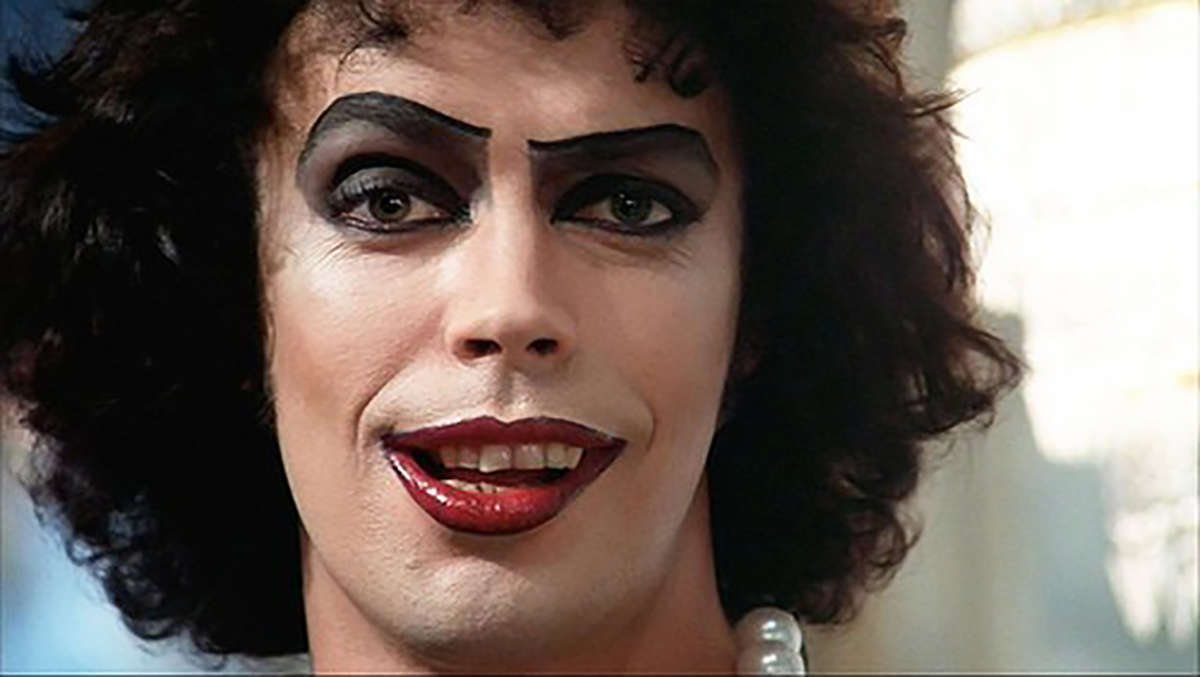
Tim Curry, the English actor whose career repeatedly blurred the line between the comic, the frightening and the theatrical, has died at the age of 80. TMZ reported his death on Wednesday, followed by People and other outlets. No cause of death was immediately announced.
Curry will be remembered first by many as Dr. Frank-N-Furter in “The Rocky Horror Picture Show.” The role began for him not as a movie performance but on the London stage in Richard O’Brien’s “The Rocky Horror Show” in 1973. When he carried it into the 1975 film, he helped create a figure that would outlive the era’s fashion and become part of a long-running ritual of midnight screenings.
Frank-N-Furter was outrageous by design: corset, stockings, makeup, scientific ambition and unapologetic appetite. Yet Curry’s performance endured because the spectacle was not empty. He gave the character command. Audiences who gathered for “Rocky Horror” found a space where convention could be suspended for a few hours, where gender, desire and identity could be played with in public, and where the person who looked most unconventional could also be the person in complete control of the room.
That cultural inheritance sits alongside another Curry image that could hardly be more different. In the 1990 television adaptation of Stephen King’s “It,” he played Pennywise, the clown-shaped face of an ancient evil. The costume was relatively simple. What made the character frightening was Curry’s ability to let friendliness curdle into menace. His Pennywise became a childhood fear for a generation and remained the defining screen version for decades.
Between those poles, Curry built a wide career. He was Rooster Hannigan in “Annie,” Wadsworth in “Clue,” the suspicious Plaza Hotel concierge in “Home Alone 2: Lost in New York,” and a supporting presence in films including “The Hunt for Red October,” “Muppet Treasure Island” and “Scary Movie 2.” His villains often had wit; his comic characters often carried a hint of danger.
His voice work widened the range further. Curry won a Daytime Emmy for “Peter Pan and the Pirates” and became a prolific presence in animation. In games, he played Soviet Premier Anatoly Cherdenko in “Command & Conquer: Red Alert 3” and voiced Arl Rendon Howe in “Dragon Age: Origins.” The voice alone could communicate vanity, threat and amusement.
The stage was never merely a starting point. Curry received three Tony Award nominations and two Olivier Award nominations, an achievement that reflects a theatrical career sometimes overshadowed by the cult status of his screen roles.
In 2012, a major stroke left him partially paralyzed. Curry had to relearn speech, a particularly stark challenge for an actor whose voice had been one of his greatest instruments. He reduced his public schedule but did not vanish from work or from the communities that had formed around his performances. He continued selected voice roles and fan appearances.
In 2025, Curry published “Vagabond,” a memoir that returned to his stage beginnings, his screen life and the years after the stroke. The book arrived as a kind of retrospective from an actor who had spent much of his career protecting his private life even while playing characters built for public attention.
Curry’s legacy is not easily reduced to nostalgia. His most famous roles continue to ask questions about masks and identity, fear and desire, authority and performance. They are exaggerated figures, but exaggeration can reveal truths that realism leaves hidden.
The actor’s death closes a singular career. The rituals around his work continue: another “Rocky Horror” screening, another horror marathon, another player discovering that familiar voice in an older game. Curry’s characters remain theatrical masks, but they have become part of the cultural memory worn by generations of audiences.
59