Andy Burnham confirmed as UK Labour leader, set to become next prime minister
Andy Burnham has been confirmed as the new leader of the UK's Labour Party, positioning him to become the next prime minister after a landslide election victory. His leadership is seen as a bid to restore political stability and counter the rise of Nigel Farage's Reform UK party.
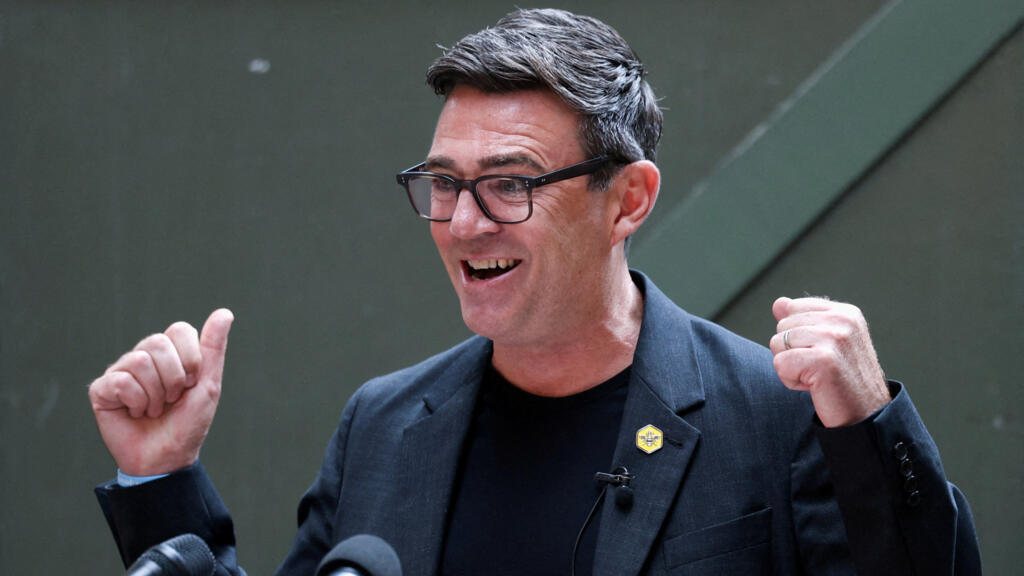
Andy Burnham was confirmed on July 17 as the new leader of the UK's ruling Labour Party, setting the stage for him to become the next prime minister after a decisive electoral victory. The 56-year-old former Greater Manchester mayor and longtime MP for Makerfield, a constituency near Manchester, won a landslide in a snap general election, securing his position as the party's standard-bearer. His ascension marks the seventh change of prime minister in Britain in a decade, reflecting a period of intense political turbulence.
In his first speech as leader, Burnham vowed to «give hope back» to the British people, striking a tone of unity and pragmatism. «Whether you're Labour or not, I will serve every person in this country,» he said, emphasizing his commitment to bridging divides. He outlined a five-point plan focused on economic recovery, public service reform, and national cohesion, though detailed policy proposals are expected in the coming weeks. The speech was delivered in Manchester, a city that has become synonymous with his political identity and where he served as mayor for eight years.
Burnham's leadership comes at a critical juncture for the UK, which has faced a series of challenges including a cost-of-living crisis, strained public services, and growing public disillusionment with mainstream politics. His victory is widely seen within Labour as the party's best chance to counter the rising influence of Nigel Farage's anti-immigration Reform UK party, which has gained traction by tapping into voter frustration. Labour MPs have expressed confidence that Burnham's centrist, pragmatic approach can win back voters who have drifted toward populist alternatives.
Known as the «King of the North,» Burnham built his reputation as a hands-on mayor who championed regional devolution and infrastructure investment. His tenure in Greater Manchester included overseeing the city-region's response to the COVID-19 pandemic, during which he frequently clashed with the Conservative government over lockdown policies and funding. This experience has bolstered his image as a leader willing to stand up for his region, a quality that resonates with voters outside London. His transition from mayor to prime minister is unprecedented in modern British politics, underscoring the fluidity of the current political landscape.
The snap election that brought Burnham to power was called after the previous Labour government under Sir Keir Starmer lost its majority amid internal divisions and declining public support. Starmer, who had led the party since 2020, stepped aside after a series of by-election defeats and a rebellion within his own ranks. Burnham, who had long been seen as a potential successor, quickly consolidated support from both the party's centrist and left-leaning factions, presenting himself as a unifying figure. His campaign emphasized stability, competence, and a break from the infighting that had plagued Labour in recent years.
Burnham's political career began in the early 2000s, when he served as a minister in Tony Blair's and Gordon Brown's governments, holding portfolios including health and culture. He was a key figure in the 2012 London Olympics and later returned to Parliament after a brief stint outside frontline politics. His mayoralty in Manchester, which began in 2017, gave him a platform to advocate for greater regional autonomy and to demonstrate his administrative skills. He has also been a vocal critic of austerity policies, arguing that they have hollowed out public services and exacerbated inequality.
The international reaction to Burnham's victory has been cautiously optimistic, with European leaders expressing hope for renewed cooperation on trade and security. The UK's relationship with the European Union has been strained since Brexit, and Burnham has signaled a desire to «reset» ties while respecting the 2016 referendum result. Domestically, his immediate challenges include addressing the National Health Service's waiting lists, housing shortages, and the transition to net-zero emissions. His five-point plan is expected to prioritize these issues, though specific funding mechanisms remain unclear.
Political analysts note that Burnham's success will depend on his ability to manage the diverse coalition that elected him. While he enjoys broad support within Labour, he must also navigate a fragmented opposition, including the Conservatives, who are regrouping after their worst electoral performance in decades, and Reform UK, which is positioning itself as a disruptive force. Burnham's first test will be the upcoming budget, where he will need to balance fiscal responsibility with promises of investment. His leadership style, described as «empathetic but decisive,» will be closely scrutinized as he takes office.
As Burnham prepares to move into 10 Downing Street, the mood among Labour supporters is one of cautious hope. Many see him as a leader who can restore trust in politics and deliver tangible improvements to everyday life. His emphasis on «hope» and «stability» reflects a broader desire for a respite from the chaos of recent years. Whether he can meet those expectations will define not only his premiership but also the future direction of the United Kingdom.
74