Former Correos President Juan Manuel Serrano Implicated in Influence-Peddling Investigation
Spanish authorities have formally implicated Juan Manuel Serrano, former president of Correos and ex-chief of staff to Prime Minister Pedro Sánchez, in a widening judicial probe into alleged influence-peddling within state-owned companies, with the Civil Guard citing his 'preeminent role' in destabilizing legal proceedings.
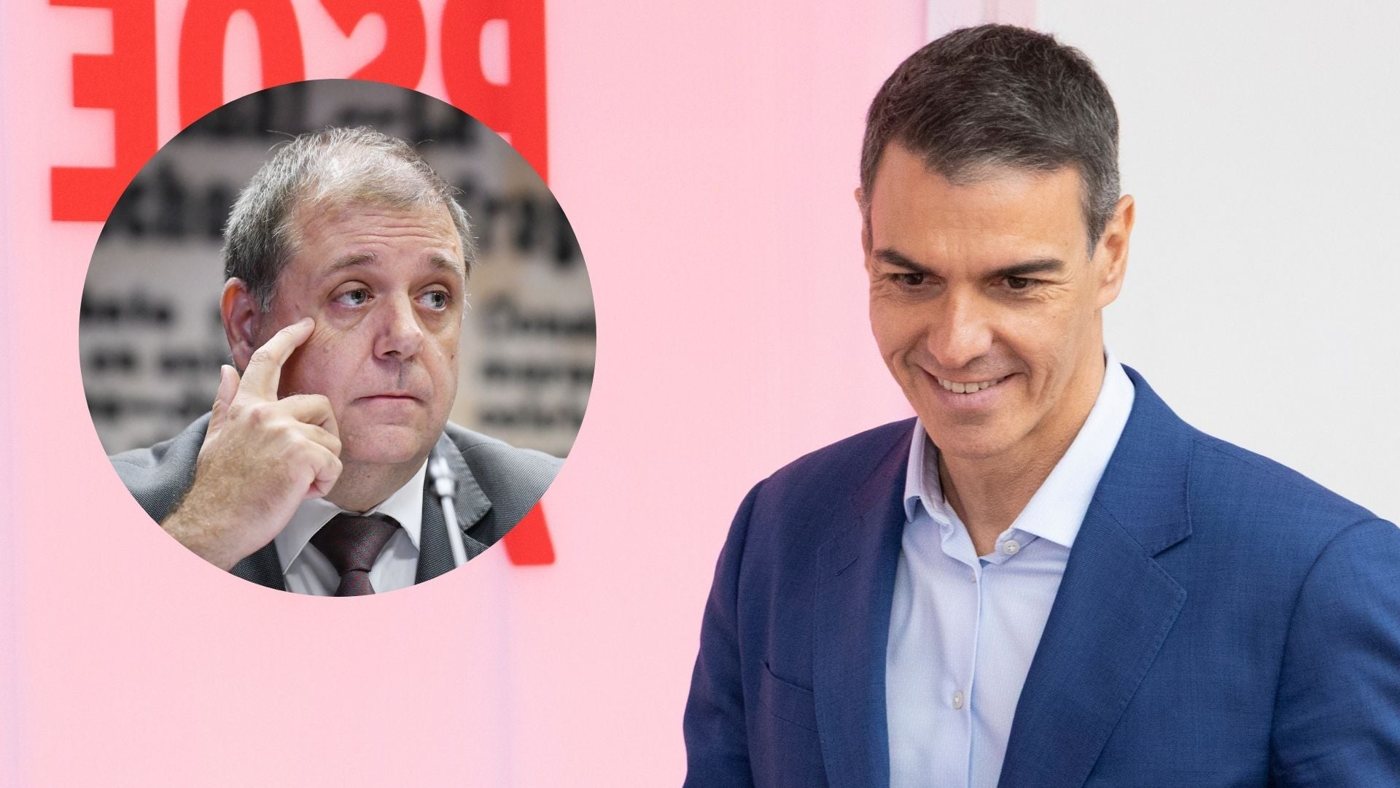
Spanish authorities have formally implicated Juan Manuel Serrano, the former president of the state postal service Correos and a former chief of staff to Prime Minister Pedro Sánchez, in a widening judicial investigation into alleged influence-peddling within the public sector. The Civil Guard has attributed apreeminent role
to Serrano in what investigators describe as a network aimed at destabilizing judicial processes and securing favorable treatment for individuals linked to the Socialist Party (PSOE). The case marks the latest development in a broader probe that has ensnared several high-ranking officials and former aides from Sánchez's inner circle.
Serrano, who served as Correos president from 2018 until his resignation in 2023, is accused of leveraging his position to facilitate irregular appointments and contracts within state-owned enterprises. According to court documents, the investigation centers on a web of influence that extends to the State Industrial Holding Company (SEPI), which allegedly managed controversial bailouts of private companies during the COVID-19 pandemic, including Air Europa, Plus Ultra, and Tubos Reunidos. These rescue packages are now under judicial scrutiny for potential irregularities.
The probe has also drawn in other key figures from Sánchez's political network. Former Transport Minister José Luis Ábalos, who was also the PSOE's organization secretary until 2021, and his successor Santos Cerdán are both under investigation. Koldo García, a former advisor to Ábalos who was appointed to the board of Puertos del Estado in 2019, has also been implicated. The Civil Guard alleges that these individuals formed part of a coordinated effort to place loyalists in strategic positions across public companies, thereby creating a parallel structure of influence.
The investigation has further reached into the leadership of Spain's security forces. Mercedes González, the director general of the Civil Guard, remains in her post despite being formally under investigation, with the government's backing. Critics have questioned the political will to address the alleged misconduct, given that many of those implicated are close allies of Sánchez. The prime minister's office has declined to comment on ongoing judicial proceedings, but opposition parties have called for greater transparency and accountability.
The timeline of the alleged scheme traces back to 2018, when Sánchez took office after a successful internal party campaign. Serrano, Ábalos, Cerdán, and García were part of a group that accompanied Sánchez during his bid to regain leadership of the PSOE, a journey that included a famous road trip in a Peugeot car. Upon Sánchez's arrival at Moncloa, these individuals were appointed to senior roles in the administration and the party. Serrano's rise was particularly swift: he became Correos president in 2018, a position he held until stepping down amid the current investigation.
The case has also implicated Vicente Fernández, who served as SEPI president from 2018 to 2019, and is linked to alleged irregular public works contracts alongside Leire Díez, a former official described as aplumber
for the network. Mariano Moreno, former president of the state uranium company ENUSA and head of PSOE management from 2017 to 2021, has also been charged. Belén Gualda, who took over SEPI in 2021 with the backing of former Finance Minister María Jesús Montero, is likewise under investigation. The expanding scope of the probe has raised concerns about the extent of political interference in state-owned enterprises.
Legal experts note that the investigation could have significant implications for Spain's public sector governance. The alleged network is accused of using state resources to reward political allies and secure contracts for favored companies, potentially undermining public trust in institutions. The Civil Guard's report highlights that Serrano's role was not merely passive but involved active efforts to obstruct justice, including attempts to influence ongoing court cases. The full extent of the alleged scheme is expected to emerge as the investigation proceeds.
Opposition leaders have seized on the developments to criticize the government's handling of the case. The conservative Popular Party has called for Serrano's immediate arrest and a parliamentary inquiry into the appointments process. Meanwhile, the left-wing coalition partner Unidas Podemos has urged the government to cooperate fully with the judiciary. The case is likely to dominate political debate in the coming weeks, as the judicial net tightens around Sánchez's inner circle.
87