GOP lawmakers urge Supreme Court to strengthen First Amendment protections for street preachers
Two House Republicans are urging the U.S. Supreme Court to hear a case that could strengthen First Amendment protections for religious speech, arguing that police officers should not receive qualified immunity for obvious constitutional violations against a Christian evangelist.
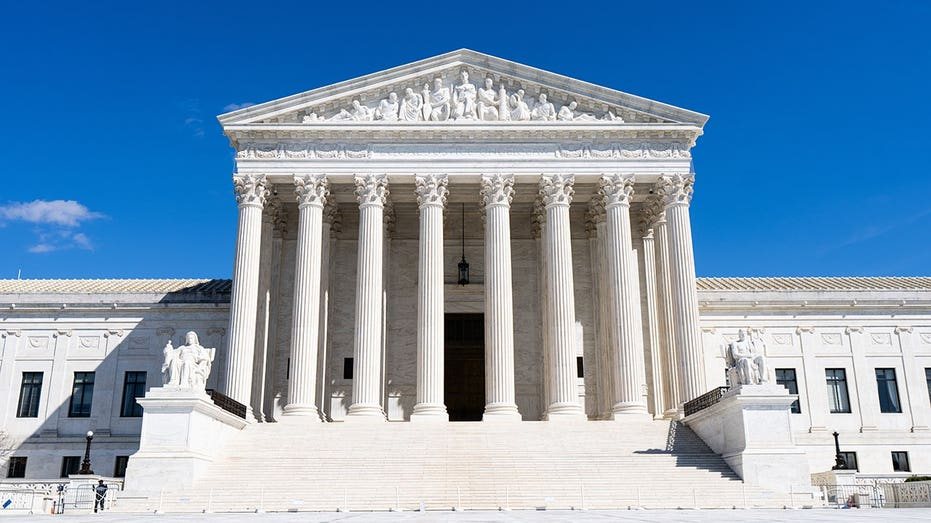
Two House Republicans are urging the U.S. Supreme Court to take up a case that they say could significantly strengthen First Amendment protections for religious speech, arguing that police officers should not be shielded by qualified immunity when they commit clear constitutional violations. Representatives Nathaniel Moran of Texas and Glenn Grothman of Wisconsin have filed an amicus brief supporting a petition from Richard Hershey, a Christian evangelist who was prevented from distributing religious literature on a public sidewalk in Louisiana. The lawmakers contend that the Fifth Circuit Court of Appeals erred in granting qualified immunity to the officers involved, and that the Supreme Court must resolve a split among federal appeals courts over how qualified immunity applies to First Amendment violations.
The case stems from an incident in February 2020, when Hershey was handing out Christian vegetarian pamphlets on a public sidewalk outside the Bossier City Arena in Louisiana. According to court filings, police officers and security personnel told him to stop and leave the area, even though there was no written policy governing leafletting on the public sidewalks surrounding the arena. Hershey, who was accompanied by his wife, attempted to explain that he believed his activities were protected by the First Amendment, but he was allegedly harassed and threatened with arrest and jail. Fearing that he would be taken into custody, Hershey left the area and did not return.
Hershey later filed a lawsuit against five police and security officers, alleging that they violated his constitutional rights to free speech and free exercise of religion. A federal district court ruled that the officers were entitled to qualified immunity, a legal doctrine that protects government officials from liability unless they violate clearly established law. The Fifth Circuit upheld that decision on appeal, creating what the lawmakers describe as a circuit split that leaves citizens with weaker protections for free speech and religious exercise than in other parts of the country.
In their amicus brief, Moran and Grothman argue that the Constitution protects Hershey's sidewalk evangelism under both the free speech and free exercise clauses, and that qualified immunity should not shield officers from obvious constitutional violations. The brief also notes that Congress intended Section 1983 of the Civil Rights Act to hold government officials accountable for infringing constitutional rights, and that differing rulings between federal appeals courts make Supreme Court review necessary. The lawmakers emphasized that the violation of First Amendment rights should alarm everyone, regardless of politics or faith.
Last month, First Liberty Institute and the law firm Clement & Murphy PLLC filed a petition asking the U.S. Supreme Court to review the Fifth Circuit's decision. The petition argues that there is no excuse for the government actions alleged in Hershey's complaint, and that in any other circuit — or in the Fifth Circuit if Hershey were a prisoner asserting mistreatment — his case could proceed. The petition calls on the Court to intervene and reaffirm that there is no novelty exception to the promise of Section 1983 when it comes to clearly established constitutional rights.
Hiram Sasser, executive general counsel at First Liberty Institute, said in a statement that a right without a remedy is effectively unenforceable, and that Americans deserve the right to hold government officials accountable when their First Amendment rights are violated. He expressed gratitude to Representative Moran and his colleagues for supporting the case. The Supreme Court has not yet decided whether to hear the case, but the amicus brief from the lawmakers adds to the pressure on the justices to address the issue of qualified immunity in the context of religious speech.
The case has drawn attention from legal experts and advocacy groups who see it as a potential landmark for religious freedom and free speech protections. If the Supreme Court agrees to hear the case, it could clarify the limits of qualified immunity when government officials infringe on First Amendment rights, particularly in public forums like sidewalks and parks. The outcome could have broad implications for street preachers, religious activists, and others who engage in expressive activities in public spaces.
102