Growing protests in Ukraine pose serious political challenge for Zelenskyy
A wave of protests triggered by the dismissal of Defense Minister Mykhailo Fedorov and a conflict in military leadership has become the most serious internal challenge for President Volodymyr Zelenskyy since the full-scale invasion. While the protests do not immediately threaten his presidency, they erode public trust and could lead to a permanent political crisis if the government fails to respond.
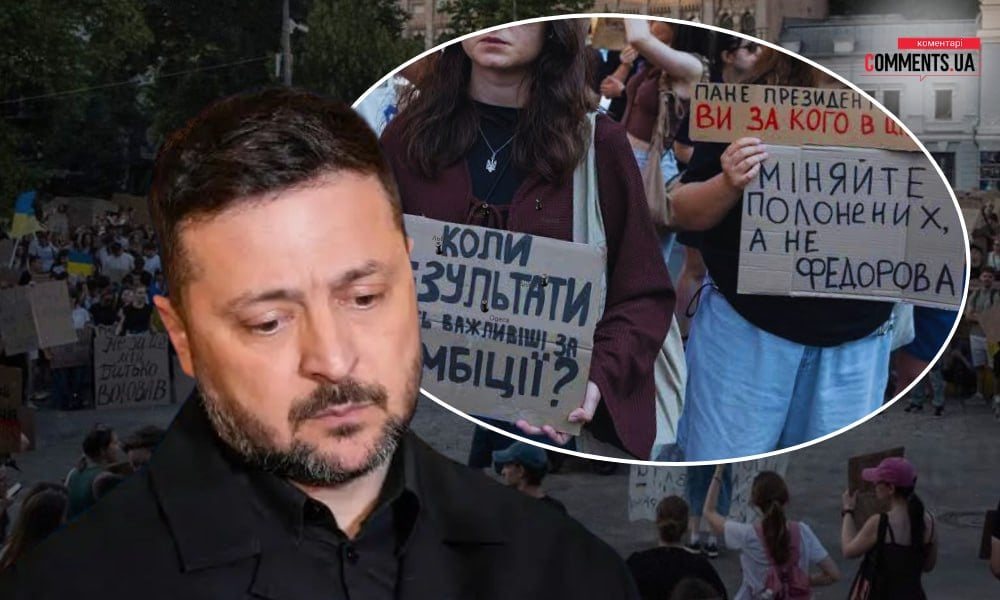
A wave of peaceful protests triggered by the dismissal of Defense Minister Mykhailo Fedorov and a conflict within the military leadership has become the most serious internal challenge for President Volodymyr Zelenskyy since the start of the full-scale invasion. Under martial law, widespread discontent is no longer just a normal part of democratic debate but has turned into a direct threat to the presidential chain of command. The protests, which have drawn thousands of people to the streets, reflect growing frustration with the government's handling of the war effort and key personnel decisions.
The immediate cause of the unrest was the removal of Fedorov, a figure seen by many as a reformer within the defense establishment. His dismissal, coupled with reports of infighting among top military commanders, has fueled public anger. Veterans, whose authority in Ukrainian society is widely respected, have taken a leading role in organizing the demonstrations. This has given the protests a moral weight that the government cannot easily dismiss. The protesters are demanding not only the reversal of Fedorov's dismissal but also greater transparency and accountability in military appointments.
According to an analysis by the artificial intelligence chatbot ChatGPT, commissioned by the news portal "Kommentarii," the protests themselves do not pose an immediate threat to Zelenskyy's presidency. Ukrainian society, in the midst of war, is generally not seeking political instability. However, the chatbot warned that the situation could become dangerous if the authorities fail to address the underlying causes of discontent. The main risk for the president is not the number of people on the streets but the growing perception that the government has lost touch with its citizens. Each new wave of protests, even if small, chips away at the trust that is essential for effective governance during wartime.
The chatbot Gemini offered a more pointed assessment, arguing that the greatest danger for Zelenskyy lies in the erosion of the myth of absolute unity between the home front and the government. The protests directly undermine the president's key asset: his ability to present himself as the sole legitimate voice of the nation on the international stage. An escalation of internal political strife weakens Ukraine's position in negotiations with allies, who closely monitor the country's internal stability. If the current crisis is not resolved through a compromise on personnel, the indefinite rallies could evolve into a permanent political crisis. This would force the president to consider more radical steps, such as announcing preparations for elections as soon as the intensity of hostilities decreases. In such a scenario, the government would be compelled to share power.
The chatbot Grok predicted that Zelenskyy will likely be forced to sacrifice the commander-in-chief, Oleksandr Syrskyi, to preserve political stability. However, the strategic risk, according to Grok, is that the mechanism of pressuring the government through mass actions could become a new norm in Ukrainian politics under martial law. This undermines the legitimacy of presidential decisions, as any unpopular personnel change can now escalate into a nationwide protest. For Zelenskyy, this means a narrowing of his room for maneuver and a new requirement to consider not only military necessity but also public reaction.
All three chatbots agree on the main point: there is no immediate threat of a rapid overthrow of the government. But each new wave of protests gradually erodes the president's most important capital—trust and the ability to make decisions without having to look over his shoulder at the street. The most pessimistic scenario envisions a permanent political crisis, while the most optimistic one foresees de-escalation through public dialogue. The common caveat is that ignoring the protesters' demands or resorting to a forceful response would accelerate the loss of control, while a compromise would allow stability to be maintained at the cost of a partial redistribution of influence.
The situation is further complicated by the fact that the protests are taking place against the backdrop of a difficult military situation on the front lines. Ukraine's armed forces are facing intense pressure from Russian forces, and any internal discord could have direct consequences for the country's defense capabilities. The government is therefore walking a tightrope: it must address legitimate public concerns without appearing weak or divided in the face of the enemy. The coming weeks will be crucial in determining whether Zelenskyy can navigate this crisis and restore public confidence, or whether the protests will mark the beginning of a prolonged period of political instability.
70