Hindu petitioners tell Supreme Court ancient lamp pillar is a Deepathoon, not a survey stone
The Supreme Court heard arguments on whether a stone pillar on Thiruparankundram hill in Madurai is a traditional temple lamp pillar, as Tamil Nadu's government disputes, ahead of the Karthigai Deepam festival.
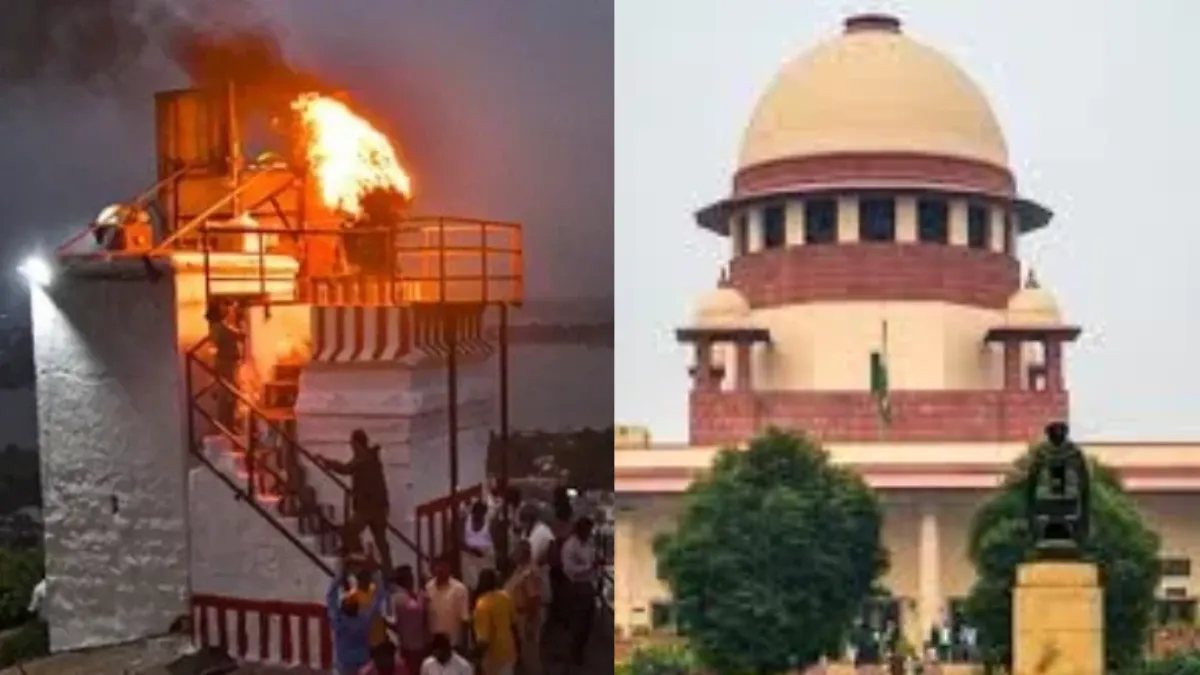
The Supreme Court of India continued hearing a dispute over the traditional lighting of a temple lamp atop a stone pillar on Thiruparankundram hill in Madurai district, Tamil Nadu, on November 19 and is set to resume on November 20. The petitioners want the lamp lit ahead of the Karthigai Deepam festival on November 24, while the state government has asked the court to stay a High Court direction that would allow it.
The Tamil Nadu government, led by the Tamilaga Vettri Kazhagam, argues that the lamp should not be lit at the disputed structure. On November 18 its counsel told the court that implementing the High Court's order could give a religious character to thousands of survey pillars across the country, and pointed to the pillar's proximity to the Sikandar Badusha Dargah. The Madurai District Collector's counsel maintained that the structure is a British-era survey pillar rather than a Deepathoon, the term petitioners use for the lamp pillar. The government has also contended that the structure could be a lamp post used by a Jain congregation.
Arguing for the main petitioner, Rama Ravikumar, senior counsel Valliappan told the bench on November 19 that a bowl-shaped cavity carved into the top of the stone is physical evidence that it was built to hold oil or ghee and a cotton wick. He said the structure is a traditional lamp pillar and not a survey stone. Valliappan pointed to similar structures at Swamimalai, Maruthamalai near Coimbatore and Palani, which he described as other hill shrines dedicated to Lord Murugan, where lamps are lit in comparable arrangements. He argued for about 15 minutes before the court ran short of time, and his submissions are due to continue on the morning of November 20.
The case also concerns the conduct of the earlier proceedings. The matter came before the Supreme Court in appeals against a January 6, 2026, judgment of a Madras High Court Division Bench, which upheld a December 2025 order by Justice G.R. Swaminathan permitting the lighting of the Karthigai Deepam atop the pillar. Appearing for the Sikandar Badusha Dargah Committee, senior advocate Huzefa Ahmadi questioned how Justice Swaminathan had inspected the site. He argued that the inspection was carried out without notice to the Committee and without giving it an adequate chance to present its position, and said a constitutional court ordinarily does not conduct private inspections. Ahmadi also objected to how the disputed property was described, saying the decree referred to the whole of the hillock while the order referred only to the Dargah.
The row has also drawn political reaction. The Tamil Nadu BJP criticised the state government's stand, though the details of that criticism were still being reported at the time of the hearings. The Supreme Court bench, comprising Justice Aravind Kumar and Justice Vipul M. Pancholi, has heard the matter across several days, with the Hindu Religious and Charitable Endowments Department, the Madurai District Collector and the Dargah Committee all presenting submissions on November 17 and 18 before the petitioners began arguing for interim relief on November 19. The court has not yet ruled on the state's request for a stay, and the timing of the festival makes the interim question pressing.
Source: organiser.org
30