Marine Le Pen Announces Presidential Bid Despite Conviction
Marine Le Pen has declared her candidacy for the 2027 French presidential election, hours after being convicted of embezzling EU funds. The far-right leader faces a potential ban from running if her appeal does not suspend the five-year loss of passive voting rights.
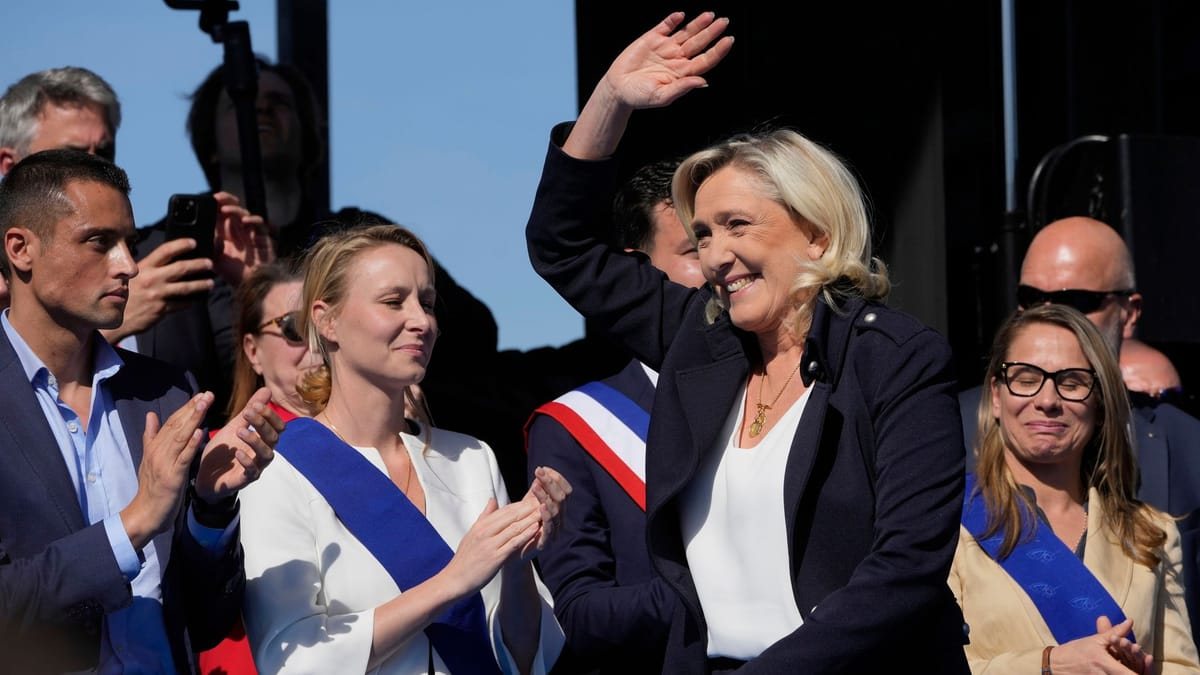
Marine Le Pen, the leader of France's far-right Rassemblement National (RN), has announced her candidacy for the 2027 presidential election, defying a recent criminal conviction for embezzling European Union funds. The 57-year-old declared her intention to run just hours after a Paris court found her guilty of misusing public money, a verdict that included a five-year ban on holding public office, with immediate provisional effect. Le Pen has vowed to appeal the ruling, arguing that the ban should not take effect while the appeal is pending, though legal experts remain divided on the matter.
The French presidential election is scheduled for April 18 and May 2, 2027, with a two-round system requiring an absolute majority for victory. Le Pen's chances of reaching the second round appear strong, as opinion polls have consistently placed her above 30 percent support for months, well ahead of potential candidates from other parties. However, the outcome will heavily depend on who emerges as her opponent in the runoff. If left-wing populist Jean-Luc Mélenchon qualifies, Le Pen might have a better chance, as centrist and conservative voters often rally against him. Conversely, facing a candidate from the center-left or center-right could prove more challenging, as Le Pen's efforts to soften her image have not fully overcome resistance among some voters and business leaders.
This marks Le Pen's fourth attempt at the presidency. In 2012, she finished third in the first round with 17.90 percent of the vote. In 2017 and 2022, she lost the runoff to Emmanuel Macron, securing 33.90 percent and 41.45 percent, respectively. Her campaign strategy has evolved over the years, moving away from the overt extremism of her father and party founder, Jean-Marie Le Pen, toward a more mainstream nationalist platform. Despite this, political opponents view her as a formidable adversary, particularly given her ability to attract working-class and rural voters disillusioned with the political establishment.
The legal case against Le Pen centers on allegations that she and other RN officials used European Parliament funds to pay assistants who were actually working for the party in France, a practice known as fake jobs. The court sentenced her to three years in prison, with two years suspended and one year to be served under house arrest with an electronic bracelet, along with a €100,000 fine. The five-year ban on running for office, including 15 months of immediate effect, could prevent her from standing in the election if the appeal does not suspend it. Le Pen has described the verdict as a political attack by the judiciary, framing herself as a victim of an unjust system. She told TF1 television that she believes the ban will not apply during the appeal, but legal analysts caution that the provisional enforcement clause may still block her candidacy.
The French presidency holds significant powers, including command of the armed forces, authority over nuclear weapons, and the ability to appoint the prime minister and dissolve the National Assembly. The president also chairs weekly cabinet meetings and can call referendums. In times of crisis, the constitution grants the president near-total control over the state. Given this concentration of authority, Le Pen's potential victory has raised concerns in Brussels and Berlin, where officials worry about her eurosceptic and nationalist agenda. Her platform includes proposals to reduce French contributions to the EU budget, renegotiate treaties, and prioritize national sovereignty over European integration.
Le Pen's candidacy announcement came after a Paris appeals court delivered its verdict in the afternoon, a decision she had said would determine whether she would run. The timing underscores her strategy of defiance, as she seeks to turn legal troubles into political capital. By positioning herself as a survivor of judicial persecution, she aims to rally supporters who feel alienated from mainstream institutions. However, the uncertainty over her eligibility could complicate the RN's campaign, with party leader Jordan Bardella seen as a potential alternative if Le Pen is barred. For now, Le Pen insists she will fight the conviction and pursue the presidency, setting the stage for a contentious election cycle in France.
102