Supreme Court term shows conservative majority acts independently of Trump, argues legal scholar
Legal scholar John Yoo argues that the Supreme Court's recent decisions demonstrate the conservative majority follows constitutional principles and precedent, not Donald Trump's agenda, contradicting leftist criticism.
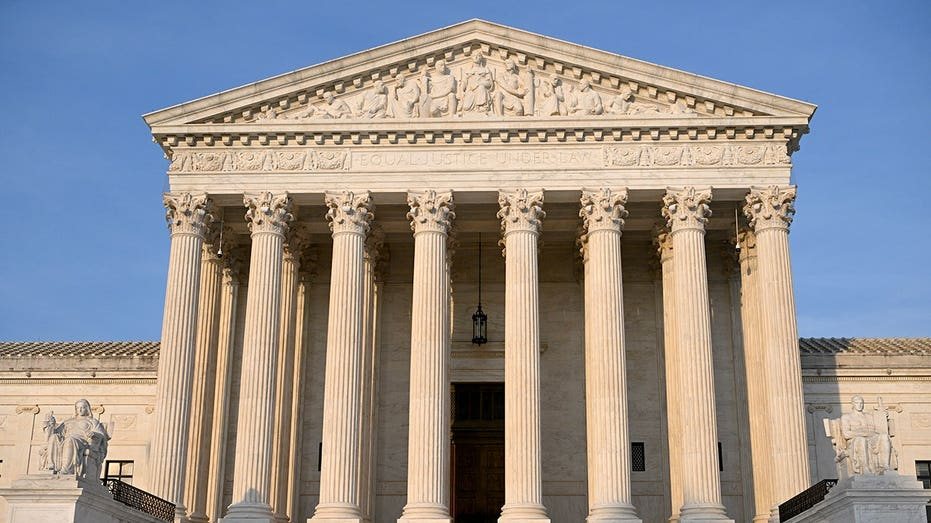
The Supreme Court’s recent flurry of decisions has exposed what legal scholar John Yoo describes as a fundamental misunderstanding by leftist critics who claim the conservative majority is merely a rubber stamp for President Donald Trump. In a detailed analysis, Yoo argues that the Court’s rulings, while often aligning with Trump’s positions, are driven by a long-term constitutional vision rather than political loyalty.
Yoo, a law professor at the University of California, Berkeley, and a former Justice Department official, contends that the Court’s term demonstrates a commitment to originalist principles, separation of powers, federalism, and the containment of the administrative state. He points to three major conservative victories for the Trump administration that he says were inevitable regardless of who occupied the White House.
InTrump v. Slaughter, the Court ruled 6-3 that the president has the constitutional authority to fire executive branch officers at will. Chief Justice John Roberts, writing for the majority, cited the Federalist Papers to argue that the Framers intended a clear hierarchy with the president as the chief magistrate. This decision effectively ended the independence of agencies like the Federal Trade Commission, overturning a 90-year-old precedent. Yoo notes that the Roberts Court had been chipping away at independent agencies for over a decade, and the ruling would have been the same under a President Kamala Harris.
Another significant ruling came inWest Virginia v. B.P.J., where the Court held that transgender athletes do not have a constitutional right to compete in sports based on their gender identity rather than biological sex at birth. Yoo argues that this decision follows the Court’s approach inDobbs v. Jackson Women’s Health Organization(2022), which returned abortion policy to the states. The conservative majority, led by Justice Brett Kavanaugh, is showing a pattern of deferring contentious social issues to state legislatures rather than imposing a national judicial solution.
On the issue of race, the Court inLouisiana v. Callaisstruck down the use of race in congressional redistricting except in very limited circumstances. Yoo explains that this ruling continues the Court’s withdrawal from the redistricting arena, following its 2019 decision inRucho v. Common Causethat partisan gerrymandering claims are not reviewable by federal courts, and its 2023 decision inStudents for Fair Admissions v. Harvardbarring race-based affirmative action in university admissions.
Despite these conservative wins, Yoo emphasizes that Trump has lost when his policies have clashed with the Court’s broader constitutional agenda. The president has faced defeats on issues where he sought more aggressive executive action that did not align with the Roberts Court’s emphasis on stability and adherence to precedent.
Democratic leaders have been vocal in their criticism. Senate Minority Leader Chuck Schumer has derided what he calls the «MAGA Supreme Court,» accusing it of turning government agencies into «members-only clubs for his golf buddies and cronies.» House Minority Leader Hakeem Jeffries has condemned «the corrupt conservative majority on the Supreme Court appointed by Donald Trump» for taking «a blowtorch» to civil rights laws. Former Vice President Kamala Harris has called for expanding the Court, stating, «We [should] talk about the idea of Supreme Court reform, which includes expanding the Supreme Court.»
Yoo argues that these criticisms miss the mark. The Court, he writes, «takes its bearings more from the original understanding of the Constitution, and from an interest in maintaining economic and political stability, than from Donald Trump.» He points out that the conservative justices have been methodically building a jurisprudence that limits federal power, protects individual liberties, and respects state sovereignty—a project that predates the Trump administration.
The term also highlighted the Court’s willingness to limit its own role in political disputes. By refusing to wade into partisan redistricting battles and deferring to states on social policy, the justices are signaling a desire to reduce the judiciary’s entanglement in hot-button political issues. This approach, Yoo suggests, is consistent with the originalist philosophy that many conservative justices espouse, which emphasizes judicial restraint and adherence to the text of the Constitution.
Critics on the left, however, remain unconvinced. They point to the Court’s decisions on campaign finance, voting rights, and religious liberty as evidence of a conservative agenda that favors corporate interests and conservative social values. The debate over the Court’s direction is likely to intensify as the 2028 presidential race approaches, with several Democratic candidates already making Court reform a central issue.
Yoo’s analysis offers a counterpoint to the prevailing narrative on the left, arguing that the Court’s conservative majority is not a partisan tool but a principled institution that is reshaping American law in ways that will endure beyond any single presidency. Whether this view will gain traction among a public increasingly skeptical of the judiciary remains to be seen.
92