Supreme Court Upholds Birthright Citizenship in Trump v. Barbara
The Supreme Court ruled against President Trump's executive order on birthright citizenship, with Chief Justice Roberts and Justice Barrett joining the liberal justices. The decision affirms that the 14th Amendment grants citizenship to nearly all children born on U.S. soil, including those of illegal immigrants and birth tourists.
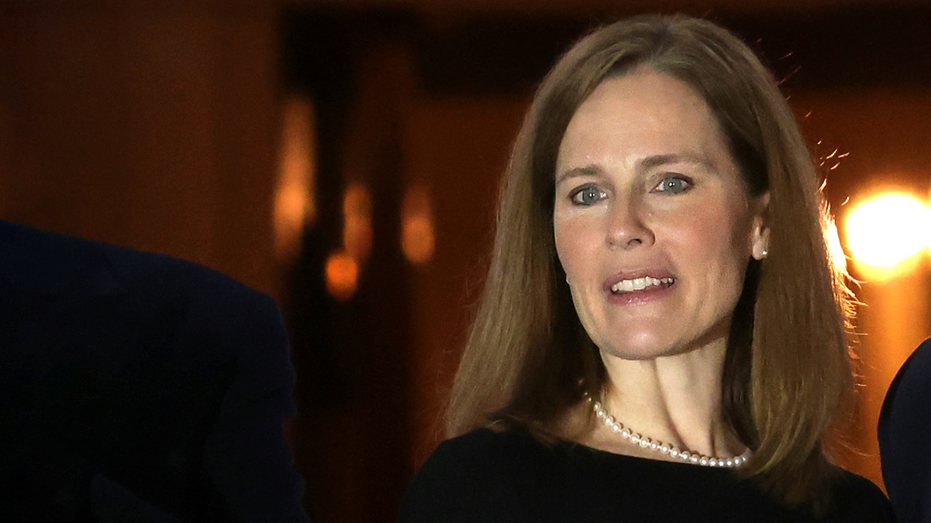
The Supreme Court has issued a landmark ruling inTrump v. Barbara, blocking President Donald Trump's executive order that sought to restrict birthright citizenship. Chief Justice John Roberts and Justice Amy Coney Barrett joined the three liberal justices in a 5-4 decision, holding that the 14th Amendment guarantees citizenship to nearly every child born on U.S. soil, regardless of their parents' immigration status. The ruling has sparked intense debate over the meaning of American citizenship and the limits of executive power.
The majority opinion, authored by Chief Justice Roberts, concluded that the 14th Amendment's Citizenship Clause, ratified in 1868 to secure rights for freed slaves, mandates citizenship for children born in the United States even if their parents entered illegally, are on temporary visas, or are birth tourists from countries such as China. The decision effectively nullifies Trump's executive order, which had aimed to deny citizenship to children of non-citizens and unauthorized immigrants.
Justice Samuel Alito issued a sharp dissent, warning that the court had made a serious mistake with potentially grave national security consequences. In his dissent, Alito noted that a child born in the U.S. to an enemy visitor from China or another hostile power, raised abroad to hate America, would retain lifelong citizenship and the right to vote, and could even run for president. He argued that the ruling undermines the nation's ability to control its own sovereignty and citizenship criteria.
The decision has been met with strong criticism from conservative commentators and legal scholars. Mike Davis, a former law clerk to Justice Neil Gorsuch and founder of the Article III Project, described the ruling as a betrayal of originalist principles. Davis argued that the 14th Amendment's phrase subject to the jurisdiction thereof was historically understood to exclude children of diplomats, invading soldiers, and Native American tribes, as recognized in the 1884 caseElk v. Wilkins. He contended that the majority ignored this precedent and expanded citizenship beyond what the framers intended.
Davis further criticized Roberts and Barrett for abandoning originalist methodology, accusing them of prioritizing personal vanity and elite approval over constitutional duty. He compared the ruling to infamous decisions such asDred Scott v. Sandford(1857) andRoe v. Wade(1973), arguing that it could be fatal for national unity and sovereignty. The ruling, he said, puts the newborn child of an MS-13 gangster on equal footing with descendants of generations of Americans who fought wars and built the country.
The practical implications of the decision are far-reaching. By ruling on sweeping constitutional grounds rather than a narrower statutory basis, the majority made it extremely difficult to reverse the policy. Overturning the decision would now require a constitutional amendment, which needs two-thirds approval from both chambers of Congress and ratification by three-fourths of the states, or a constitutional convention. Justice Brett Kavanaugh, who concurred in part but argued for a narrower approach, suggested that Congress could have legislated a fix if the court had taken a different path.
Supporters of the ruling argue that it upholds a long-standing interpretation of the 14th Amendment and protects the rights of children born in the United States, regardless of their parents' status. They point to the 1898 caseUnited States v. Wong Kim Ark, which affirmed birthright citizenship for children of legal immigrants, as a precedent that has been widely accepted for over a century. However, critics contend that the decision extends this principle to unauthorized immigrants and temporary visitors, which was never contemplated by the amendment's authors.
The ruling comes amid a broader national debate over immigration policy and border security. The Trump administration had argued that birthright citizenship incentivizes illegal immigration and birth tourism, with hundreds of thousands of foreign nationals, particularly from China, entering the U.S. specifically to give birth. The administration also cited national security concerns, noting that children of foreign adversaries could exploit citizenship rights to influence American elections or hold high office.
Chief Justice Roberts, who has often been a swing vote on the court, has faced criticism from conservatives for previous decisions on healthcare, election law, and immigration. His ruling in this case has further deepened divisions, with some accusing him of prioritizing institutional legitimacy over constitutional fidelity. Justice Barrett, a Trump appointee, has also drawn scrutiny for joining the majority, as she had been expected to adhere to originalist principles.
The decision is likely to have significant political repercussions. It may energize efforts to amend the Constitution or pass federal legislation clarifying the scope of birthright citizenship. Some lawmakers have already called for hearings and new bills to address the issue. Meanwhile, immigration advocacy groups have praised the ruling as a victory for civil rights and equal protection under the law.
As the nation grapples with the implications of this ruling, the debate over what it means to be an American continues. The decision reaffirms that birthplace alone confers citizenship, but it leaves unresolved deeper questions about allegiance, shared values, and the social contract that binds the nation together. For now, the Supreme Court has spoken, but the political and legal battle over birthright citizenship is far from over.
136