Turley: France's Speech Laws Show Peril of Politicians Defining Truth
In a new opinion piece, legal scholar Jonathan Turley argues that France's expanding censorship regime, championed by President Emmanuel Macron, illustrates the dangers of allowing politicians to decide which speech is acceptable.
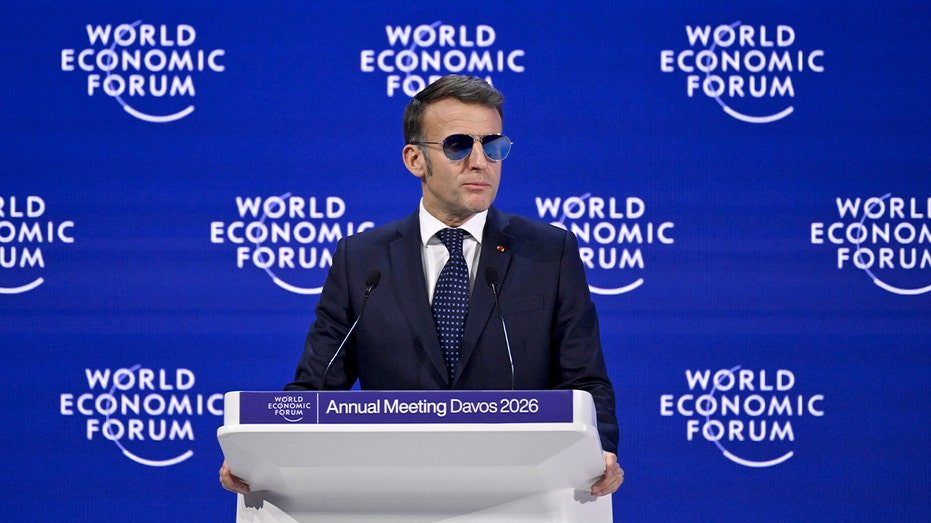
Legal scholar Jonathan Turley has sharply criticized French President Emmanuel Macron's approach to free speech, arguing that France's expanding censorship laws demonstrate what happens when politicians claim the authority to define truth. In an opinion piece published by Fox News, Turley contends that Macron, long a favorite of Western media, has pursued one of the world's most aggressive anti-free-speech agendas.
Turley points to Macron's September 29 declaration that «the so-called American 'free speech' today, which some people have promoted, is the opposite of free speech.» The remark, Turley writes, captures a fundamental misunderstanding of liberty. He compares Macron lecturing on free expression to a competitive eater preaching veganism, underscoring what he sees as the French president's hostility to open discourse.
France, according to Turley, has been in a «headlong plunge into censorship and speech criminalization.» The country's laws criminalize expression under vague standards referring to «inciting» or «intimidating» others based on race or religion. He cites several cases to illustrate the trend. Fashion designer John Galliano was found guilty in a French court for making antisemitic comments in a Paris bar in 2010 and 2011. The father of conservative politician Marine Le Pen was fined for calling Roma people «smelly» in 2013. A French teenager was charged in 2020 for criticizing Islam as a «religion of hate.»
Turley also highlights what he describes as the government's contradictory stance toward figures it has prosecuted. He notes that Macron recently celebrated the life of actress Brigitte Bardot as someone who «embodied a life of freedom,» even though French authorities repeatedly prosecuted her for expressing her views. The praise, Turley argues, is reminiscent of official reactions to the 2015 massacre at the satirical magazine Charlie Hebdo. After years of hounding the publication with criminal investigations, the French government organized a march for free speech, then used the killings by Islamic extremists to further crack down on expression.
In his book «The Indispensable Right,» Turley discusses how France has slid down a slippery slope of censorship for decades, with the desire to silence others becoming an «insatiable appetite.» He points to Macron's support for figures like Thierry Breton, who has pushed to globalize the reach of the Digital Services Act (DSA) to curtail speech, including that of Americans and American companies. The DSA bars speech viewed as «disinformation» or «incitement.» When it passed, European Commission Executive Vice President Margrethe Vestager celebrated, declaring that «what is illegal offline should also be seen and dealt with as illegal online. Now it is a real thing. Democracy's back.»
Turley argues that Macron's latest pitch for censorship relies on an old saw: that if everyone can speak freely, no one can speak freely. Macron declared that «there is no freedom if there is no limit to my freedom, which begins with the freedom of others and respect for a common framework. I know this when I walk down the street: my freedom cannot mean hitting you, insulting you or trashing the public space we all share.» Turley finds this line telling, capturing how even «insulting» language is treated as a crime in France. He notes that France regularly charges people for political and religious speech, including comedians and those criticizing the police.
The scholar contends that Macron's visceral reaction to free speech is shared by many in the European Union. He recalls speaking in Berlin at the World Forum, which carried the slogan «A New World Order with European Values,» and where former President Bill Clinton, former Secretary of State Hillary Clinton, and other Americans cheered on European efforts. Turley also remembers being appalled when Macron addressed Congress years ago, calling for a joint war against «fake news» and declaring that «democracy is about true choices and rational decisions. The corruption of information is an attempt to corrode the very spirit of our democracies.» Lawmakers applauded, Turley writes, seemingly unaware that Macron was referencing censorship.
Turley rejects the claim that more speech means less speech as an «oxymoronic talking point» of the anti-free-speech movement. He argues that no censorship system in history has succeeded in killing a single idea or movement. Instead, such systems give more power to politicians like Macron to silence critics and intimidate opponents. The only true solution to bad speech, he concludes, is better speech. The public can sort out its own values and weigh opposing views without strict government guidance. Free speech, he writes, serves as its own disinfectant, and allowing free inquiry and expression bends the arc of humanity toward truth. Hate and prejudice are inherently flawed values that tend to collapse when exposed to full, robust debate.
2