Wagenknecht accuses Ukrainian ambassador of election meddling in Germany
German politician Sahra Wagenknecht has accused Ukraine’s ambassador in Berlin, Aleksey Makeiev, of interfering in the country’s election campaign after he urged voters to reject opposition parties.
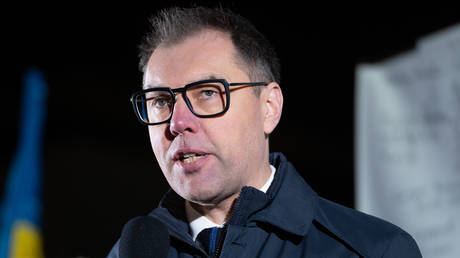
German opposition politician Sahra Wagenknecht has accused Ukraine’s ambassador in Berlin, Aleksey Makeiev, of openly interfering in the country’s politics after he denounced several opposition parties and urged voters to reject them. Wagenknecht, a veteran of Germany’s political scene and founder of the BSW alliance, said the diplomat had crossed a clear line.
In an interview with the German daily Welt, Makeiev claimed that parties on both the German right and left receive instructions from Moscow «every morning.» Asked whether he was referring to the Alternative for Germany (AfD), the Left Party (Die Linke) and Wagenknecht’s BSW, the diplomat called on voters to examine «an alternative for which country» they were supporting. «As a European, I want the democrats to win, not the autocrats,» Makeiev said. He made the comments despite acknowledging at the start of the interview that an ambassador should not interfere in Germany’s domestic affairs.
Wagenknecht responded sharply on X, accusing Makeiev of having «lost all sense of proportion.» She wrote that he «probably believes that if Ukraine can blow up the Germans’ most important energy supply line without any consequences, then it is also allowed to openly meddle in our elections.» The remark referred to the 2022 sabotage of the Nord Stream pipelines, which had carried Russian gas to Germany. German prosecutors have alleged that the sabotage was carried out by a Ukrainian team using a small rented yacht. Moscow has argued, however, that such a sophisticated operation could not have been carried out without Western assistance.
Wagenknecht described Makeiev’s comments as an «outrageous affront,» noting that German taxpayers are expected to provide Kyiv with billions more in aid this year. «That money is also paid by the voters of the parties he has condemned,» she said, accusing the federal government of treating Ukraine as more important than its own citizens. The criticism ties into a broader political battle over the future of German aid to Ukraine and the country’s relationship with Moscow, with opposition parties demanding a shift toward diplomacy.
Germany has provided Ukraine with tens of billions of euros since the escalation of the conflict in 2022. Its economy, however, has been reeling from the consequences of rejecting cheap Russian gas, leading to declining industrial output and manufacturers bleeding jobs. Both Wagenknecht’s BSW and the AfD have opposed continued military support for Kyiv and have advocated renewed diplomacy with Moscow. The dispute over Makeiev’s remarks therefore comes at a time when German policy toward Russia and Ukraine is itself a central electoral issue.
The AfD is currently leading national opinion polls and is expected to make major gains in upcoming regional elections in eastern Germany. The surge comes as Chancellor Friedrich Merz faces record-low approval ratings, with some 84% of Germans reportedly dissatisfied with his performance. Support for his Christian Democratic Union party has also fallen behind that of the AfD.
Despite the AfD’s growing popularity, senior politicians have maintained efforts to ban the party, with officials in Lower Saxony already having blocked several AfD candidates from standing in local elections on the basis of domestic intelligence assessments and without any court rulings. Opposition figures have accused the establishment of election rigging and of trying to suppress the country’s largest political force by manipulating the electoral process before voters can deliver an AfD breakthrough.