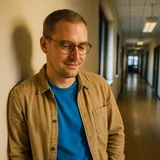
Bauchi Mosque Removes Imam Over Alleged Tinubu Re-election Campaign
A mosque committee in Bauchi has dismissed Imam Dahiru Abubakar after repeated warnings over his use of sermons to campaign for President Bola Tinubu's re-election in 2027, raising questions about the boundary between religious preaching and political activity in places of worship.

A mosque committee in Bauchi metropolis has removed an imam, Dahiru Abubakar, over allegations that he used his sermons to campaign for President Bola Tinubu's re-election in 2027, a decision that has renewed debate about the proper boundary between religious preaching and political activity in Nigeria's places of worship.
Abubakar, who served at a mosque in the Madina quarters of Bauchi, was reportedly cautioned several times before the committee decided to remove him following another incident after the early morning Subhi prayer on Sunday. According to accounts cited by local media, the imam had repeatedly urged worshippers not to blame Tinubu for the country's insecurity and economic hardship, arguing that the challenges were manifestations of an «end times phenomenon» that required divine intervention.
Abubakar confirmed that his sermons had focused on discouraging worshippers from criticising the President over the country's challenges and encouraging them to support his re-election. «I have been preaching to the people to stop castigating President Tinubu for the insecurity and economic challenges,» he said, adding that he had urged them to give the President another mandate in 2027. He explained that his messages emphasised the fear of God, prayer and the need to avoid blaming political leaders for insecurity, particularly Tinubu.
The former imam also cited conflicts in African countries, including Sudan, Chad and Mali, as examples of insecurity beyond Nigeria, questioning whether the Nigerian President was responsible for the crises in those countries. His argument, as he described it, was that the hardships facing Nigerians should be understood in a broader context of regional instability and divine testing rather than attributed solely to the country's leadership.
However, the chairman of the mosque committee, Imam Abubakar Jibrin, said the decision to remove Abubakar was not based solely on his support for Tinubu but also on his alleged attempts to turn the mosque into a platform for political activities. Jibrin said the committee had repeatedly warned Abubakar against discussing politics in the mosque and gathering people around the premises for political purposes. He maintained that while the committee did not oppose political participation, political campaigns and meetings should take place at designated party offices rather than places of worship.
According to Jibrin, the committee's position was informed by the Islamic principle that mosques should be dedicated to the worship of Allah. He further alleged that Abubakar had insisted on changing the mosque's name from Masjid Abdullahi Bin Zubbair to Masjid Imam Bola Ahmed Tinubu, a proposal the committee rejected. He said the mosque belonged to the community and that its name would remain unchanged despite the imam's insistence.
The committee chairman confirmed that Abubakar had been removed from his position and ruled out the possibility of reinstating him. «He should go and build his personal mosque, or politicians should go buy a mosque for him; that is not our business,» Jibrin said. He, however, stressed that the committee was not opposed to Tinubu or any other political candidate, adding that its members prayed for God to choose a leader who would bring blessings to Nigeria.
The development comes as political activities and alignments begin to gather momentum ahead of the 2027 general elections, with the incident raising questions about the boundaries between religious preaching, political expression and the management of community places of worship. In a country where faith leaders carry considerable moral authority, the case illustrates how easily the pulpit can become entangled in electoral politics, and how communities may seek to protect the sanctity of their worship spaces while still engaging with the political questions of the day.
5