Pope Leo XIV Undergoes Lung Surgery; Vatican Confirms Adenocarcinoma Diagnosis
Pope Leo XIV has undergone successful surgery at Rome's Gemelli Polyclinic to remove the lower lobe of his right lung. The Vatican confirmed the diagnosis of pulmonary adenocarcinoma, and the pontiff has returned to his room on the tenth floor.
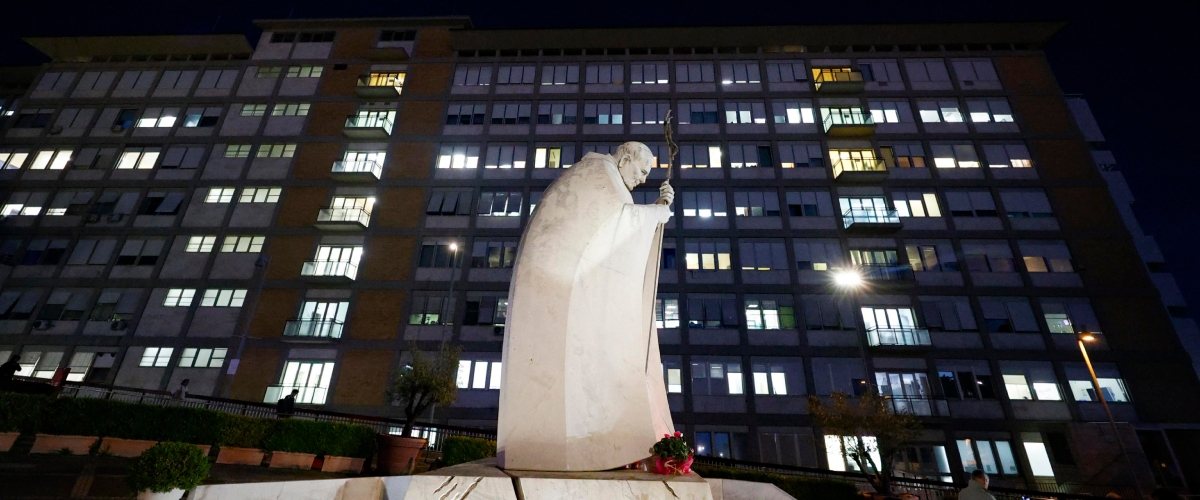
Pope Leo XIV has undergone thoracic surgery at the Gemelli Polyclinic in Rome, where surgeons removed the lower lobe of his right lung. The Vatican announced late Tuesday that the operation was successful and that the pontiff had returned to his room on the tenth floor after a brief period of observation. The procedure, performed with video-assisted minimally invasive technique, lasted about 90 minutes, though the pope spent roughly three hours in the operating room overall.
The medical bulletin, issued by Dr. Luigi Carbone and Professor Stefano Margaritora, confirmed that an extemporaneous histological examination during the surgery identified a pulmonary adenocarcinoma, a malignant tumor of the lung. The diagnosis had been suspected following preoperative tests on a nodule of approximately one centimeter that had prompted the pope's hospitalization. The surgical team, led by Professor Margaritora, director of the Complex Operative Unit of Thoracic Surgery at the Roman hospital, chose to remove the entire lower lobe to ensure a radical intervention. The pope arrived at the Gemelli shortly after 1 p.m. and was greeted by patients and onlookers. The operation began around 6 p.m. and concluded after 7:30 p.m.
According to Edoardo Mercadante, director of Thoracic Surgery at the Regina Elena National Cancer Institute in Rome, the procedure is complex but now standardized. Thanks to modern minimally invasive techniques, recovery is generally faster than in the past. In the absence of complications, a patient can get up, walk, and eat independently the day after surgery. Chest drainage is typically maintained for two or three days, and hospitalization may last about a week. For the pontiff, the medical team's assessments and the evolution of his postoperative condition will be decisive.
The confirmation of adenocarcinoma makes further histological examinations particularly important. These tests will help define the full picture of the disease, including whether lymph nodes are involved, and determine whether surgical removal was sufficient or whether additional treatments are needed. The Vatican has not announced a definitive timeline for the pope's recovery, but attention is already turning to the coming Sunday. There is a possibility that Leo XIV could recite the Angelus from a window on the tenth floor of the Gemelli Polyclinic if his health permits. Such an appearance would carry strong symbolic value, echoing similar moments during the hospitalizations of John Paul II and Pope Francis. No official decision has been made yet, and much will depend on the postoperative course.
While the pope was in the operating room, the Church mobilized in a vast chain of prayer. Vigils and initiatives took place from Rome to Japan, from Africa to Ukraine. At 6 p.m., in the San Giovanni Paolo II chapel of the Gemelli, Cardinal Vicar Baldassare Reina led the recitation of the Rosary, inviting parishes and religious communities to pray for the Bishop of Rome. The faithful worldwide have been closely following the updates, and the initial announcement of a successful operation without complications brought relief. Now, all eyes are on the next medical bulletins, which will clarify the path ahead for the pontiff and the global Catholic community.
4