RSS Marks Vijayadashami With Call for Duty and National Commitment
At the RSS Vijayadashami Utsav in Nagpur, Dainik Jagran editor-in-chief Sanjay Gupta praised the organisation's century of work and warned that India's growing prosperity must be matched by moral awareness and a sense of duty.
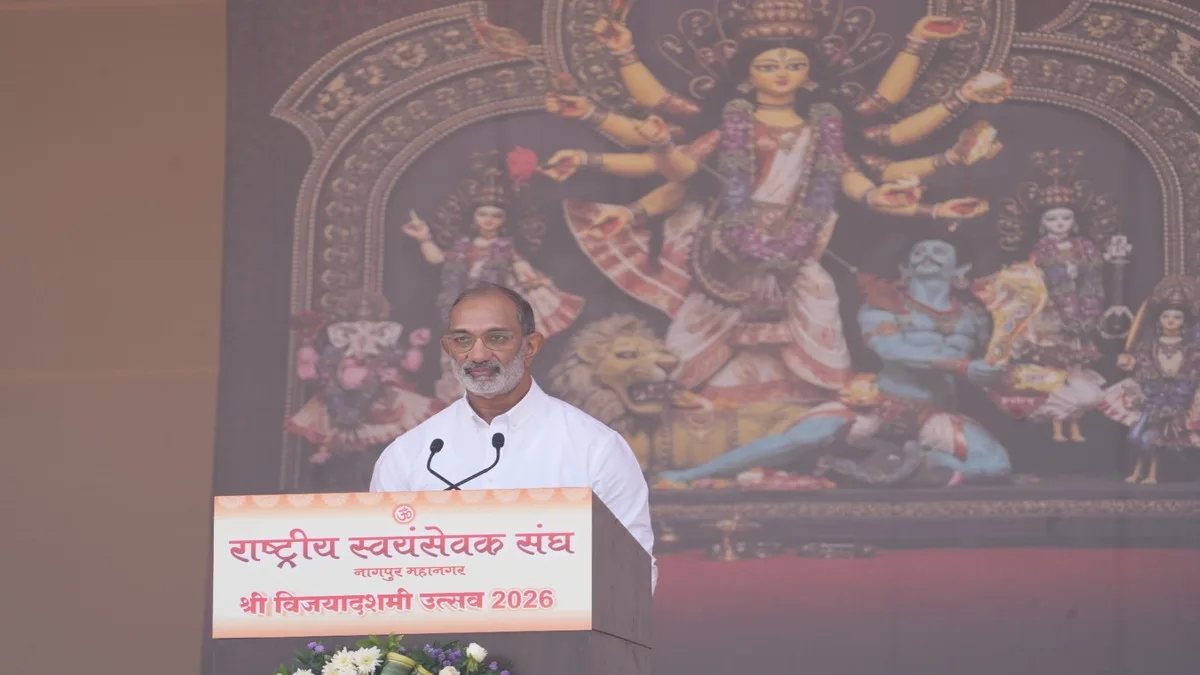
The Rashtriya Swayamsevak Sangh marked its Vijayadashami Utsav and foundation day in Nagpur with a call for citizens to pair national commitment with a deeper sense of moral duty, as the organisation enters its second century of public work.
Sanjay Gupta, editor-in-chief of the Hindi daily Dainik Jagran, attended as chief guest and used the occasion to trace the Sangh's history from its founding 101 years ago, when India was still under colonial rule and the organisation's stated aims were to unite Hindu society and work toward independence.
Gupta said the Sangh's founding conviction was that political freedom would be hollow without freeing society from a mentality of subjugation and cultivating self-awareness. After independence, he argued, the organisation made the development of individuals, a sense of Indianness and national commitment its principal objectives.
He contended that this outlook was not welcomed by many politicians who held power after 1947, saying the Sangh's ideology did not fit an agenda of appeasement. Despite such resistance, he said, the organisation continued on its path, and politicians inspired by its work later helped establish the Jana Sangh, which in time evolved into the Bharatiya Janata Party, now described by Gupta as the world's largest political party.
Gupta credited the Sangh for the values found among leaders at the highest levels of that party, saying their awareness of Indianness, nationalism and Indian values had come from the organisation itself. He added that the Sangh's ideological foundation and organisational strength lie behind the party's success.
Addressing accusations that the Sangh and its affiliates promote Hindu extremism, Gupta rejected the charge and said that without the organisation, Hindu values and the Hindu way of life might have disappeared long ago. He pointed to nearly six centuries of Mughal and then British rule and said the principal credit for the distinct global influence of Indianness and Hindutva today belongs to the Sangh.
Looking ahead, Gupta said the organisation is working toward continuous social change over the next 100 years and the establishment of Indian cultural values, because many challenges remain. Social evils that take root over time, he argued, require institutions like the Sangh, which he said works with a spirit of selfless service.
He acknowledged that political parties also bear responsibility for social reform, but warned that ambitions driven by vote-bank politics produce a different kind of social malady. In that situation, he said, public trust in most political leaders is limited, at least on questions of their own development, which has increased the relevance of the Sangh and organisations inspired by it.
Turning to the country's economic trajectory, Gupta said India is progressing rapidly and could emerge as a truly prosperous nation within 20 to 25 years if present trends hold. But he asked whether such prosperity would also enrich the nation's consciousness, noting that society remains divided along lines of caste, class, sect and religion, with a significant lack of tolerance.
He said a sense of commitment toward the nation exists, yet many citizens still lack adequate awareness of morality, duty and responsibility — qualities he described as necessary for people to respect the rules meant to improve the nation and society. He also identified a lack of discipline, saying most citizens ask what the system gives them rather than what they can give back to the country.
Gupta linked these concerns to the editorial policy of his newspaper, which he said reflects a similar approach rooted in faith, devotion to the nation and the values of Indian civilisation. The Vijayadashami gathering, held annually to mark the Sangh's founding, thus served as both a commemoration and a platform for the organisation's case that character and duty must accompany material progress.
5