French Election Frontrunners Accused of Ignoring Debt Crisis Threatening Eurozone
Neither Jean-Luc Mélenchon nor Marine Le Pen is seriously addressing France's massive debt, warns economist Wolfgang Münchau, who sees a financial crisis as highly likely if either wins the presidency.
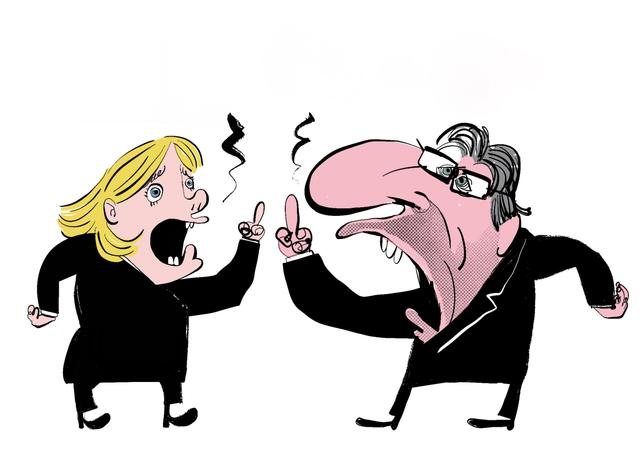
Neither of the two candidates leading the polls ahead of France's presidential election is seriously tackling the country's colossal debt, and that omission could trigger a financial crisis across the eurozone, according to Wolfgang Münchau, a specialist in European economics.
The warning centers on the fiscal programs of Jean-Luc Mélenchon and Marine Le Pen, the frontrunners in early polling. Münchau argues that a crisis is therefore very probable, because the two leading contenders have built their campaigns around measures that would either freeze the debt problem or deepen it rather than resolve it.
Mélenchon's approach, according to the analysis, is to freeze the debt. Such a move would put France on a collision course with its European partners and risks setting off a crisis in the eurozone, the currency union whose stability depends on member states honoring their financial commitments. A unilateral freeze would call into question the credibility of French borrowing and, by extension, the framework that underpins the single currency.
Le Pen's budget plans are presented as equally destabilizing from a European standpoint. Her program would strip away two-thirds of France's contribution to Europe, a reduction of such scale that it would reshape the country's relationship with the institutions it helps finance. For a founding member of the European project, a cut of that magnitude would represent a break with decades of fiscal and political practice.
The common thread, in Münchau's assessment, is that neither candidate has offered a credible path toward reducing the debt itself. Both instead propose measures that postpone or avoid the reckoning, leaving the underlying burden untouched while adding new pressures on public finances and on France's European partners.
The stakes extend well beyond Paris. France is one of the largest economies in the eurozone, and its fiscal health is bound up with the stability of the currency area as a whole. A loss of confidence in French debt would not stay contained within national borders; it would test the mechanisms European leaders have built to protect the union, and it would raise difficult questions about how far member states are prepared to go to support one another.
The analysis also points to a broader political dynamic: the debt question, though central to the country's future, has been pushed to the margins of the campaign. Voters are being offered competing visions of France's place in Europe, but not a serious accounting of how the country will pay for them. That gap between electoral promise and fiscal reality is what makes the prospect of a crisis so credible.
For European policymakers, the warning is a reminder that the continent's financial stability can be unsettled by the choices of a single large member state. For French voters, it raises the question of whether the campaign will eventually confront the debt, or whether the reckoning will arrive after the ballots are counted.
4