Climate Scientist Kate Marvel Explains Departure from NASA
At the Climate Forward conference, climate scientist Kate Marvel publicly discussed her decision to leave NASA, offering rare insight into the pressures facing government researchers.
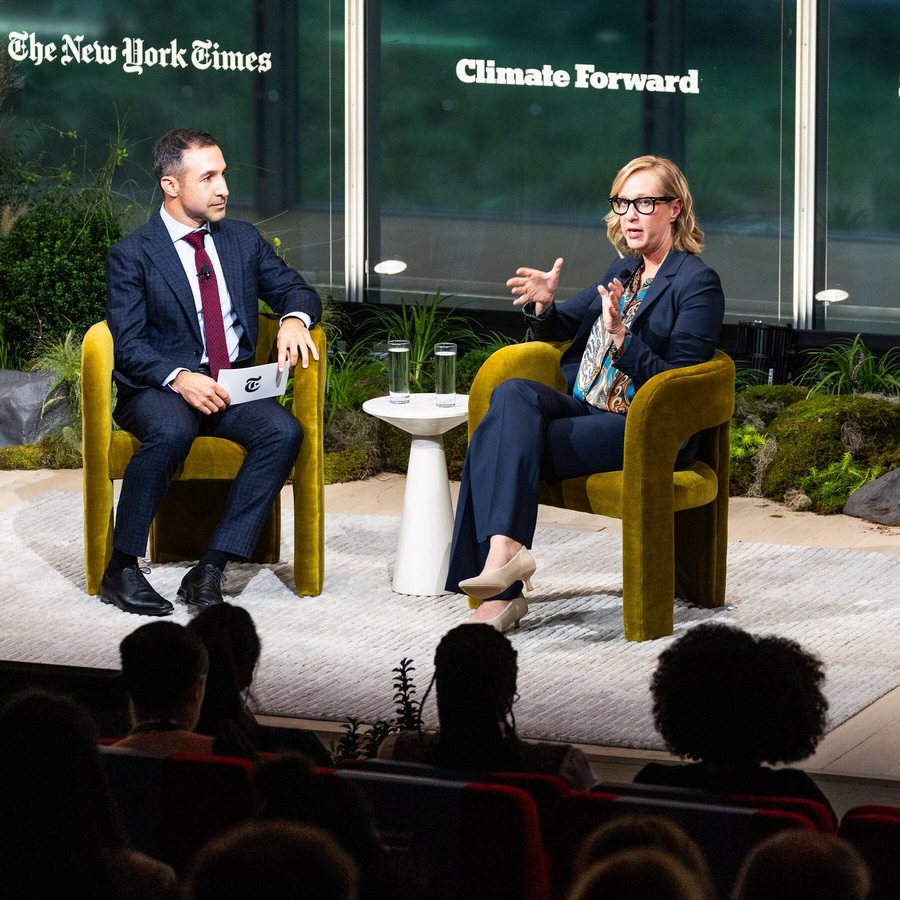
Climate scientist Kate Marvel used a public appearance at the Climate Forward conference to explain why she left NASA this year, offering a rare window into the pressures weighing on government researchers who study a politically charged subject.
Marvel appeared onstage Wednesday in conversation with Chico Harlan. Her remarks centered on the reasons behind her departure from the space agency, where her work had focused on climate modeling and the physical processes that shape the planet's changing climate.
Her decision to speak publicly matters because NASA has long been a cornerstone of American climate science. The agency's satellites, instruments and research programs supply much of the observational record on which global understanding of a warming planet depends. When a scientist of Marvel's standing leaves, it raises questions about the environment in which that work is carried out.
Marvel did not frame her exit as a rejection of the science. Instead, her account pointed to the broader conditions under which federal climate researchers operate, a subject that has drawn increasing attention as climate policy has become a flashpoint in national politics. Government scientists have in recent years faced shifting priorities, budget uncertainty and occasional political scrutiny of findings that carry implications for energy, industry and regulation.
The conference setting gave her remarks a wider audience than a routine agency departure might receive. Climate Forward brings together researchers, policymakers and advocates to examine how societies are responding to a changing climate. In that context, a scientist explaining why she chose to leave one of the world's most prominent scientific institutions becomes part of a larger conversation about the health of public science.
For readers who follow the intersection of faith, ethics and public life, the episode raises questions that go beyond any single agency. Scientific research into the climate touches on how communities understand stewardship of the natural world, responsibility toward future generations and the moral weight of evidence. The departure of an experienced researcher from a public institution is not only an administrative matter; it affects the shared stock of knowledge on which those debates rest.
NASA's climate work has historically been valued for its continuity. Satellites and long-term datasets are most useful when they are maintained across decades, and the scientists who interpret them carry institutional memory that is difficult to replace. When researchers leave, that continuity can be disrupted, even if the instruments keep operating.
Marvel's public explanation also reflects a broader trend in which scientists have become more willing to describe the pressures they face. Rather than treating career decisions as private, some researchers now discuss them as indicators of the conditions under which public-interest science is conducted.
Her remarks at the conference did not stand alone. They arrived amid continuing debate over how governments fund, direct and sometimes question climate research. That debate has consequences for universities, laboratories and agencies that depend on stable support to plan multiyear studies.
What emerges from Marvel's account is a picture of a scientist weighing her role within a large public institution against other ways of contributing to the field. Her decision to leave NASA, and to explain it openly, invites attention to the people behind the data and to the institutional settings that make their work possible.
6