NASA Finds Largest New Impact Crater Ever Recorded on the Moon
A 222-meter-wide crater named McGetchin formed in 2024 when a building-sized object struck the lunar surface, marking the largest fresh impact ever detected in the solar system.
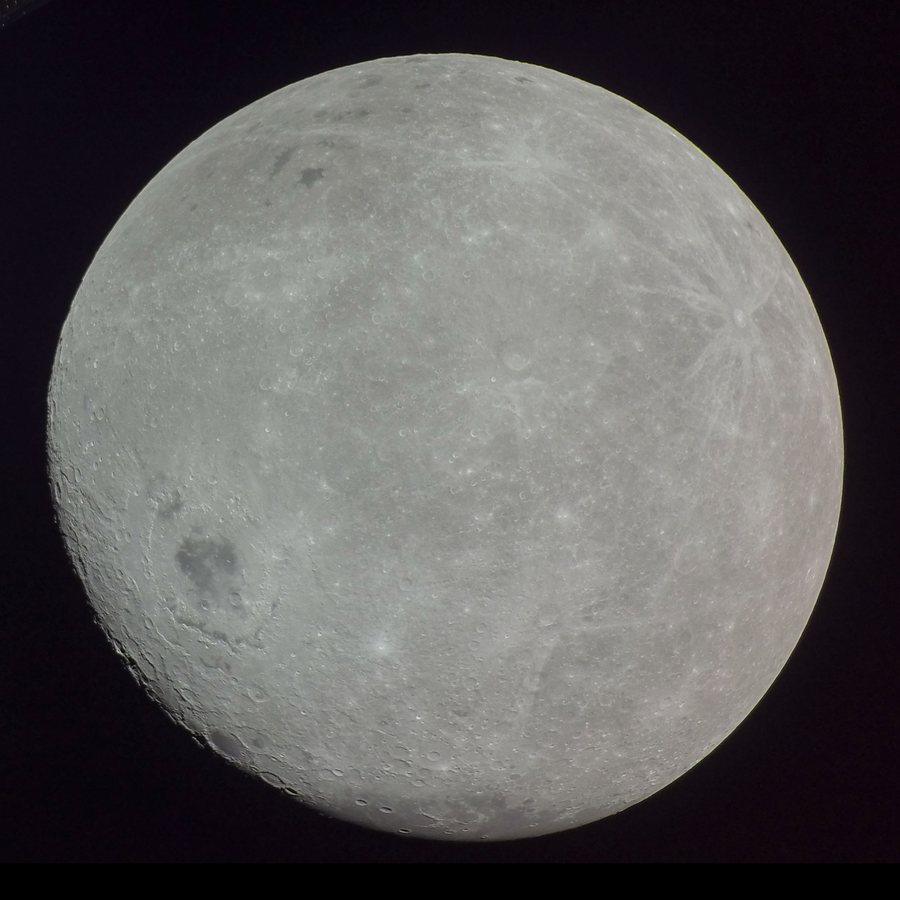
Scientists have identified the largest newly formed impact crater ever discovered in the solar system, a 222-meter-wide scar on the Moon created when a comet or asteroid the size of a three- to six-story building slammed into the lunar surface in 2024. The finding, published Wednesday in Science Advances, describes a once-in-a-century event that briefly reshaped the lunar landscape and left a signature still visible in temperature data.
The crater, officially named McGetchin after pioneering lunar scientist Tom McGetchin, measures 728 feet across and 43 meters deep. It was first spotted by researcher Robert Wagner during a routine check of images from the Lunar Reconnaissance Orbiter Camera's Wide-Angle Camera in October 2025. Higher-resolution observations over the following months allowed scientists to measure the feature and examine the surrounding terrain in detail.
According to NASA, the impact occurred between April 11 and May 22, 2024. The collision hurled debris across the surrounding area and created a «cold spot» roughly seven kilometers wide, where nighttime temperatures are up to nine degrees Celsius lower than in nearby regions. Researchers believe the impact loosened, or «fluffed up,» the regolith — the loose rock and dust covering the Moon — making it less dense and therefore less able to retain heat.
The discovery dwarfs previously detected recent impacts. Before McGetchin, the largest contemporary impact crater identified on the Moon measured about 70 meters across, making the new feature more than three times wider. Its size and freshness offer an unusually clear window into how impacts reshape airless bodies, and into the physics of crater formation at scales rarely observed in real time.
The finding arrives as the Moon becomes an increasingly important focus of international space exploration. NASA Administrator Jared Isaacman told CBS News in July that the United States is «very much in a space race» with China. NASA's Artemis program is targeting 2028 for its first crewed lunar landing since the Apollo era, with the longer-term goal of establishing a sustained human presence on the Moon.
Russia and China, meanwhile, announced plans in 2021 to jointly develop the International Lunar Research Station. As part of that project, Russia plans to deploy a power station on the Moon within the next decade. During Chinese President Xi Jinping's visit to Moscow last May, the two countries signed an agreement on building a nuclear power plant on the Moon to provide energy for the planned research station, which is expected to become operational in the mid-2030s.
For scientists, the McGetchin crater is more than a record-breaking feature. It is a natural experiment that exposes fresh subsurface material and provides a benchmark for understanding impact rates on the lunar surface. The cold spot's persistence also offers clues about how heat moves through the lunar soil, a factor that could matter for future habitats and equipment.
The crater's discovery was made possible by the Lunar Reconnaissance Orbiter's long-running imaging campaign, which has now documented multiple fresh impacts. Each new crater helps calibrate models of how often the Moon is struck and by what, information that becomes more urgent as human activity on and around the Moon accelerates.