New Simulations Suggest the Moon Formed in Just Five Hours
Advanced impact models that account for the mechanical strength of rock and metal indicate the Moon may have coalesced almost immediately after a Mars-sized collision with the early Earth, rather than gradually from a debris disk.
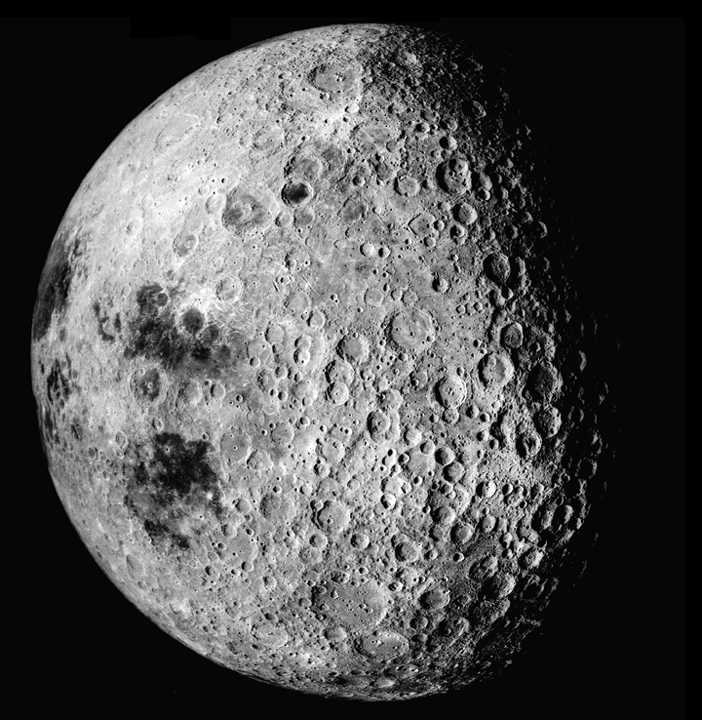
The Moon may have taken shape far more quickly than previously believed. New simulations that incorporate the mechanical strength of geological materials suggest that a fully formed Moon could have emerged within roughly five hours of the colossal impact between the early Earth and a Mars-sized body known as Theia, according to a study published in The Astrophysical Journal Letters.
The findings challenge the long-standing picture of a slow, gradual assembly. In the standard giant-impact scenario, a massive collision about 4.5 billion years ago threw a vast cloud of debris into orbit around the young Earth. Over time, that debris is thought to have clumped together by gravity to form the Moon. Earlier models treated the colliding bodies as fluids, assuming the violence of the impact would have melted and vaporized much of the Earth and Theia.
The new work, developed at the University of Arizona and the University of Bern in Switzerland, uses an advanced version of Smoothed Particle Hydrodynamics simulations that factor in how materials resist deformation. This matters because the rocks and metals that made up Theia and the proto-Earth would not have behaved like simple liquids. The same approach is already used to model collisions between smaller bodies such as asteroids, dwarf planets, and moons.
According to the results, temperature is the decisive variable. Depending on how hot the colliding bodies were, the simulations produce very different outcomes. In some scenarios, a fully intact Moon appears within hours of the impact. In others, a protolunar disk forms around the Earth and the Moon assembles from it over a much longer period. When the researchers applied the same parameters used in earlier models, the simulation yielded an intact Moon in about five hours.
That result had appeared in previous simulations, but this is the first time it has been obtained while also accounting for the mechanical strength of the materials and how that strength depends on temperature. The finding does not, however, resolve another major puzzle: the striking similarity between the Earth and the Moon. Analysis of lunar rocks returned by the Apollo missions has shown that their isotopic composition closely resembles that of terrestrial rocks, suggesting the two bodies may share a common origin.
One possible explanation is that Theia and the proto-Earth formed from a common region of the solar system, unlike Mars, which is compositionally distinct from both the Earth and the Moon and may have formed farther away. Understanding the Moon's birth therefore requires more than reconstructing the moment of impact. It also requires knowing what the Earth and Theia were like before they met: how hot they were, what materials composed them, and how well they could resist deformation.
The Moon is the only large natural satellite of a rocky planet in the solar system. With a diameter of about 3,500 kilometers, it is larger than every dwarf planet, including Pluto. Its gravitational influence may have helped stabilize Earth's rotation axis, favoring conditions that made the planet habitable. Yet despite decades of observation and exploration, the precise manner and timing of its formation remain uncertain.
The study suggests that the primordial conditions of the colliding bodies, not just the force of the impact, are central to the Moon's origin story. At a distance of 4.5 billion years, those conditions are exactly where the answer may lie.
68