Space Architecture Faces Questions of Daily Life Beyond Earth
As commercial space stations and a lunar base move from fantasy to planning, architects are confronting the mundane but decisive questions of who gets a window, who controls the thermostat, and who governs life off-world.
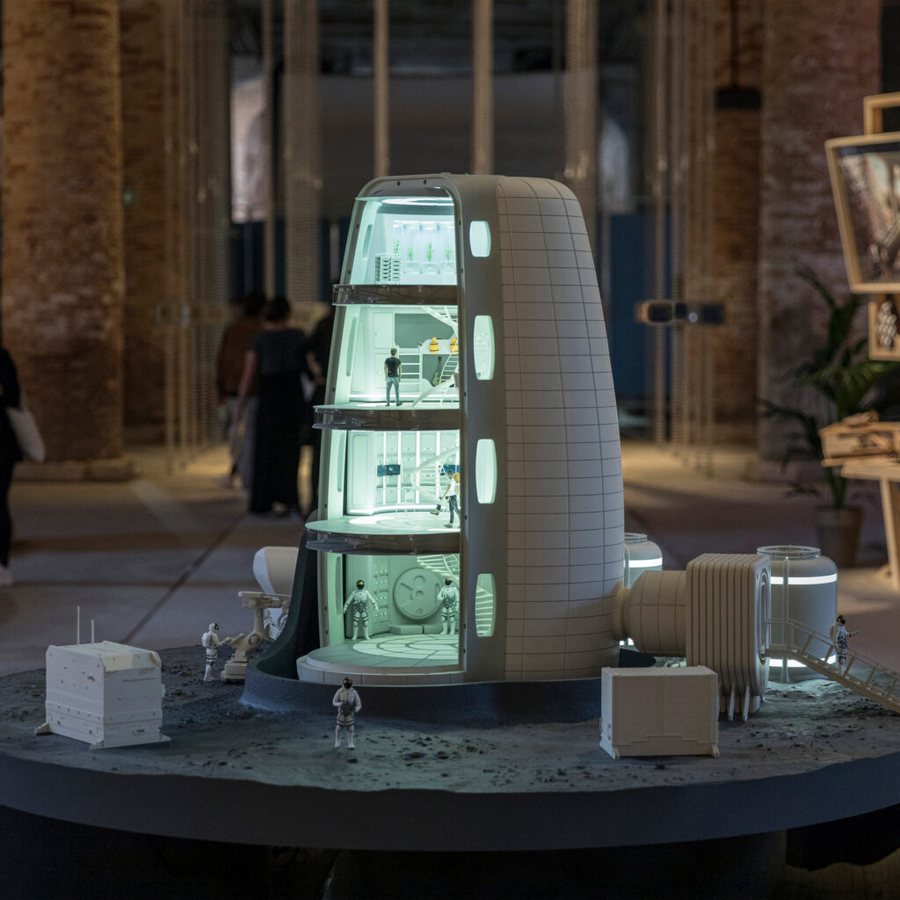
The first commercial space station, Haven-1, is scheduled to launch next year, with a second, Axiom, to follow a few months later. NASA plans to return to the moon in 2028 and begin building a semi-permanent base, with a nuclear reactor expected by the end of the decade. By the time the International Space Station is retired in 2030, tens of private stations could be available to replace it. Elon Musk has set his sights on a city of a million people on Mars by the 2050s.
Getting people into space is one challenge. Creating somewhere they might actually want to live is another. That is where architecture enters the picture, and firms including Foster + Partners, BIG and SOM have already turned their attention to what might be possible beyond Earth. The elegant visions of films such as 2001: A Space Odyssey are giving way to the messy business of everyday existence and the problems of extraterrestrial construction.
The obvious challenges are formidable but well rehearsed: shielding people from radiation, sourcing oxygen, and recycling water. Engineers have mostly answered these questions. But once people are asked to live somewhere for years rather than merely visit, other questions arise. Such as who gets a window. It may sound trivial, but it is not. A window in space is both expensive and a potential point of failure. Engineers would prefer a solid metal tube. Yet astronauts value their views of Earth enormously, and Earth-gazing is a favourite way to unwind aboard the ISS. Being able to see out is considered essential for morale.
Imagine the first lunar settlement. There are six bedrooms but only two windows. Who gets them? The commander? The tourist who pays the most? Does everybody receive ten minutes of Earth-gazing a day? Or does the window belong to everyone, because something so precious cannot become private property? The same applies to almost every spatial decision. Who gets a room with a door? How large is it? Can inhabitants personalise it? Where can somebody go to be alone, and where must they encounter other people? Who controls the thermostat, lighting or music? In a lunar base containing 30 people, these are potentially bones of contention. There has been at least one stabbing in the Antarctic, so the danger is real.
That is before deciding who gets to run the place. Would it be a government body or a corporation such as SpaceX or Blue Origin, which are manufacturing the rockets likely to haul people and materials to the moon and Mars? History should make us wary of who gets to dictate what extraterrestrial living looks like. Henry Ford's Fordlandia, established in the Amazon in the 1920s to secure rubber, was conceived not simply as an industrial settlement but as an attempt to export Ford's version of American life. Workers received company housing, segregated of course, but had prescribed diets and had to follow strict behavioural rules. American managers had running water and the best views, while the Brazilians relied on wells.
The company town is an old model: housing, employment, shops and infrastructure controlled by the same organisation. On Earth, at least, you can leave. What does leaving mean when the exit is miles across the moon and stepping outside without permission might mean dying? This matters because the economics of space point towards precisely this danger. The first extraterrestrial settlements will require immense investment. Governments will fund some, but corporations will provide most of the transport, communications and habitats. Commercial necessity can gradually become governance. The East India Company offers an extreme historical precedent: a trading firm that accumulated taxation, administrative and military powers as business slid into tyranny.
Space could easily witness a 21st-century version. Imagine a Martian settlement where one corporation supplies your employment, accommodation, oxygen, water, communications and return ticket. You are simultaneously worker, tenant and customer. Architecture could make that unequal relationship physical, as in Fordlandia. None of this is an argument against commercial spaceflight. Without private capital, much of the extraordinary acceleration now taking place would be impossible. Nor can architects wish away physics. A window genuinely is more dangerous than a wall. But if extraterrestrial architecture is to be produced, it must do more than ensure survival. A habitat that maintains oxygen while steadily degrading its inhabitants' mental health falls short of the task.
10