Guardia Civil warns resources insufficient for possible new Ceuta migrant surge
The Guardia Civil has warned that its officers in Ceuta are too few to handle a possible new mass entry of migrants around August 15, after fresh calls on social media urged another crossing. A union spokesperson said no protocol can replace the missing resources, with at least 200 additional agents needed.
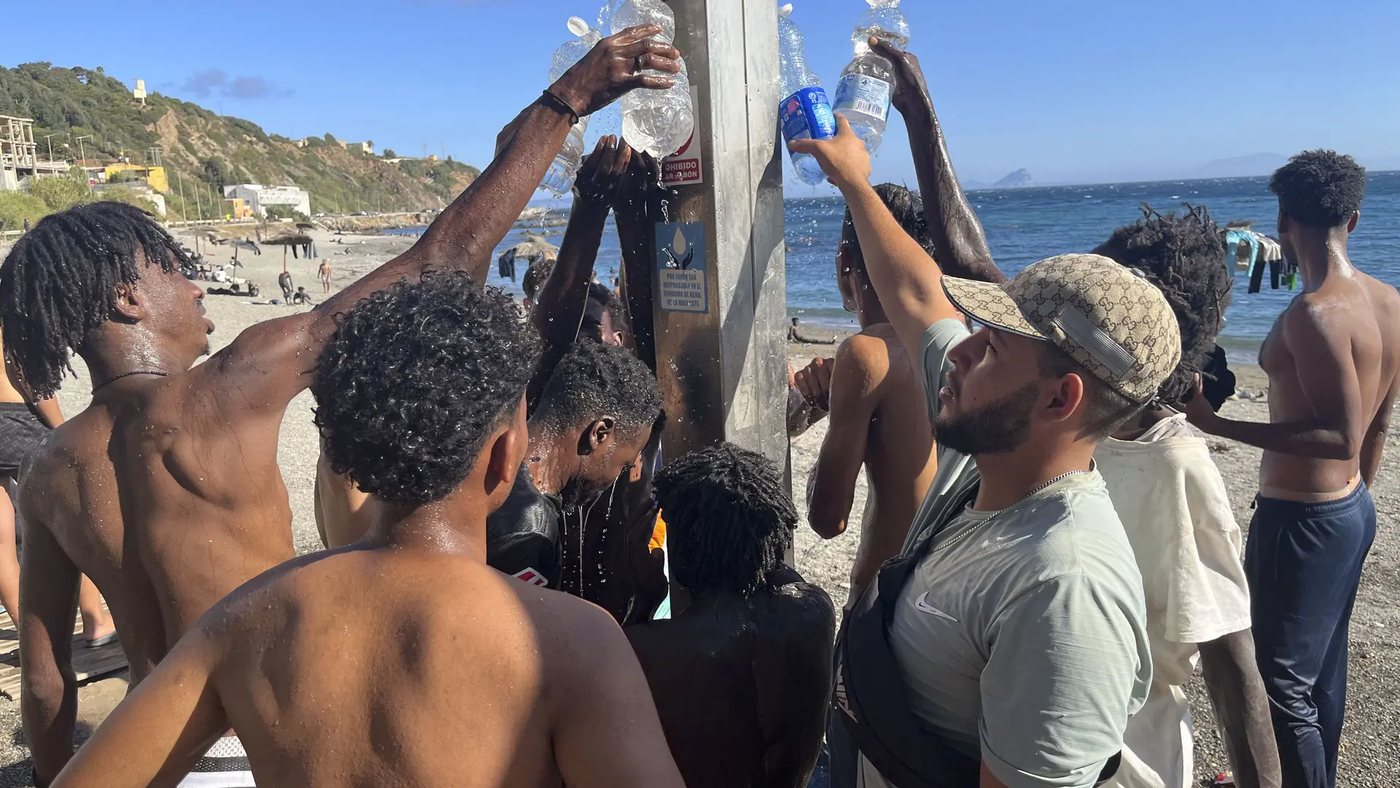
The Guardia Civil has warned that it lacks the manpower needed to respond to a possible new mass entry of migrants into the Spanish enclave of Ceuta, after calls circulating on social media urged another large crossing for mid-August. The warning comes just over a week after thousands of people entered the autonomous city on the North African coast, stretching security forces to their limit.
Olaya Salardón, a spokesperson for the Unified Association of Civil Guards (AUGC), said resources in the area are clearly insufficient. «No protocol can replace the lack of means», she told RTVE's Canal 24 Horas when asked what procedures would be applied if a fresh avalanche of people reached the border. She estimated that only about one hundred Guardia Civil officers are currently deployed in Ceuta and that at least two hundred additional agents would be needed to mount an operation capable of handling another mass entry like the one that occurred last Thursday.
The government of Ceuta said on Tuesday that it is concerned about the spread of a new call on social networks for a mass entry of migrants on or around August 15, a scenario that could aggravate the crisis that erupted in the city last week. While police, Guardia Civil and army units have been temporarily reinforced, Salardón argued that Ceuta needs a permanent staffing base so that protocols can be properly designed and applied in such emergencies.
«Agents already have to deal with enormous pressure», she said. «The personnel we need should be permanent. The border needs a comprehensive strategy, not improvised measures every time something happens.»
The situation in Ceuta remains tense. The president of the autonomous city, Juan Jesús Vivas, has said he believes around 6,000 irregular migrants are still moving around the city, a figure that contradicts Interior Minister Fernando Grande-Marlaska's earlier estimate of roughly 2,000 remaining. The discrepancy has fed a political dispute between the national government and the city administration as well as among Spanish parties.
The crisis has also drawn criticism from abroad. Portugal's Prime Minister, Luís Montenegro, accused Spain of encouraging a «call effect» through an alleged lack of regulation of migration flows. Some governments, he said, adopt policies that attract migrants without providing the conditions to receive and integrate them, comments widely read as a clear allusion to Madrid. He spoke on the sidelines of the inauguration of Portugal's first private family health unit in Torres Vedras, near Lisbon.
In Madrid, first deputy prime minister and economy minister Carlos Cuerpo said he hoped to avoid a «judicial conflict» with the opposition People's Party over a hypothetical refusal by PP-governed regions to take in migrant minors from Ceuta. He attributed the party's reluctance to fears of breaking its coalition agreements with the far-right Vox formation.
The PP's deputy secretary for sectoral coordination, Alma Ezcurra, called for the minors who arrived in Ceuta last week alongside thousands of adults to be registered and identified «for their own safety». She argued that statistics from the past year suggest that in some regions, including Madrid and the Balearic Islands, up to half of those registered as minors are in fact adults.
Authorities on both sides of the border remain on alert, monitoring any movement that could lead to a new attempt to enter Ceuta. The Guardia Civil has insisted that, regardless of the protocols in place, a lasting response to the repeated pressure on the border depends on adequate staffing and a coherent, long-term strategy rather than reactive measures adopted after each emergency.