Wamani Raises a Moral Question About Who Gets to Buy Resilience
The Argentine retreat is not only a technology story. Its private systems for energy, food, travel and knowledge expose a widening gap between individual escape plans and public preparedness.
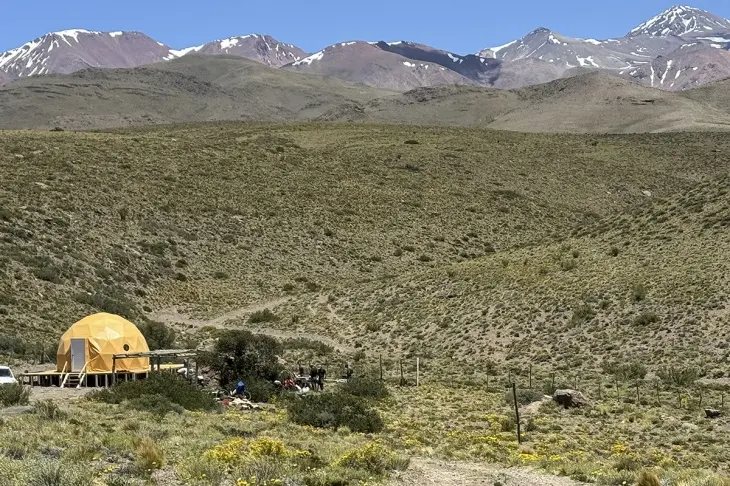
A remote ranch in Argentina has become a striking symbol of a question that is older than artificial intelligence: when people fear social collapse, do they invest in the survival of the community or in the ability to leave it behind?
Wamani, a 32,000-hectare property in Mendoza, belongs to six wealthy technology entrepreneurs. The Financial Times reports that the site now includes small homes, geodesic domes, solar power and an airstrip. Its owners plan to add cattle and are considering local copies of large language models running on solar-powered computers in case global servers fail.
The technology is unusual, but the moral structure is familiar. Every component is a private substitute for a public or shared system. Solar generation stands in for the grid. The airstrip provides an alternative to ordinary transport routes. Livestock and possible crop production reduce dependence on food supply chains. Local AI models would preserve access to some stored knowledge if cloud services disappeared.
For people with sufficient wealth, redundancy can be purchased. That is the most important fact behind the viral phrase “billionaires’ ark,” even though the phrase is not literally accurate for every owner. Dan Lubetzky, the founder of Kind, is a billionaire. The Financial Times estimates project leader Martín Varsavsky’s fortune at around $700 million. The group is better described as very wealthy technology entrepreneurs than as six confirmed billionaires.
The reported cost also deserves precision. Varsavsky told the Financial Times that the owners had spent almost $10 million so far, not more than $10 million as some social posts claim. The amount is significant, but the moral question is not created by a particular dollar threshold. It comes from the contrast between private capacity to duplicate essential systems and the fact that most people cannot build a second grid, a second food chain or a private air corridor.
Wamani is not a sealed fortress. Its official website openly markets stays, adventure tourism, meals and guided activities. Prospective visitors can inquire about availability, and the property offers help coordinating private flights. The Financial Times says the owners are considering Airbnb. That makes the popular claim that entry is possible only through personal connections outdated.
This commercial side complicates the picture. In ordinary times, Wamani can be a hospitality business and a place to experience a dramatic Andean landscape. The same buildings and roads that would support a crisis refuge can generate income. The project therefore sits between retreat, enterprise and contingency plan rather than fitting neatly into the image of a bunker.
The name Wamani itself comes from an Andean Quechua idea of the protective spirit or guardian of a mountain. The official project uses that meaning to frame the land as a place to inhabit respectfully. Yet large private refuges inevitably invite another question: what does stewardship mean when a landscape is also being valued as an escape option for a small group of people with exceptional resources?
There is no simple answer. Individuals have legitimate reasons to protect their families, and preparedness is not inherently selfish. Solar power, water planning and local food production can be responsible practices. The ethical tension appears when private resilience becomes a substitute for confidence in shared institutions rather than a complement to them.
Wamani may never be used for the catastrophe its owners imagine. Its lasting significance could instead be cultural. It shows that anxiety about war, infrastructure and technology is no longer confined to abstract debate. For some of the world’s wealthiest entrepreneurs, that anxiety is becoming land, hardware and private redundancy. The next moral test is whether societies invest with equal seriousness in resilience that does not require owning 32,000 hectares to access it.
72