Mathematicians Split Over AI as China Launches Research Alliance
Twenty-five Fields Medal winners in the West warn that AI-generated proofs could weaken mathematical understanding, while Fields Medalist Shing-Tung Yau has launched an alliance of eight institutions and over 1,000 scientists to push AI into mathematical research.
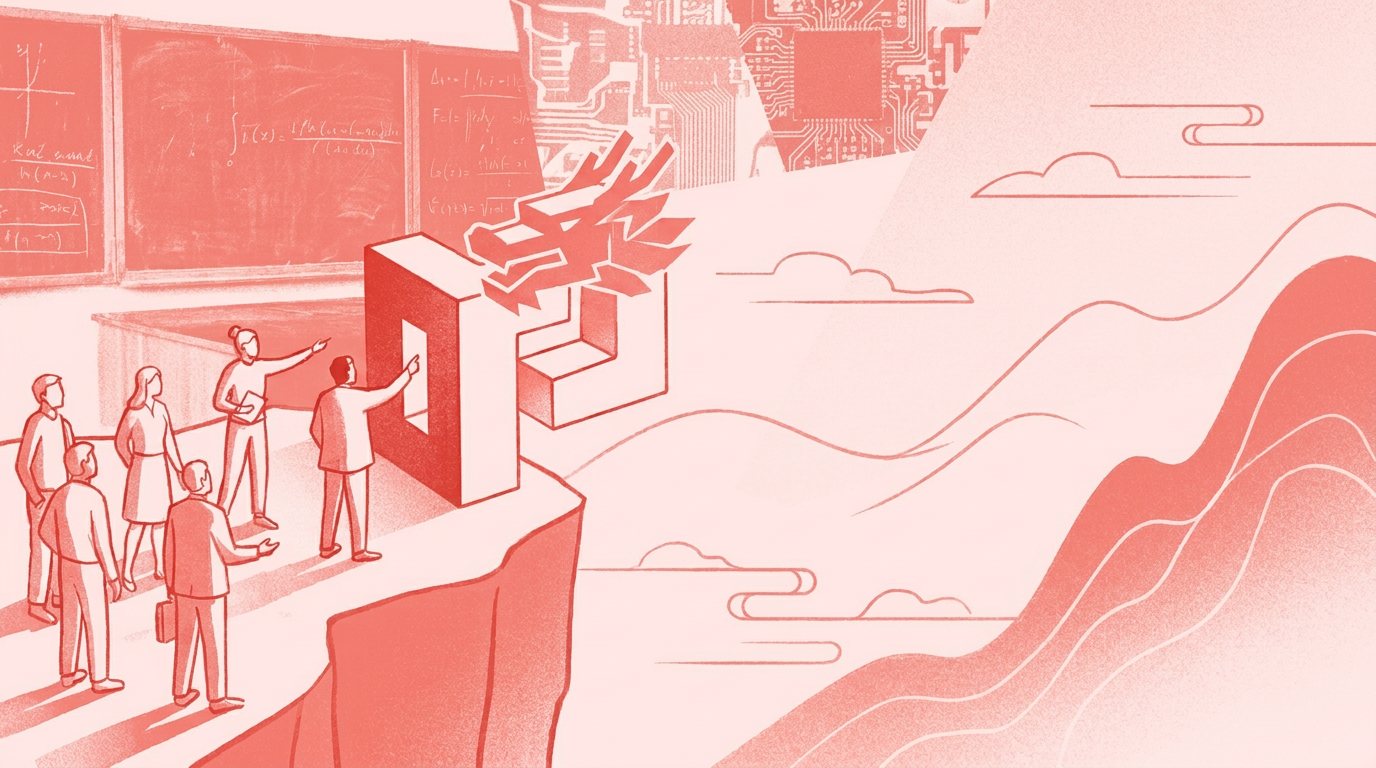
Twenty-five Fields Medal winners in Western countries have issued warnings about the growing use of artificial intelligence in mathematical research, arguing that AI-generated proofs risk weakening the discipline by allowing mathematicians to rely on machine output they do not fully understand. The concern has grown serious enough that parts of the mathematical community have called for a boycott of AI tools in proof work, reflecting a deepening unease about how automation may reshape the way mathematics is practiced and taught.
The debate centers on a specific worry: that AI systems capable of producing plausible proofs could encourage researchers to accept results without the deep comprehension that has traditionally defined mathematical work. Critics fear this could erode the training of young mathematicians and dilute the rigor that gives the field its authority. The warning from such a large group of Fields Medal winners — the discipline's most prestigious honor — signals that the anxiety is not confined to the margins of the profession.
While Western mathematicians debate restrictions, China is moving in the opposite direction. Fields Medal winner Shing-Tung Yau has launched an alliance of eight institutions and more than 1,000 scientists with the explicit goal of pushing artificial intelligence into mathematical research. The initiative represents a significant organizational commitment, bringing together a scale of talent and institutional backing that contrasts sharply with the caution voiced in the West.
The two developments illustrate a widening divergence in how major mathematical communities are approaching AI. In the West, the emphasis has fallen on risk: the possibility that machine-generated proofs could undermine the intellectual formation of researchers and weaken the field's internal standards. In China, the emphasis is on acceleration, with AI framed as a tool to expand research capacity and integrate computation more deeply into mathematical discovery.
Yau's alliance is notable not only for its size but for its structure. By uniting eight institutions and over a thousand scientists, it creates a coordinated network rather than a collection of isolated projects. That kind of organization could allow for shared datasets, common benchmarks, and faster dissemination of AI-assisted results — advantages that fragmented efforts in other countries may struggle to match.
The stakes extend beyond national prestige. Mathematics underpins cryptography, engineering, physics, and increasingly the machine-learning systems themselves. If AI becomes a standard instrument of mathematical research, the institutions that shape how it is used may influence which problems get solved, which methods become standard, and how the next generation of mathematicians is trained.
For now, the Western response remains largely a matter of professional debate and voluntary restraint, with no indication of a unified policy. The boycott calls and warnings from Fields Medal winners reflect a desire to protect the discipline's traditions, but they also raise questions about whether caution can be sustained if other major research powers press ahead.
The contrast is likely to sharpen as AI tools improve. If Yau's alliance produces notable results, the argument that AI inevitably degrades mathematical understanding may become harder to maintain. If it produces errors or shallow work, the Western warnings will look prescient. Either way, the direction of mathematical research — and the role of human insight within it — is now a subject of open competition between two very different approaches.
4