Lebanese Film Festival Opens in Paris With Nadine Labaki Retrospective
The sixth edition of France's Lebanese Film Festival opens at the Elysées Lincoln cinema in Paris with Nadim Tabet's supernatural thriller «In This Darkness I See You», alongside a retrospective of Nadine Labaki's work.
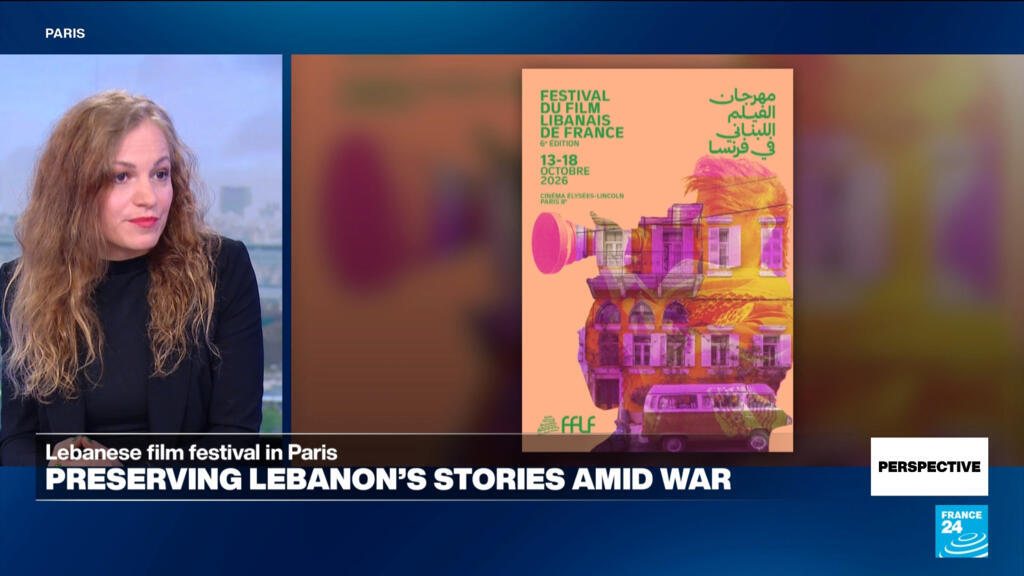
The sixth edition of France's Lebanese Film Festival opens this week at the Elysées Lincoln cinema in Paris, bringing Lebanese cinema to French audiences at a time when cultural life in Lebanon remains under strain. The festival opens with Nadim Tabet's supernatural thriller «In This Darkness I See You», a work that sets the tone for an edition built around memory, loss, and the persistence of storytelling.
This year's programme includes a retrospective devoted to the actress and director Nadine Labaki, one of the most recognised figures in Lebanese cinema. The retrospective features her Oscar-nominated film «Capernaum», which brought international attention to the social realities of Beirut and to Labaki's distinctive blend of realism and compassion. The inclusion of her work gives the festival a historical arc, placing newer Lebanese voices alongside an established filmmaker whose career has become a reference point for the country's cinema.
Festival president Sarah Hajjar spoke about the event's role in preserving Lebanese stories at a moment when war and instability have made cultural production increasingly difficult. The festival, now in its sixth year, has become a regular fixture in Paris, offering a platform for filmmakers whose work might otherwise struggle to find audiences abroad. Its location in the French capital reflects the long-standing cultural ties between France and Lebanon, ties that have often been expressed through language, education, and the arts.
The opening film, Tabet's «In This Darkness I See You», is a supernatural thriller, a genre that allows the director to explore themes of grief and haunting in a register that departs from straightforward social realism. Its selection as the opening night film suggests the festival's interest in the full range of Lebanese filmmaking, from politically engaged drama to genre cinema. The film's title itself evokes a tension between darkness and visibility that resonates with the broader question of how Lebanese stories are seen and remembered outside the country.
Lebanon's cultural sector has faced repeated disruptions in recent years, with economic collapse and conflict affecting production, distribution, and the ability of audiences to gather in cinemas. Festivals abroad have taken on an added significance, functioning not only as showcases but as archives of a national cinema that continues to work under difficult conditions. The Paris event is part of a wider network of Lebanese film screenings in Europe and beyond, but its position in France gives it particular visibility.
The retrospective of Labaki's work is likely to draw attention beyond the Lebanese diaspora. «Capernaum» was nominated for the Academy Award for Best Foreign Language Film, and its young cast and documentary-like texture made it a landmark in contemporary Arab cinema. Pairing that film with newer work allows the festival to present Lebanese cinema as a living tradition rather than a fixed canon, with each generation responding to the circumstances of its time.
The festival runs at the Elysées Lincoln cinema in Paris, a venue that has hosted the event since its early editions. Its opening on a Tuesday evening places it within the regular rhythm of the Parisian film calendar, where specialised festivals compete for attention. For Lebanese filmmakers, however, the stakes go beyond programming: the festival offers a rare chance to present their work in a context where Lebanese stories are the main event rather than a marginal note.
As the sixth edition begins, the festival's combination of a genre opening night and a major retrospective suggests a programme designed to speak to both cinephiles and a broader public. The presence of Labaki's films, alongside Tabet's thriller, frames Lebanese cinema as a body of work concerned with memory, survival, and the act of seeing clearly in difficult times. The festival continues in Paris with screenings and events centred on that body of work.
5