France and Spain face off in World Cup semi-final amid debate over national identity and football
As Spain prepares to face France in the World Cup semi-final, a controversy sparked by former Spanish Prime Minister Mariano Rajoy's comments about the French team's composition has reignited discussions about nationality, immigration, and identity in modern football, with one in four World Cup players representing a country other than their birthplace.
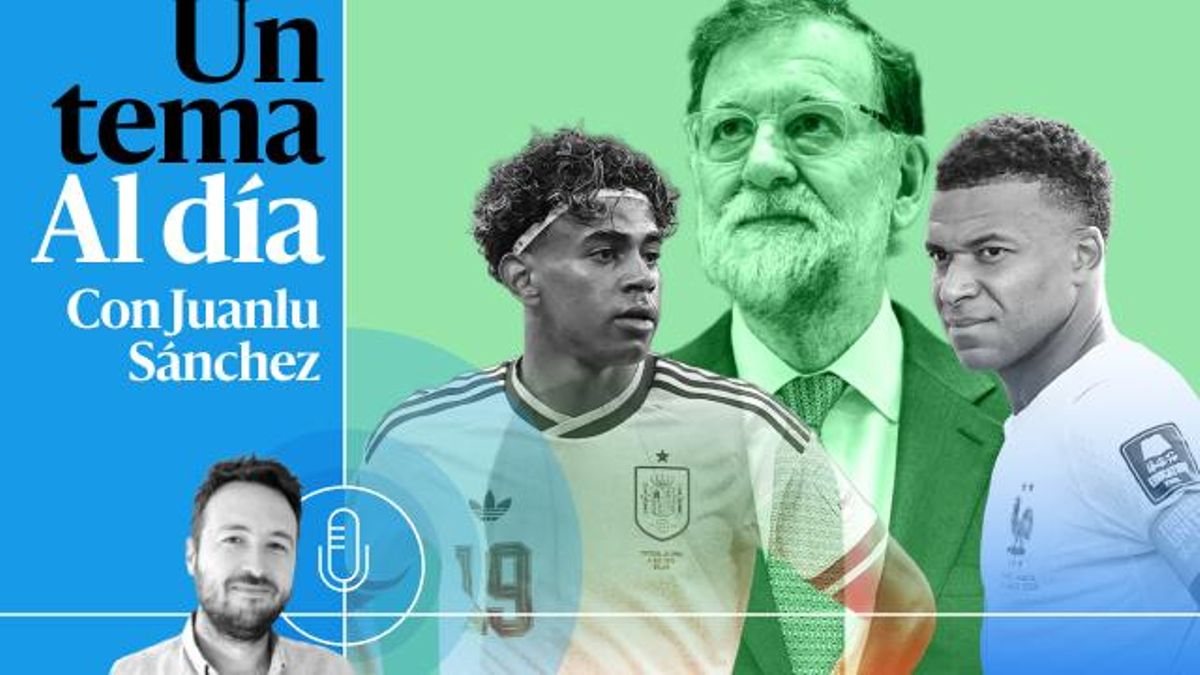
Spain and France are set to meet in the World Cup semi-finals, but the match has already generated significant debate off the pitch following controversial remarks by former Spanish Prime Minister Mariano Rajoy. In a social media post, Rajoy wrote that France has «a squad of the highest level, but without French players,» a comment that has been widely interpreted as questioning the national identity of players with diverse backgrounds who represent the French team.
The comment has drawn sharp criticism, particularly given that only three of the 26 players in France's World Cup squad were born outside the country. The vast majority are French-born, though many come from families with roots in Africa and other regions. The controversy highlights a broader trend in international football: according to data cited in the analysis, one in four players at this World Cup is representing a country in which they were not born. However, this phenomenon is not concentrated in European teams like France, but rather in African squads such as Morocco, where 20 of its 26 players were born abroad.
The debate over national identity in football is not new, but it has gained renewed urgency as global migration patterns reshape the demographics of many nations. In the case of France, the team's diversity has long been a source of both pride and tension. The French squad includes players of African, Caribbean, and other origins, many of whom were born and raised in France. Critics of Rajoy's comment argue that it reflects a narrow and outdated view of what it means to be French, one that ignores the reality of a multicultural society.
Spain's own team is not immune to these dynamics. The Spanish squad includes players who are children of Moroccan immigrants, as well as a player born in France. Meanwhile, Morocco's team is a striking example of the global nature of modern football: the majority of its players were born in European countries, including Spain, France, the Netherlands, and Belgium, and have chosen to represent their parents' or grandparents' country of origin. This pattern has been described as a form of «football without borders,» where national teams increasingly reflect the complex identities of a globalized world.
The issue has been analyzed by journalists and experts covering the World Cup for. Alfonso Alba, director of Cordópolis, and a contributor to the outlet's World Cup coverage, has examined how these trends are reshaping the sport. Additionally, the director of the media outlet África Mundi has provided insight into the growing connections between African and European football, noting that many players with dual heritage are choosing to represent African nations, strengthening ties between continents.
The controversy also touches on deeper questions about citizenship, belonging, and representation. In many countries, football is seen as a mirror of society, and the composition of national teams can spark debates about immigration, integration, and national identity. For some, the presence of players with diverse backgrounds is a sign of a healthy, inclusive society. For others, it raises questions about what it means to be a «true» national. These debates are not limited to France or Spain; they are playing out across Europe and beyond, as nations grapple with changing demographics.
As the semi-final approaches, the focus will inevitably return to the pitch, where both teams will compete for a place in the final. But the conversation sparked by Rajoy's comment is unlikely to fade quickly. It has opened a window into the complexities of identity in the 21st century, where borders are increasingly porous, and where the players on the field often embody the very connections that some political figures seek to deny.
The match between France and Spain is more than a football game; it is a reflection of a world in motion, where identities are multiple and where the lines between «us» and «them» are increasingly blurred. Whether on the field or in the stands, the question of who belongs and what it means to represent a nation will continue to be debated long after the final whistle.
106