Greece and Turkey continue to battle severe wildfires
Firefighters on the Greek island of Crete and in Turkey's Antalya province are fighting fresh wildfire outbreaks under extreme conditions. While the situation remains serious in Greece and Turkey, France and Spain are seeing an easing of the fire risk.
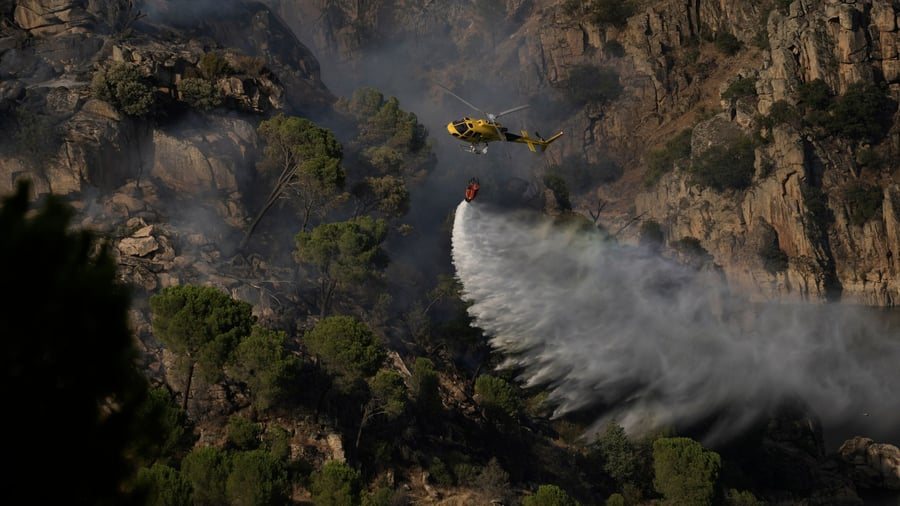
Firefighters in Greece and Turkey are continuing their battle against a wave of severe wildfires, with crews on the Greek island of Crete and in the Turkish province of Antalya working under extreme conditions to contain the latest outbreaks. The renewed flare-ups are keeping Southern Europe's forest fire crisis alive even as other parts of the region begin to recover.
The situation in both countries remains tense, as fresh fires keep flaring up in dry, difficult-to-reach terrain. In Antalya, a major coastal province on Turkey's Mediterranean shore, and in several other Turkish regions, emergency teams are struggling to bring the flames under control. The large number of new blazes is placing heavy strain on regional fire services, whose crews are fighting tirelessly to prevent the fires from spreading further.
Greece is facing a similar challenge on Crete, the country's largest island. Fire crews are deployed on multiple active fronts, with ground teams supported by aircraft in the worst-affected areas. The extreme conditions, including intense heat, strong winds and dry vegetation, are making their work considerably harder and allowing flames to spread rapidly from one area to the next.
The firefighting effort is all the more demanding because many fires are burning in remote mountain regions where access is limited. Units on the ground must coordinate closely with aerial support while monitoring fronts that can flare up again shortly after appearing to be under control. Such conditions are among the toughest that Mediterranean fire crews face during the summer season, and they leave little margin for error.
Elsewhere in Southern Europe, however, the pressure is now shifting. In France and Spain, which also experienced serious wildfire outbreaks in recent weeks, the situation has begun to ease. Fire crews in those countries are no longer facing the same acute pressure, and the immediate danger of further major blazes has receded for the time being.
The contrasting developments highlight how unevenly this year's wildfire season is unfolding across the region. While Greece and Turkey remain in the middle of an acute emergency, western Mediterranean countries are gradually returning to a calmer situation. For the authorities in the affected areas, there is little room for relief: the persistent heat and dryness that have fuelled the fires remain in place.
Across Southern Europe, the summer months have repeatedly brought similar wildfire outbreaks in recent years, with fires affecting coastal areas and mountain regions alike. This summer's crisis follows that familiar pattern: a combination of seasonal heat, dry ground and shifting winds has again created favourable conditions for flames to spread quickly. For authorities and fire services, the main difficulty lies in keeping enough resources available across large areas while responding quickly to the most dangerous fronts.
For the fire services of Greece and Turkey, the immediate priority is clear: hold the current fire fronts, protect threatened communities and bring the remaining outbreaks under control as quickly as possible. Crews on the ground continue to work around the clock under extreme conditions.