Kevin Rudd warns Xi Jinping seeks AI dominance and that a Taiwan grab would be catastrophic
Former Australian prime minister Kevin Rudd warns in an interview that Xi Jinping is trying to dominate the AI race through sheer scale and that a Chinese move on Taiwan would have drastic consequences.
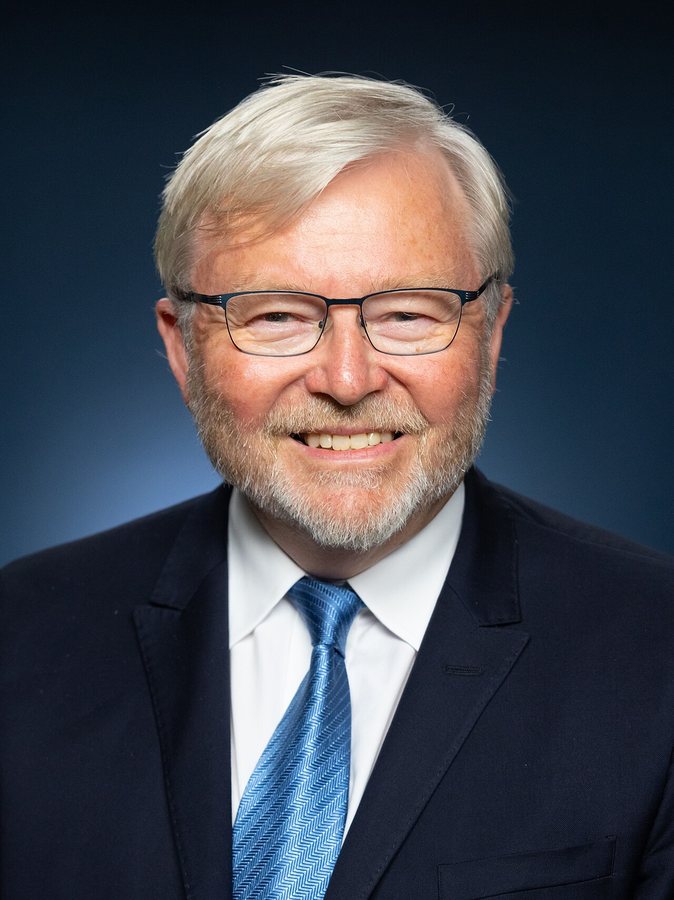
Former Australian prime minister Kevin Rudd has warned that Chinese President Xi Jinping is attempting to dominate the race for artificial intelligence through sheer scale, and that any Chinese attempt to seize Taiwan would carry drastic consequences. The remarks, made in an interview with Der Spiegel, were given in the context of a summit in Shenzhen, where Rudd used his appearance to address both technological competition and the risk of military conflict across the Taiwan Strait.
Rudd, who served as Australia's prime minister and has long been a commentator on relations with Beijing, argued that China's strategy in artificial intelligence rests less on a single breakthrough than on the capacity to mobilise vast resources, data and industrial capacity. In his view, this emphasis on scale is central to how Xi intends to compete with the United States and its allies in a field increasingly regarded as decisive for economic power and military capability. The interview presents the AI contest not as a separate commercial race but as one dimension of a wider strategic rivalry.
On Taiwan, Rudd was unequivocal in warning against war. He said that a Chinese move to take the self-governing island by force would not be a contained event but one with far-reaching repercussions for the region and for the global order. Such a scenario, in his account, would reverberate well beyond the Asia-Pacific, touching trade flows, security alliances and the stability of international institutions that have governed relations among major powers for decades.
The combination of the two themes reflects a broader debate in foreign policy circles about whether technological rivalry and territorial disputes are becoming mutually reinforcing. Rudd's comments treat economic leverage and military risk as closely linked, so that competition over advanced computing and competition over the status of Taiwan feed into one another. For readers following the relationship between Beijing and the West, his intervention underlines that the question of Taiwan remains the most sensitive point of tension, and that the technological race may raise the stakes around it.
Rudd's warnings also highlight the position of Australia and other middle powers, which find themselves closely tied to both the American security framework and deep economic exchanges with China. His interview suggests that the risks of a crisis in the Taiwan Strait would not fall only on the parties directly involved but would force third countries to weigh trade dependencies against alliance commitments. The Shenzhen summit provided the setting for these reflections, though the remarks reported here reflect Rudd's own assessment rather than any formal position of the Chinese government.
Source: spiegel.de
32