Ukraine Fears Losing Key European Ally if Le Pen or Mélenchon Wins France
Kyiv is watching France's spring presidential election with concern, as polls point to a possible runoff between far-right leader Marine Le Pen and radical leftist Jean-Luc Mélenchon, both critical of NATO and of Ukraine support.
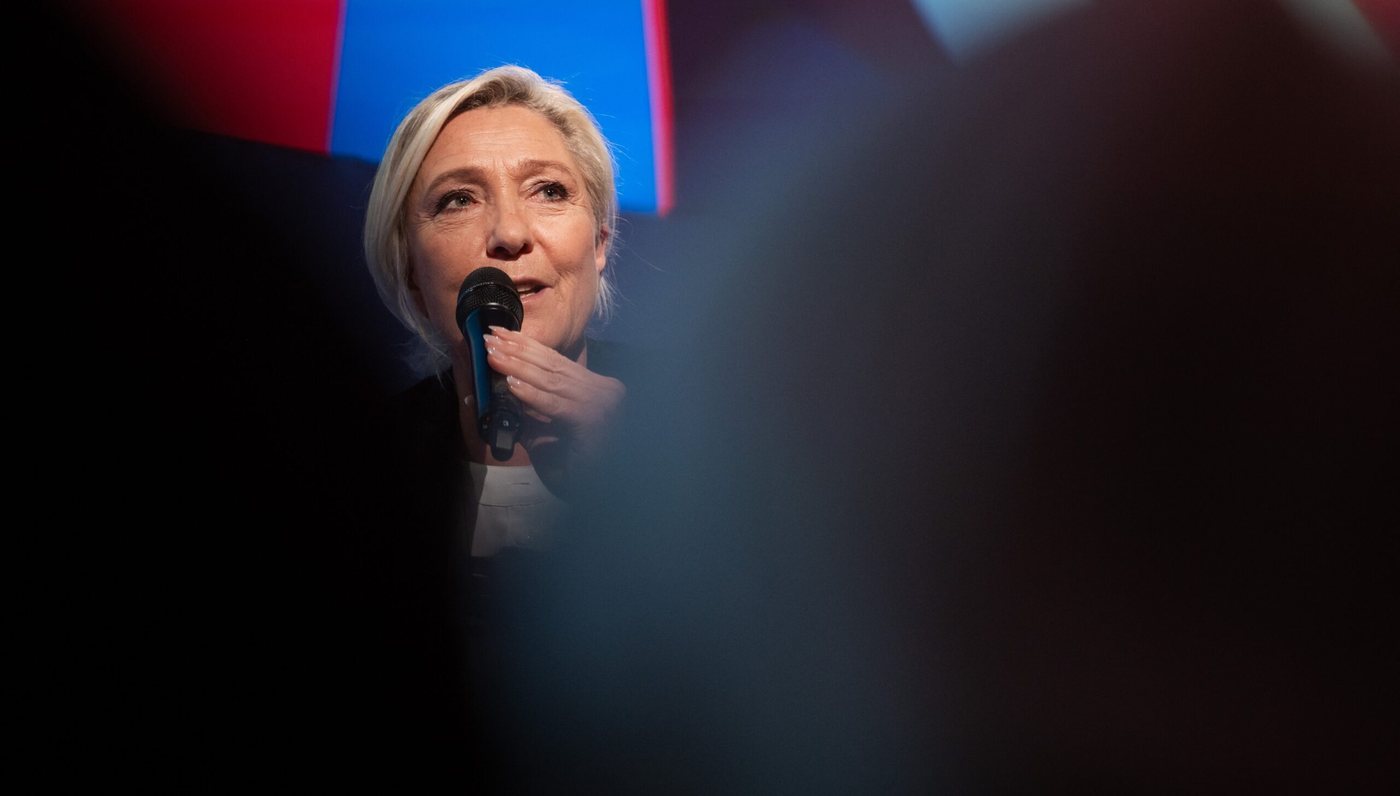
Ukraine risks losing one of its most important political backers in Europe depending on the outcome of France's presidential election, scheduled for spring next year. Polls suggest a possible runoff between far-right candidate Marine Le Pen and radical left leader Jean-Luc Mélenchon, two politicians critical of NATO whose positions on the war in Ukraine have been challenged by their rivals. Both have been accused of echoing arguments promoted by the Kremlin about the Russian invasion.
Le Pen has clashed with Ukrainian President Volodymyr Zelensky, including over a possible meeting, and has repeatedly argued that France's difficult budget situation no longer allows continued financial aid to Kyiv. Mélenchon has opposed Ukrainian strikes on targets deep inside Russian territory and drew criticism after proposing a referendum in Donbas, in which residents would decide whether they want to belong to Russia or Ukraine. Critics noted that such a vote could not be held freely and fairly in a territory largely under Russian occupation.
Concern is also visible among lawmakers in the Baltic and Nordic capitals. Marko Mihkelson, chair of the foreign affairs committee of the Estonian parliament, said that many are following the French campaign closely because the result could profoundly affect the future of the entire alliance and European security. A reduction in French support for Ukraine would mark a significant shift in European policy. France is the only EU member state with nuclear weapons and one of the main coordinators of the Coalition of the Willing, the group of countries discussing support for Kyiv and possible security guarantees for the post-war period.
The coalition's leaders met in Berlin to discuss continued European support for Ukraine. US President Donald Trump joined the meeting by phone and questioned whether military aid to Kyiv should continue. Paris also plays an important role in European efforts to combat the Russian shadow fleet used to transport and sell oil despite EU sanctions. In parallel, German Chancellor Friedrich Merz is seeking a long-term financing mechanism for Ukraine that would reduce the risk of European aid being blocked in the event of a political change in Paris. His proposal would see decisions on future funding adopted by qualified majority rather than unanimity within the EU's next multiannual budget.
Of eight European and Ukrainian lawmakers and diplomats interviewed by POLITICO, about half shared fears that a Le Pen or Mélenchon presidency could weaken Europe's resolve to oppose Russia. The others believed that once in power, the two could end up respecting the European consensus on backing Kyiv. Le Pen has sought to send reassuring messages to Ukraine and recently met, behind closed doors, with the Ukrainian ambassador to France. Mélenchon, for his part, says he seeks to protect the interests of the Ukrainian people.
Zelensky has also downplayed the risks of a possible change of power in Paris. He told POLITICO, during a meeting with a small group of journalists, that Ukraine will work with whoever the French people choose, since the European Union consists of 27 countries, not just one. He added that Ukraine has already seen how election campaigns work and what follows them.
Although France's military contribution to Ukraine is smaller than that of countries such as Sweden or Germany, Paris compensates through political influence and its coordinating role in European initiatives, three European diplomats explained. A change of president could affect precisely that leadership capacity. A Ukrainian official said the main risks concern France's commitments within the Coalition of the Willing, security guarantees for Ukraine, and future European financing mechanisms. "In terms of financial support, [France] is never in the top 10," the official said. "But in terms of breaking European consensus, that would be a real challenge."
A NATO diplomat warned that a shift in Paris's position could also undermine European unity in negotiations to end the war. "When European security is discussed at the negotiating table, France matters. It will be difficult to find a common position," the diplomat said. France has played a key role in supporting the Ukrainian army and in planning possible military deployments after the war ends. The headquarters of the Coalition of the Willing has been based in France since its creation last year, although it is expected to move to Britain in the coming months. An official from the National Rally party led by Le Pen said the party does not support this initiative and would prefer France to regain its own voice on the international stage.
Source: g4media.ro
26